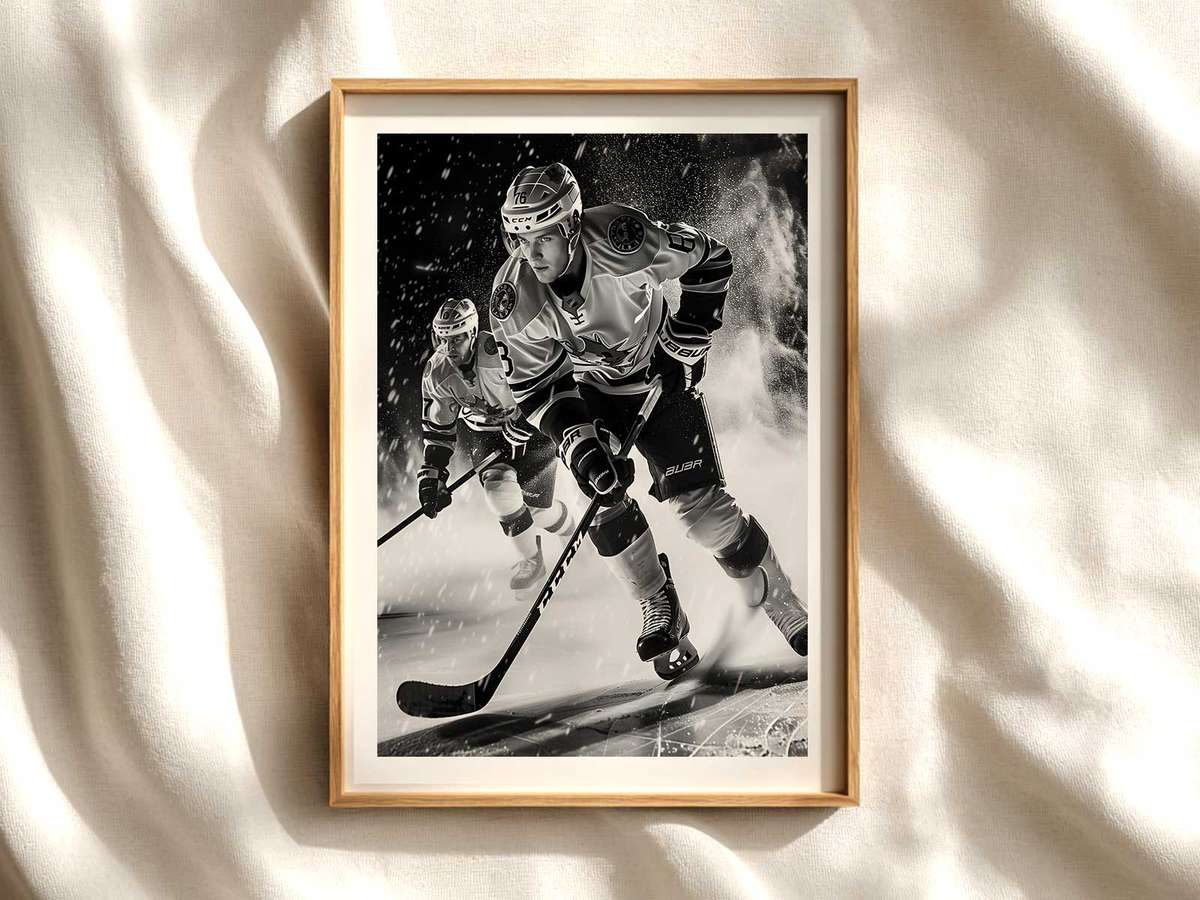
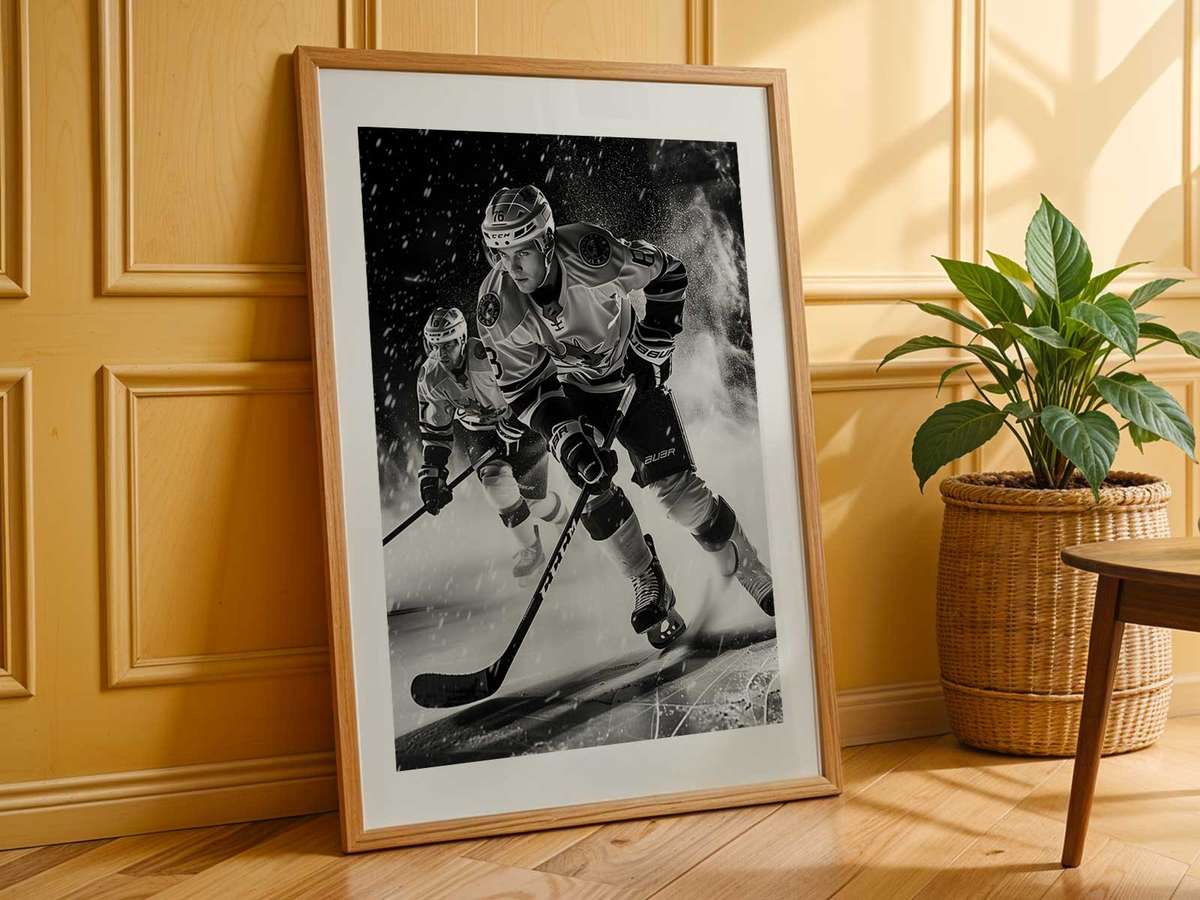
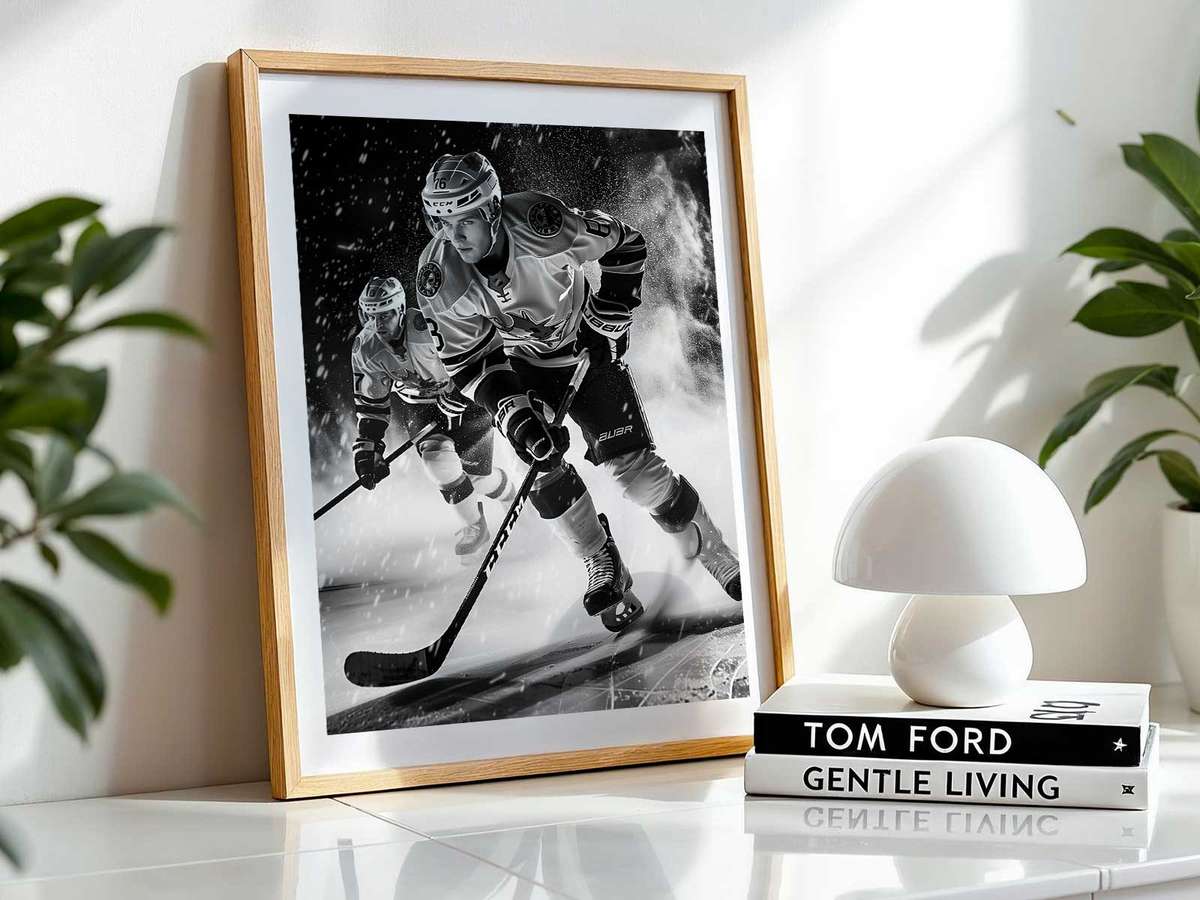
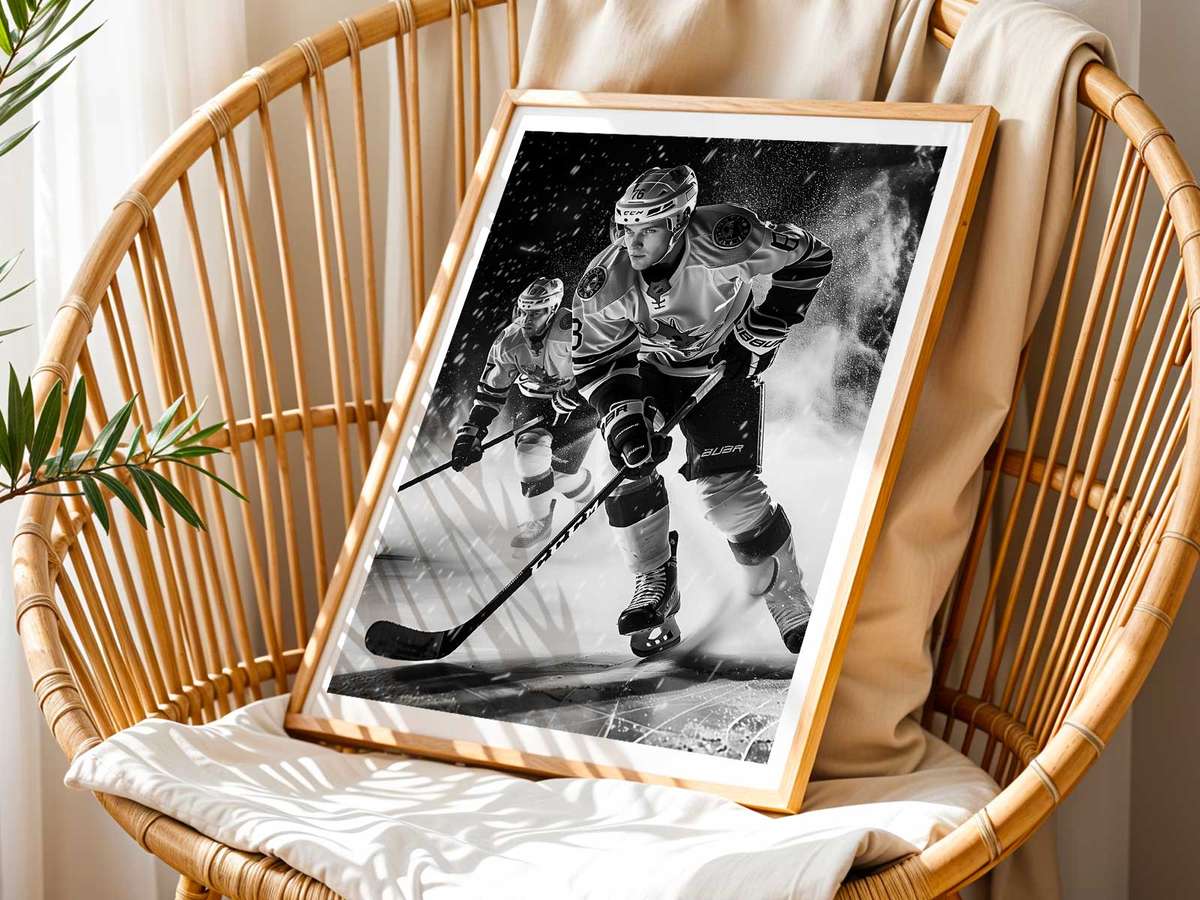
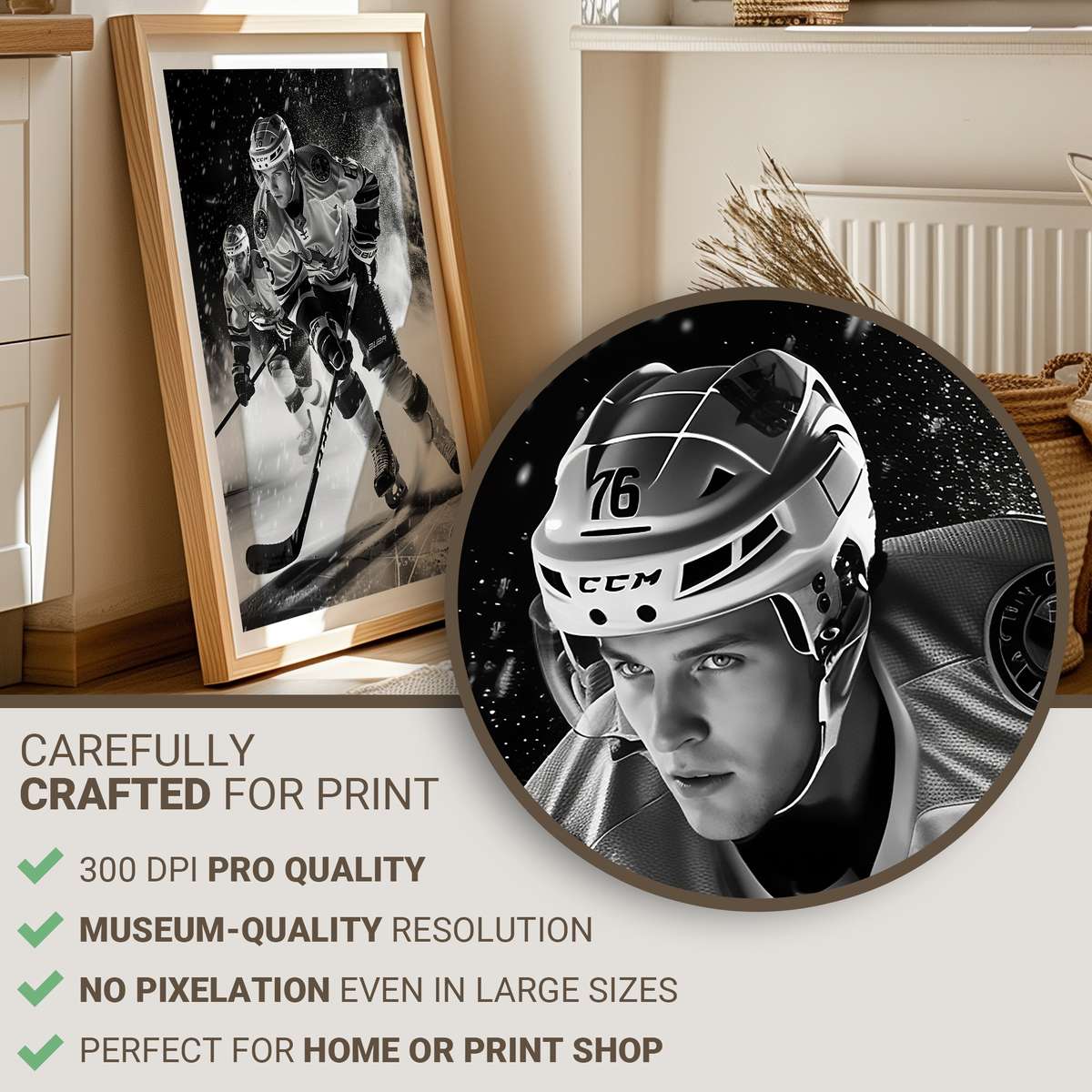
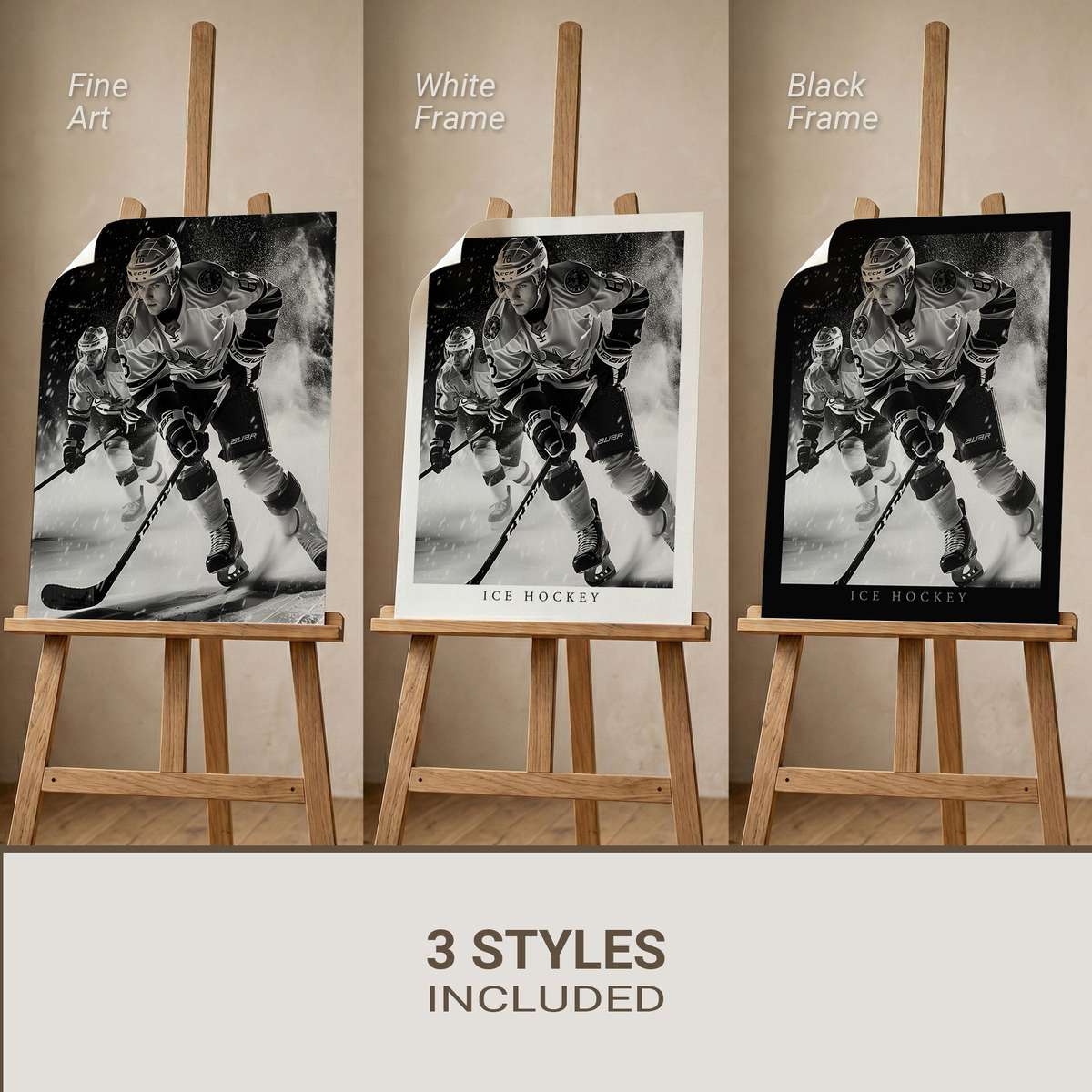
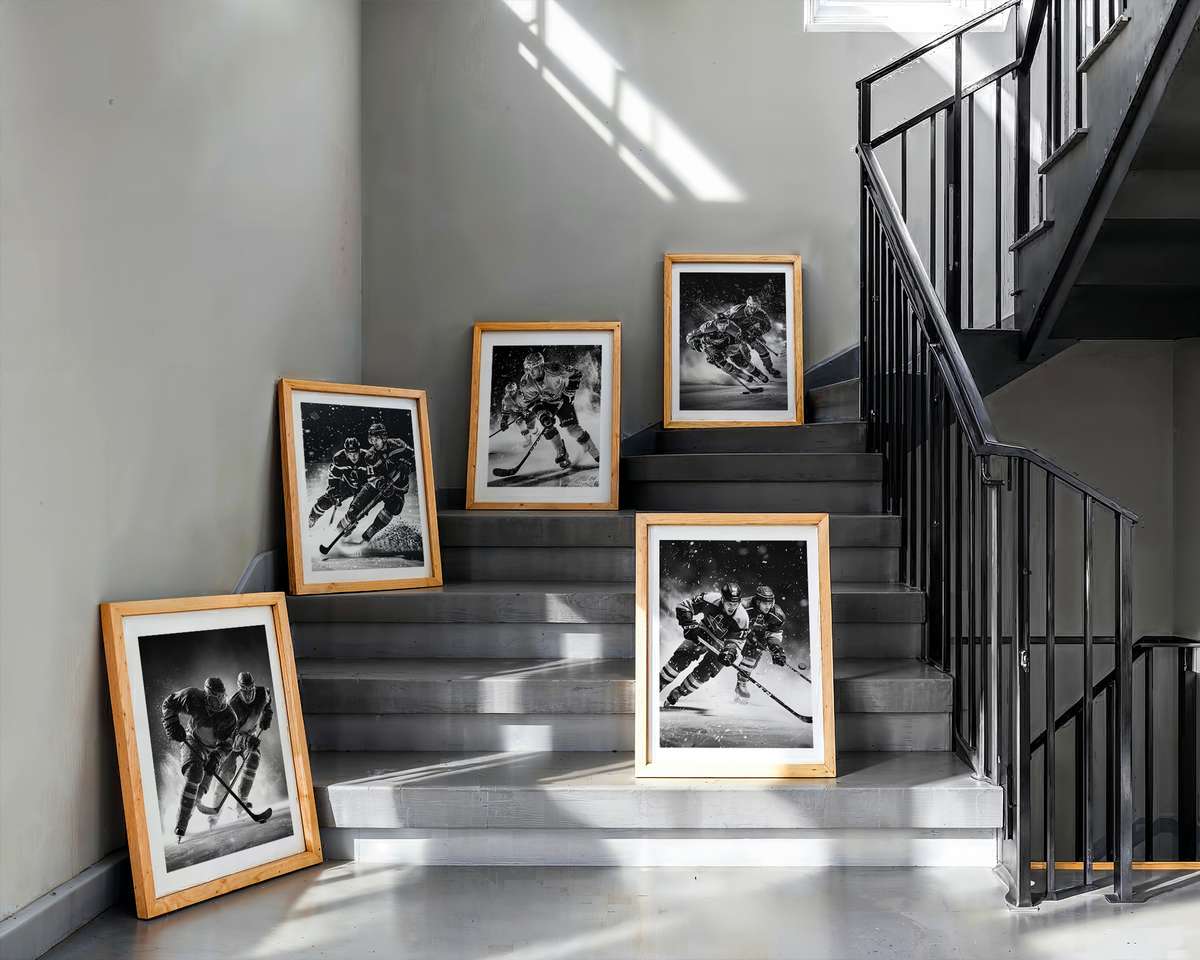
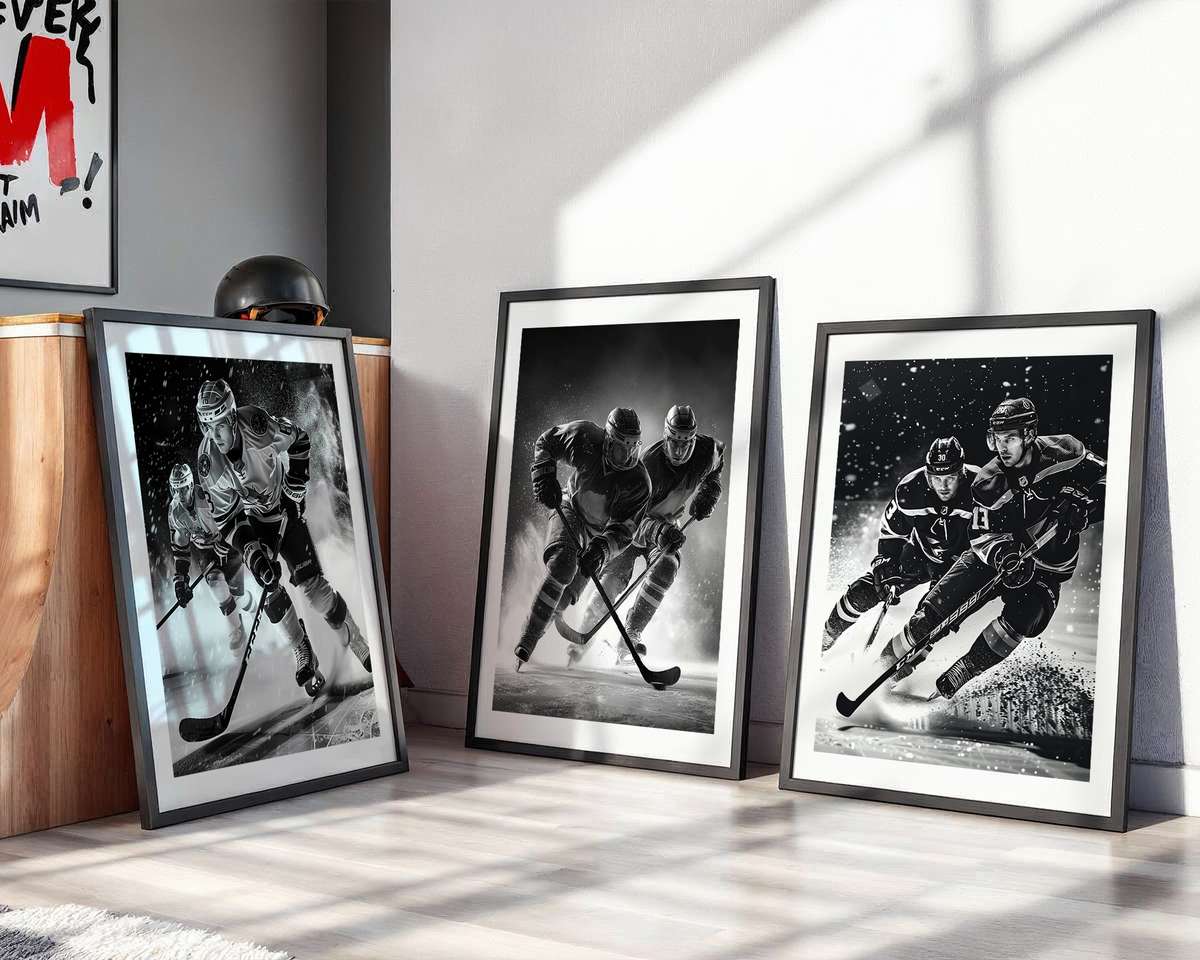
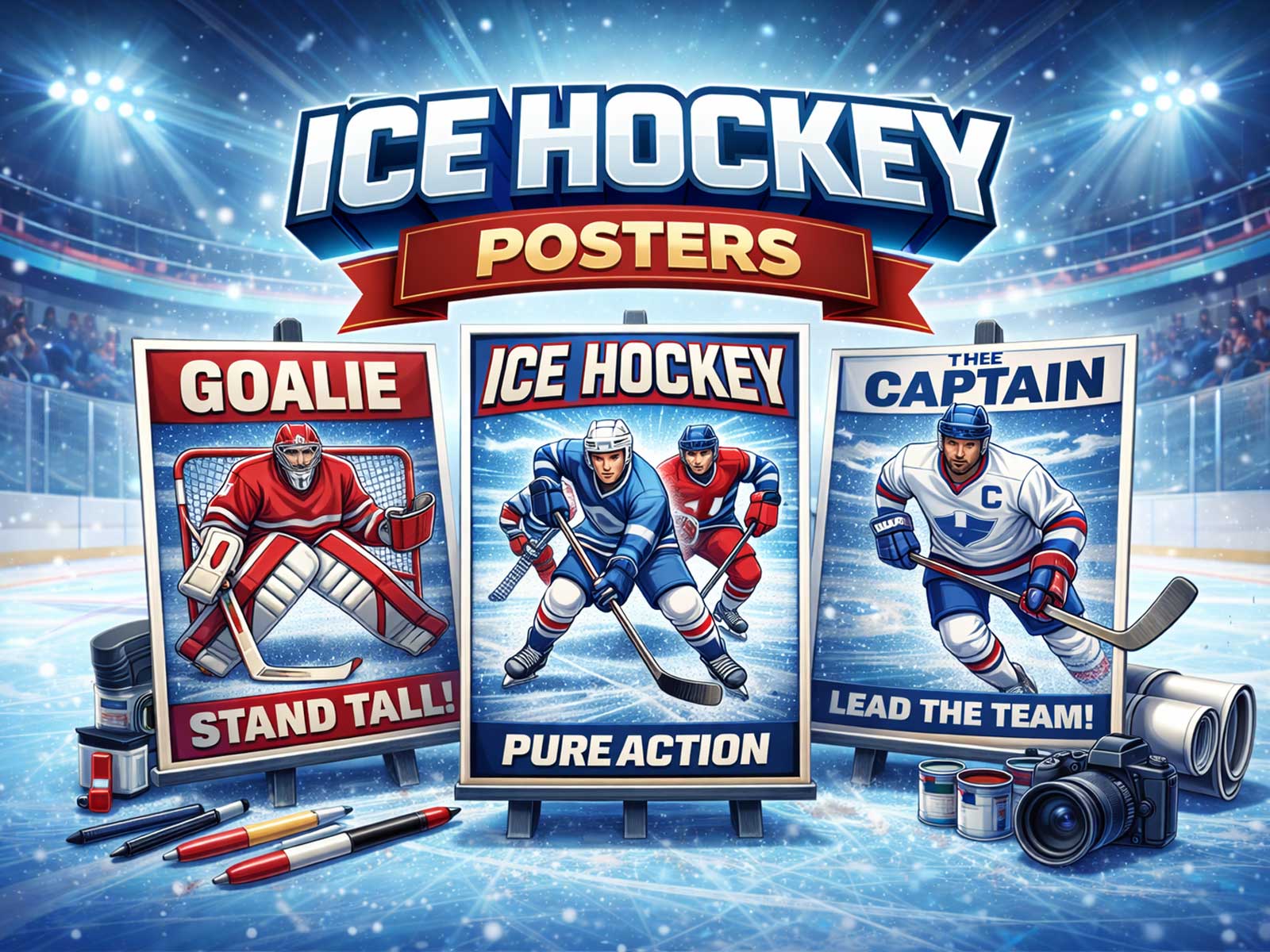
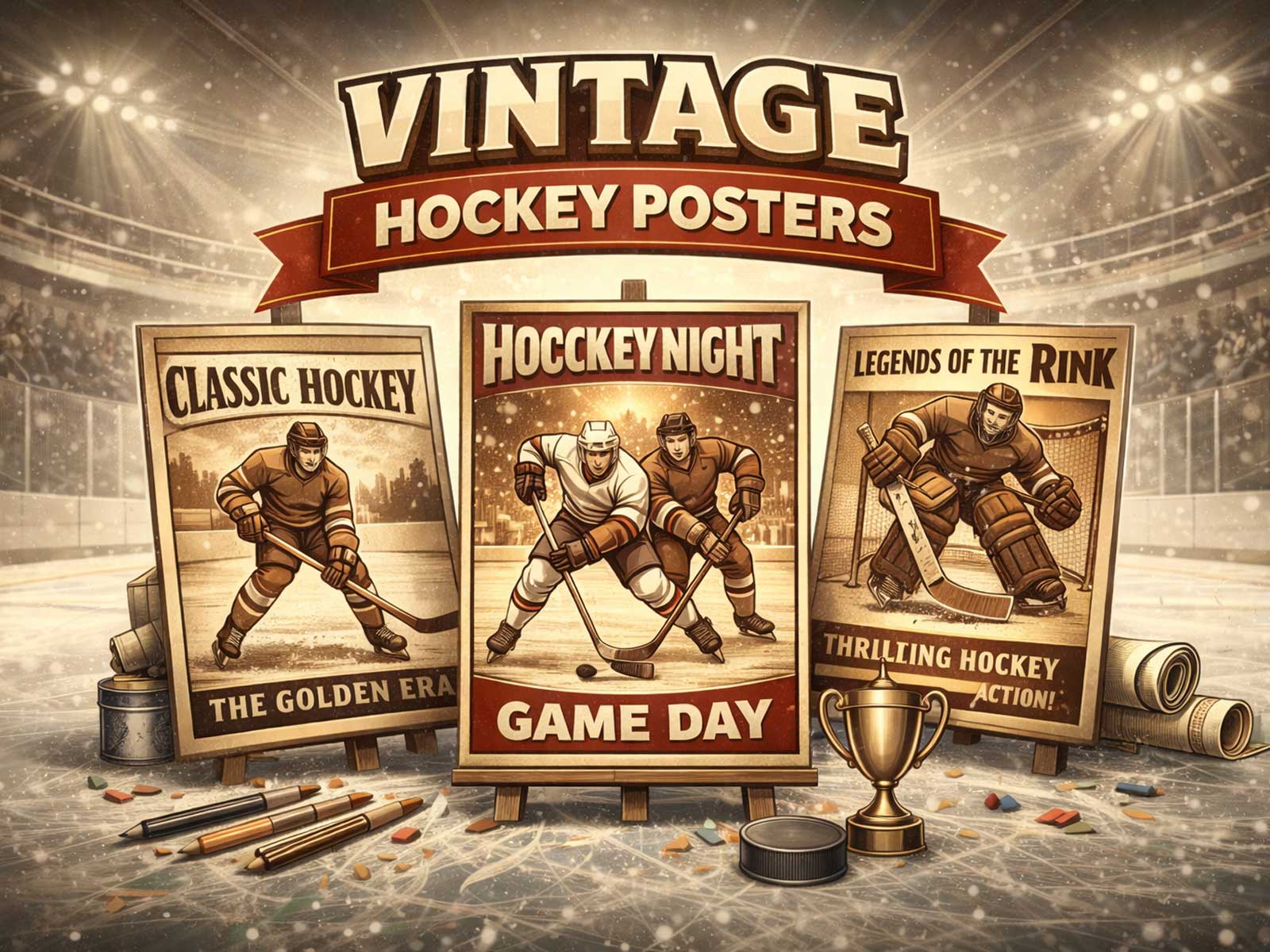
Celebratory motifs from birthday cakes and party graphics carry a certain shorthand — confetti, streamers, bold type, flat icons — but when those festive rhythms are translated into hockey wall art, the result must shift its center to the puck, the gear, and the brutal poetry of the ice. The trick is not to paste party imagery onto a rink, but to reinterpret pattern and palette through motion, texture, and the specific visual language of hockey: skates carving arcs, a stick blade frozen mid-snap, the helmet silhouette against arena light.
Visually, hockey is all contrast. Bright team colours and crests sit on cold white planes broken by thin lines of rink paint; the puck is a small, dark fulcrum in a wide, luminous field. A poster that borrows the graphic economy of cake decorations — simplified shapes, repeated motifs, celebratory accents — becomes compelling when those elements are re-centered on hockey signifiers. Confetti becomes spray from a sudden stop, dots and stars echo ice chips and puck marks, and banner ribbons convert to the sweeping geometry of boards and glass.
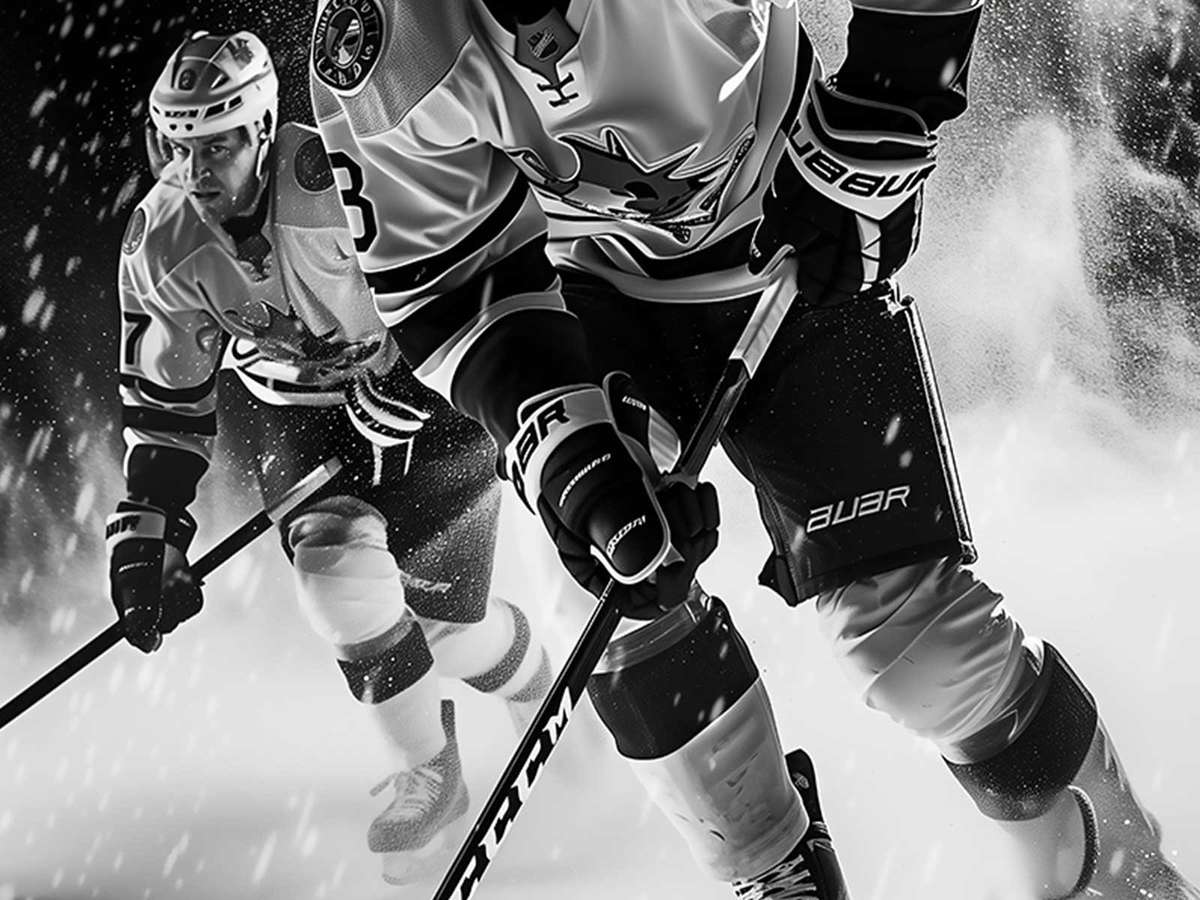
Composition is where the celebration meets the arena. Placing the puck or the stick at the visual pivot gives the eye an anchor amidst frenetic patterning. A single, crisply lit puck in the lower third of the frame, surrounded by the arc of a skate’s spray or the negative space under a lifted stick, reads clearly from across a room while rewarding closer inspection with texture: frost blooming on the blade, scuff marks on leather, the halo of arena lights on polycarbonate visors. These tactile details make the image feel authentic and lived-in rather than merely decorative.
[IMAGE_INSERT_ARTICLE_01]
The mood shift from party to player is also a question of motion. Cake motifs imply stasis — a moment of celebration — but hockey wall art must convey kinetic energy. Use diagonals: the stick shaft slicing the frame, the shoulder line charging toward the net, or the spray of ice thrown by an emergency stop. Those diagonals turn repeated graphic elements into visual tempo, so a pattern that began as confetti now suggests the staccato rhythm of shifts, checks, and breakaways.
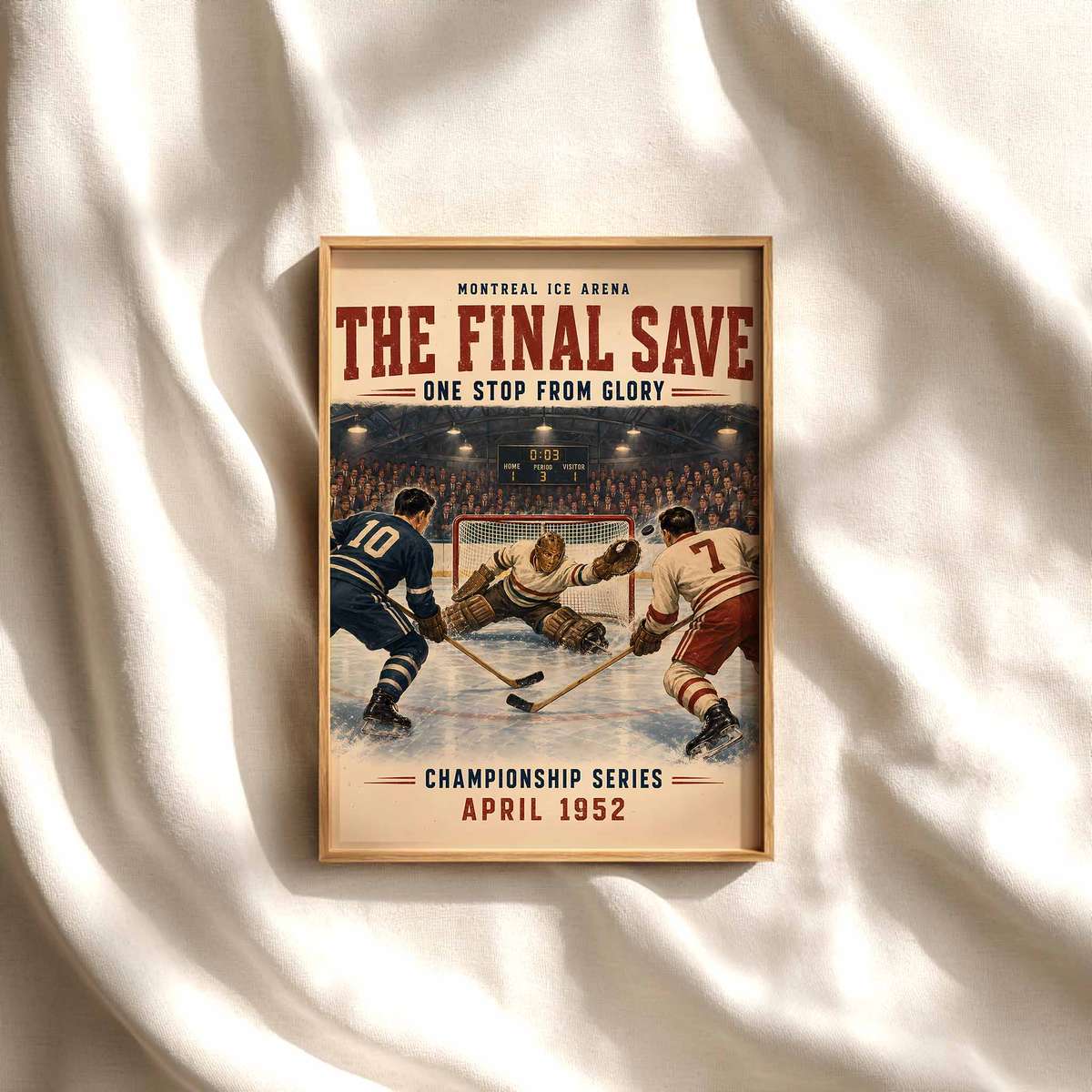
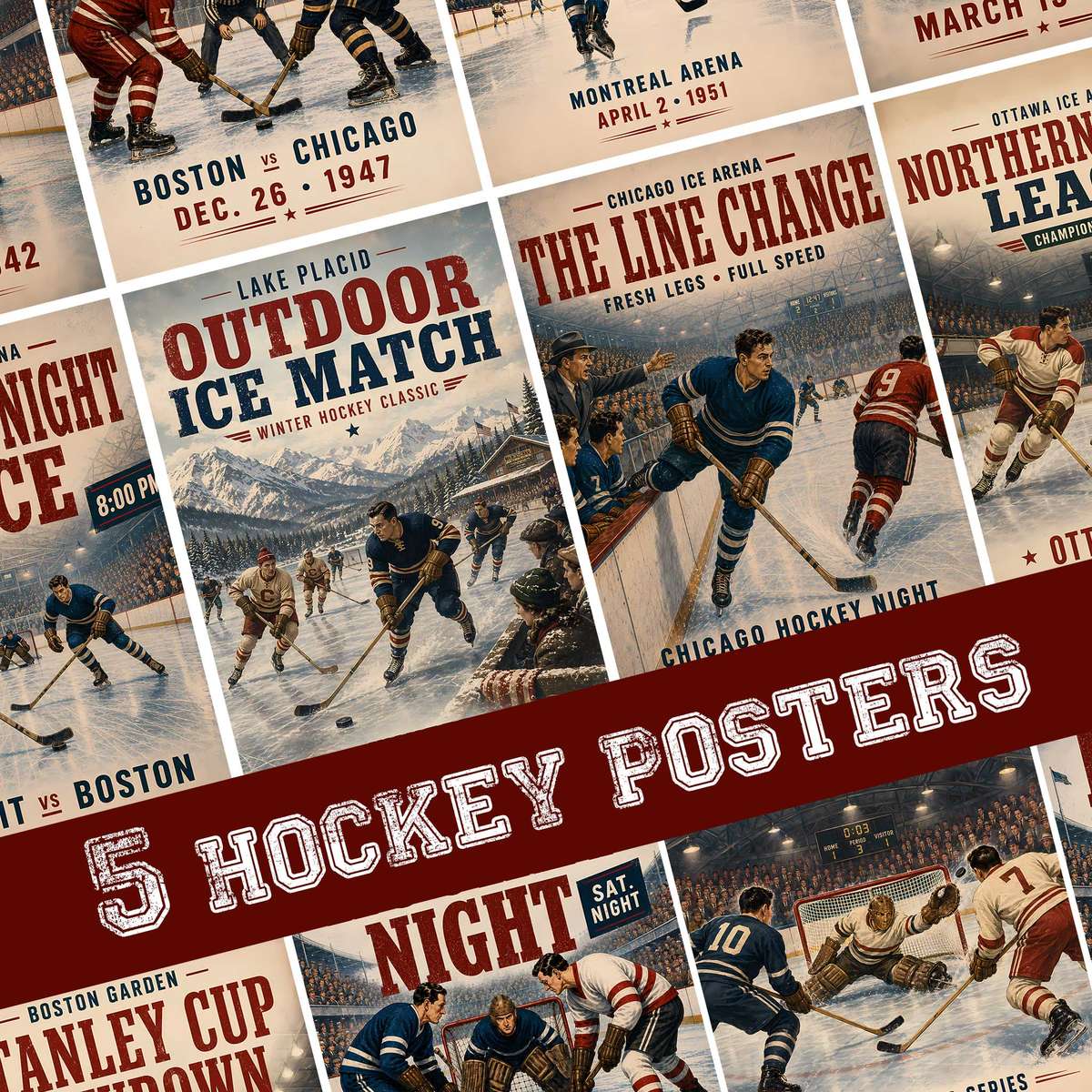
Color handling distinguishes modern from retro interpretations. A retro approach leans on muted creams, worn paper textures, and slightly desaturated team marks that evoke arena posters and old programs. A modern approach embraces high contrast and saturated team palettes, letting strong blocks of colour define silhouette and movement. Both styles can borrow celebratory patterning — stars, stripes, circles — but must respect hockey’s light: reflective ice, cold highlights, and deep shadow under helmets and benches.
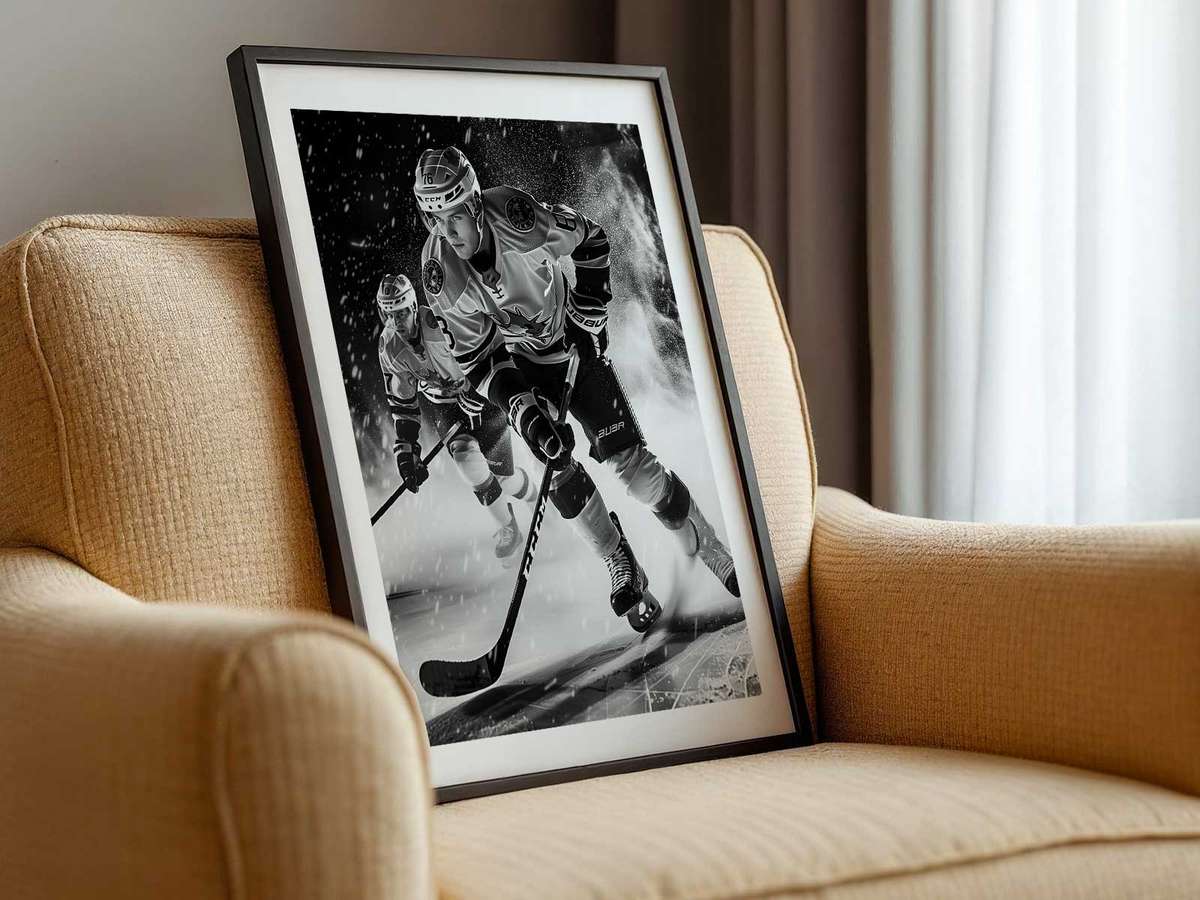
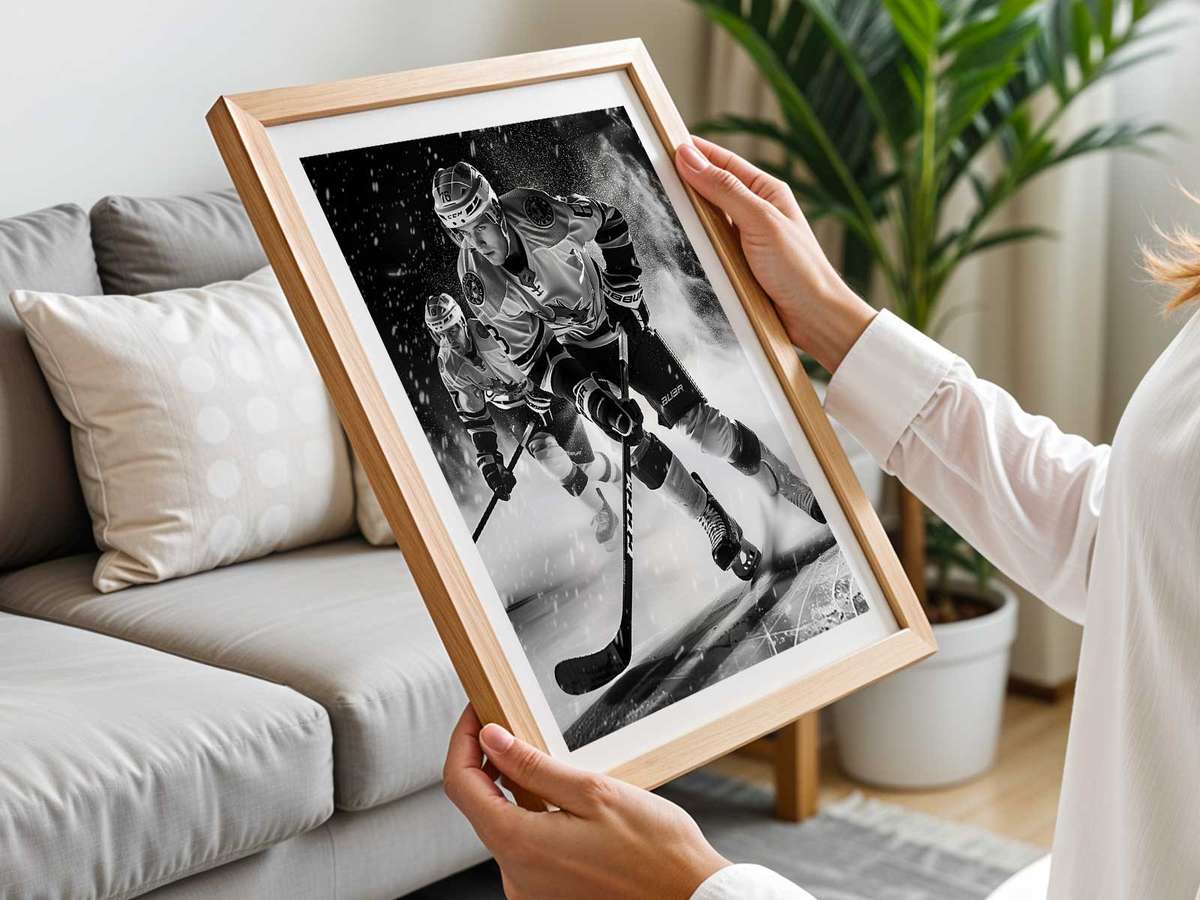
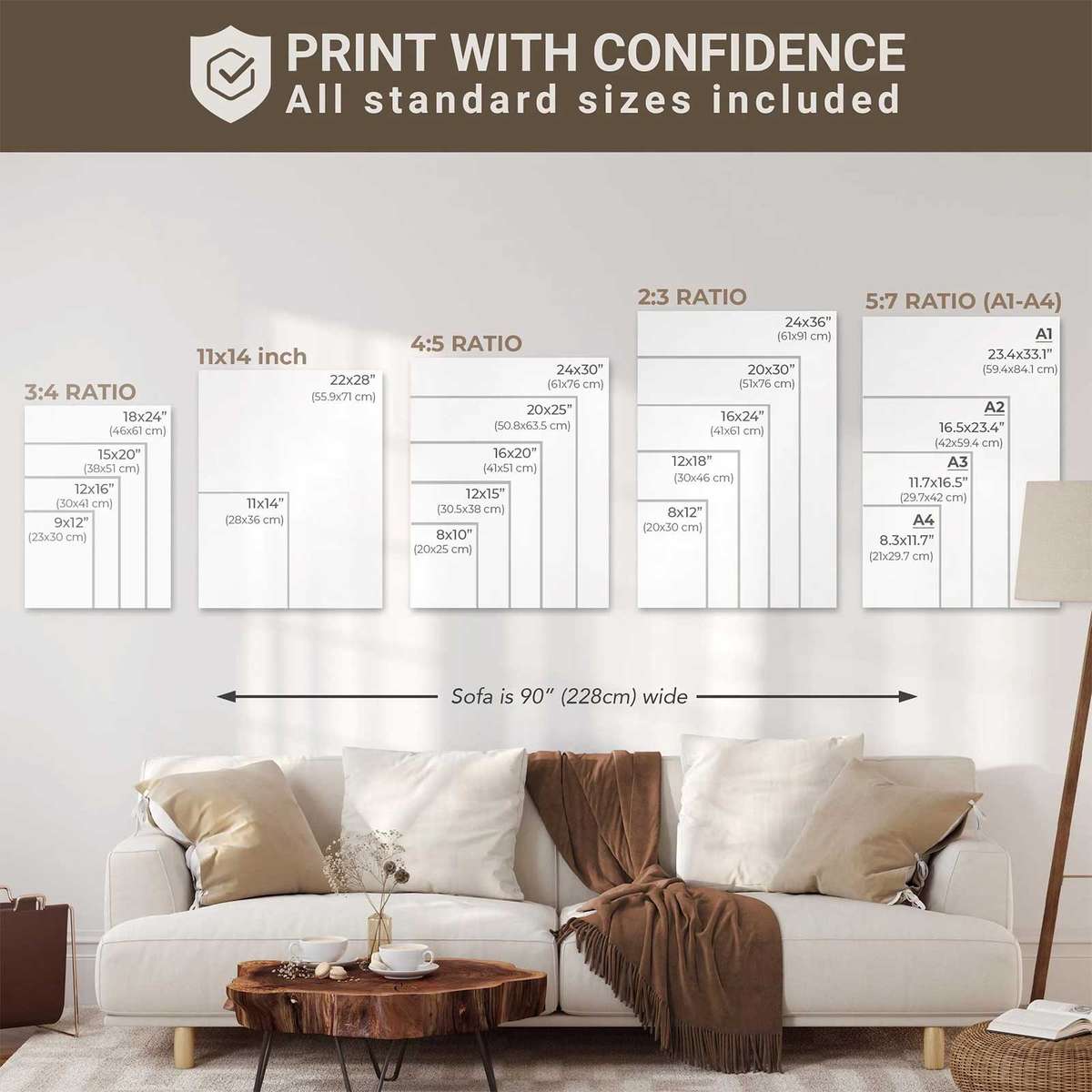
Thinking about room placement helps refine the design. Over a study desk, a poster with a subdued palette and quiet, archival textures creates a contemplative, collector-friendly atmosphere. In a game room or fan cave, a high-energy piece with bright colour blocking and visible ice spray becomes an arena proxy — it amplifies soundless excitement and reads well from the couch. In bedrooms, scale matters: larger images emphasizing a single frozen instant feel cinematic and immersive, while smaller prints with repeated motif details reward bedside inspection.
Finally, the desirability of this visual crossover lies in its dual promise: the friendly shorthand of celebration and the visceral intensity of sport. When festive motifs are reinterpreted through the puck’s gravitational pull, equipment-focused details, and the cold geometry of the rink, you get artwork that is both approachable and precise. It invites fans and design-minded viewers alike to hang a piece that looks lively across a room, holds up to scrutiny close up, and turns everyday walls into reminders of speed, identity, and the textured drama only hockey can provide.