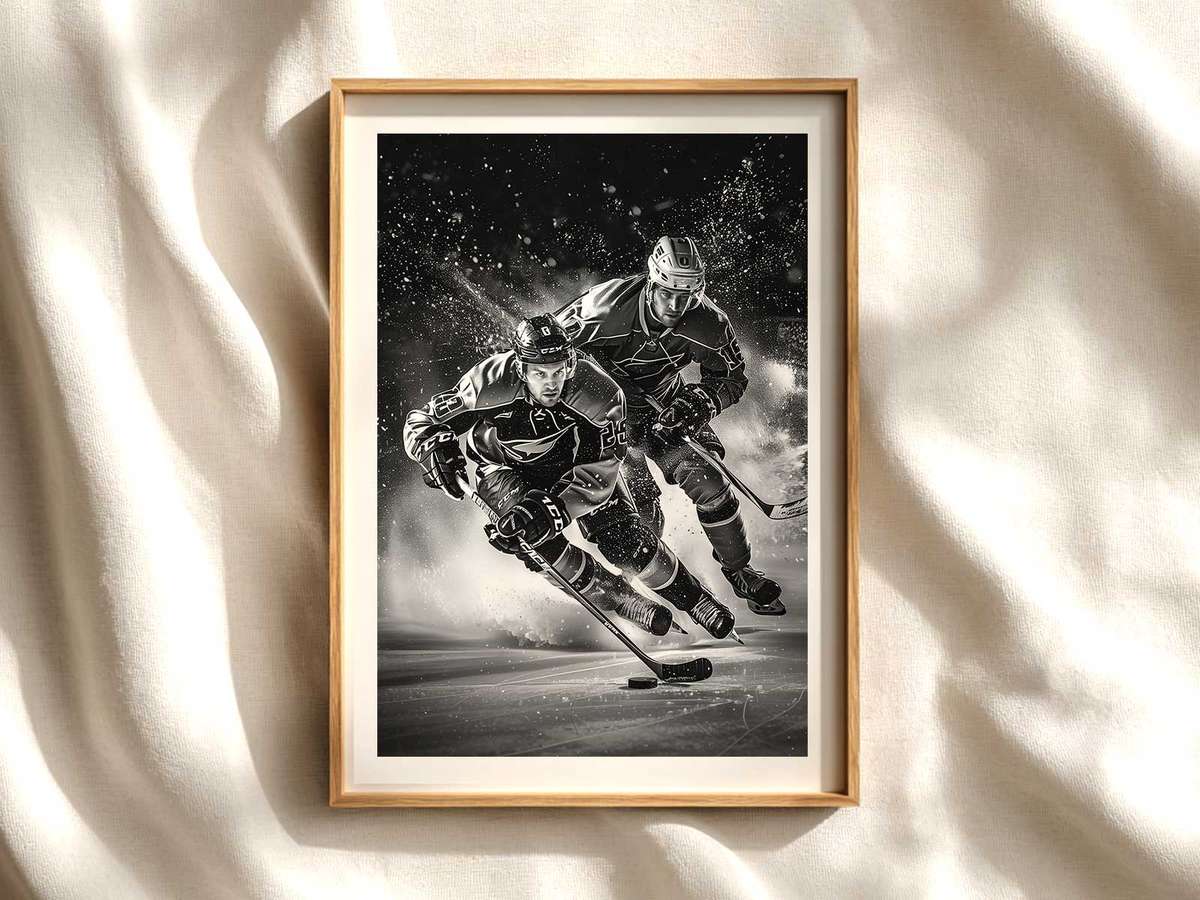
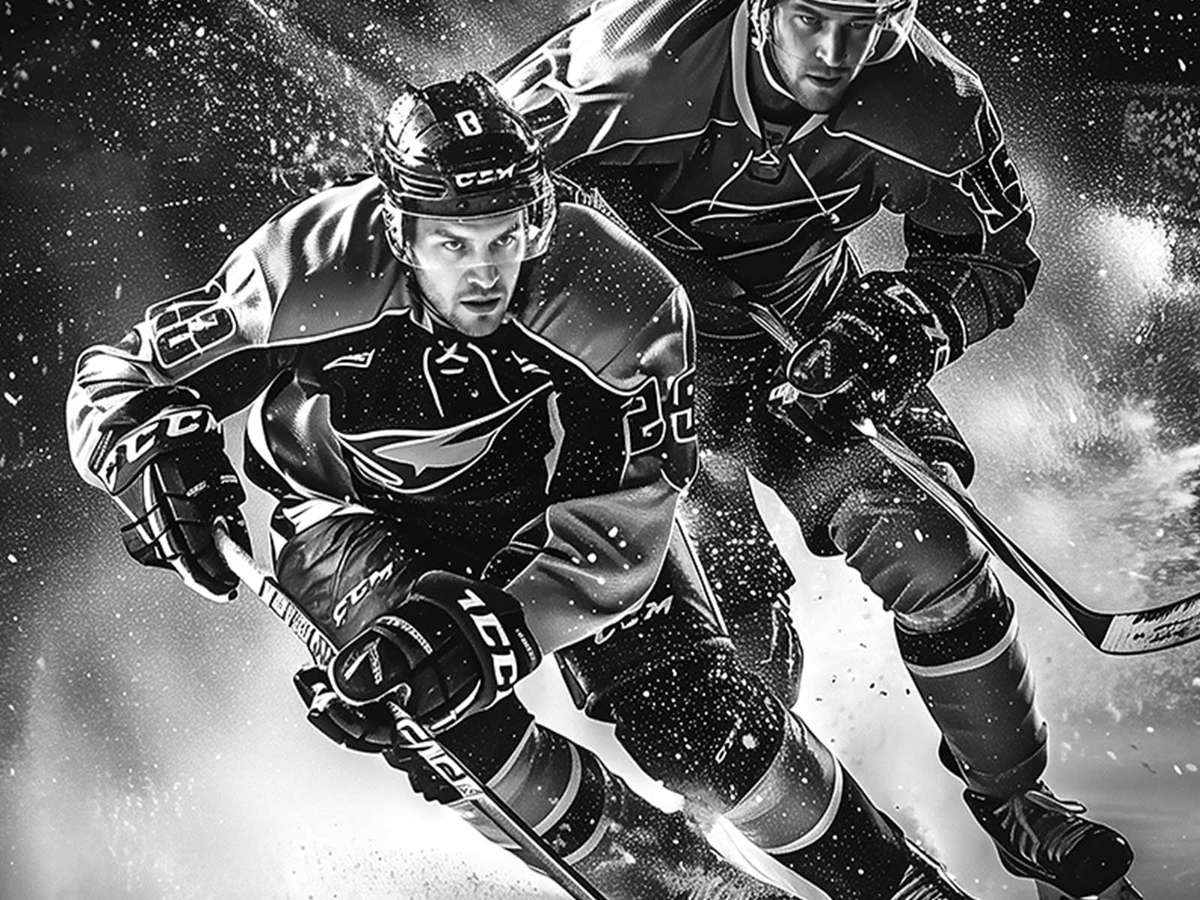
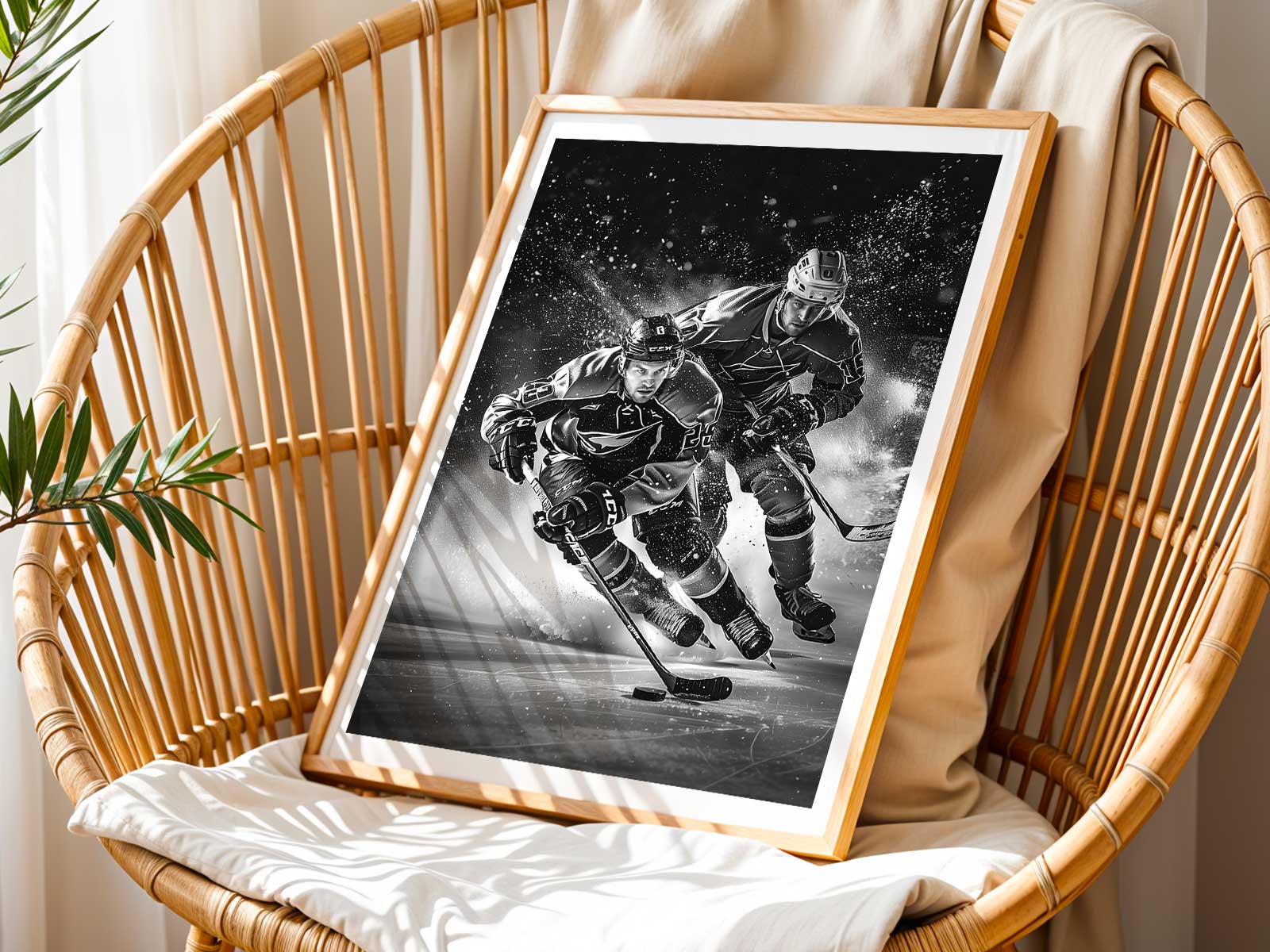
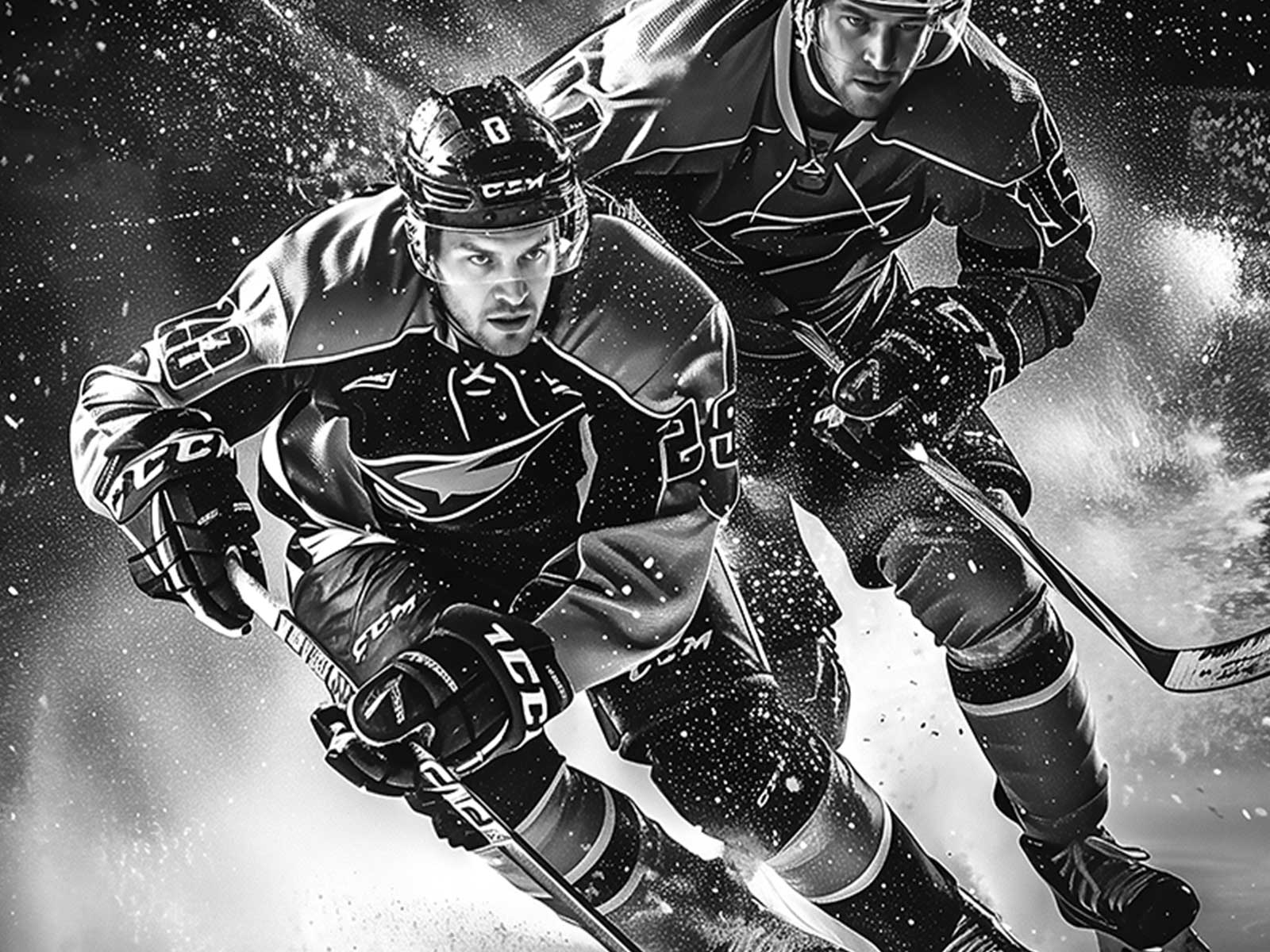
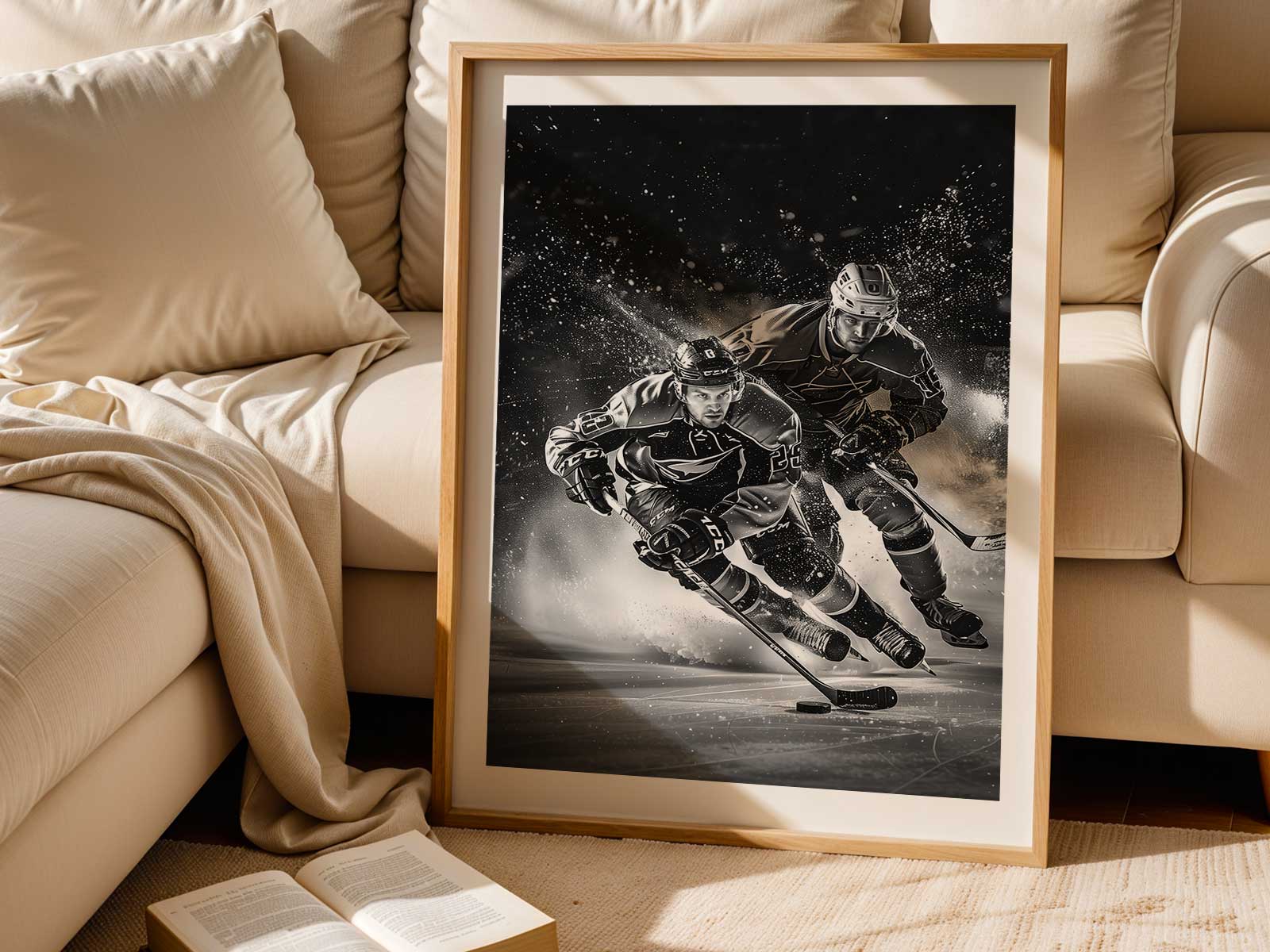
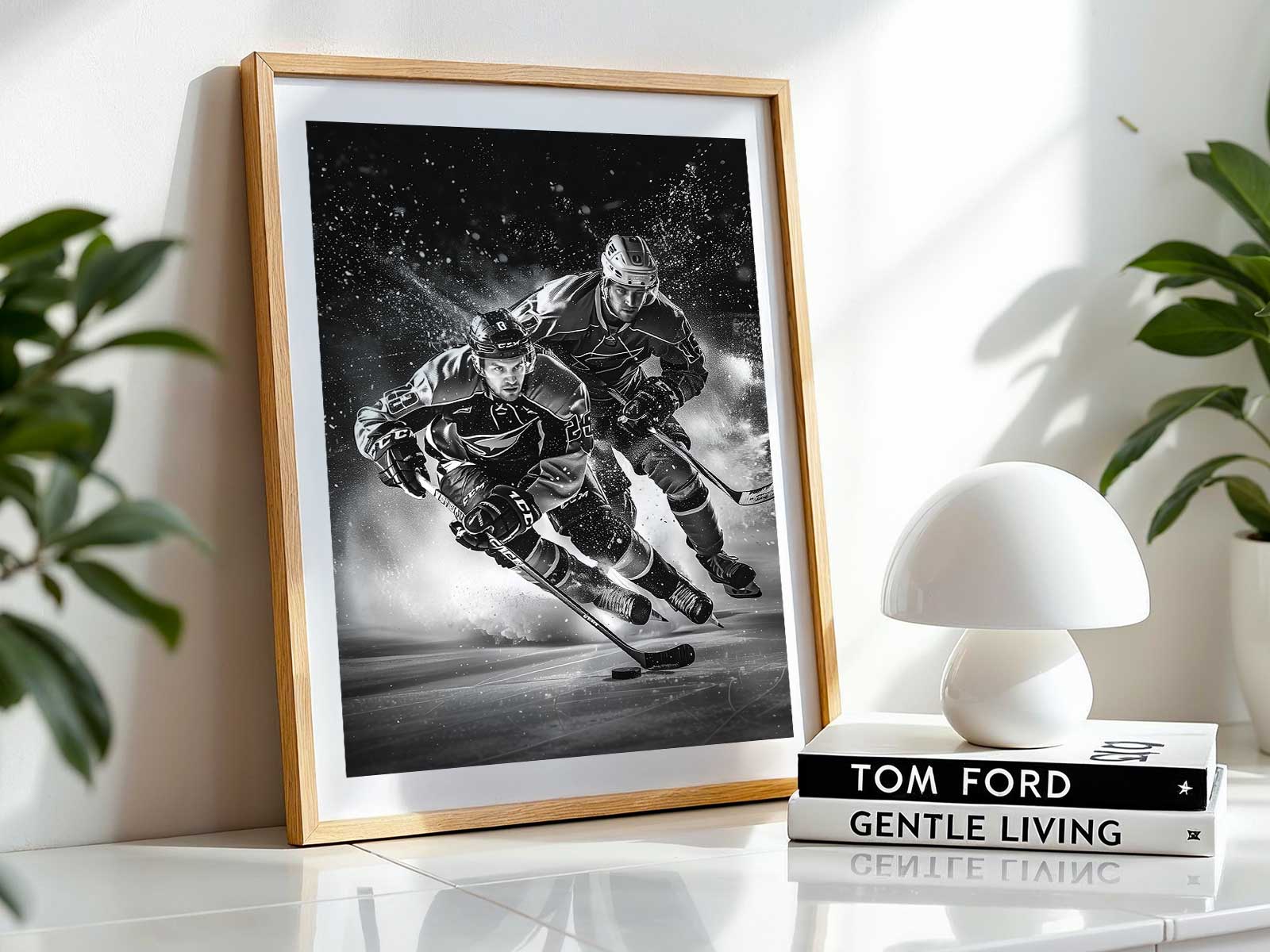
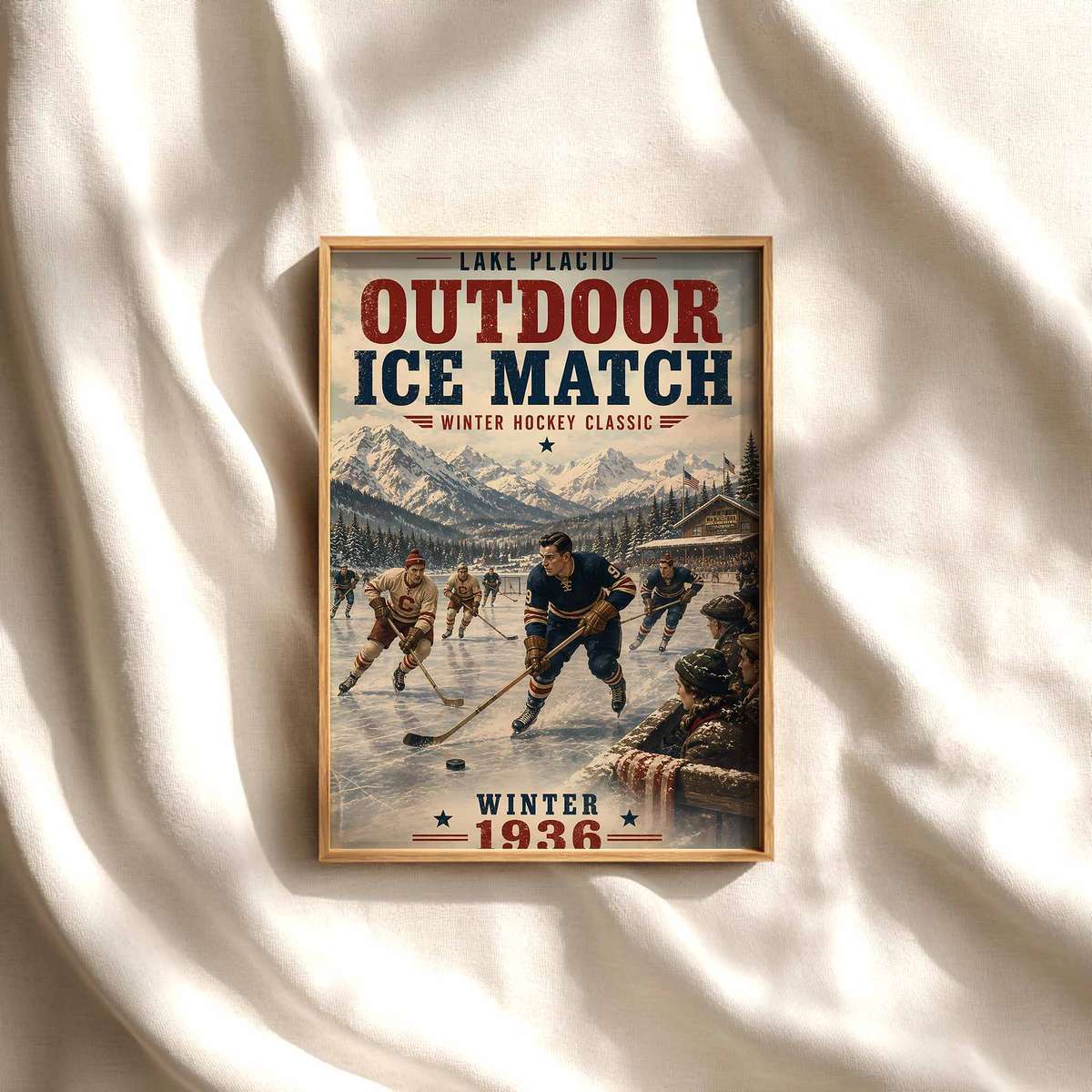
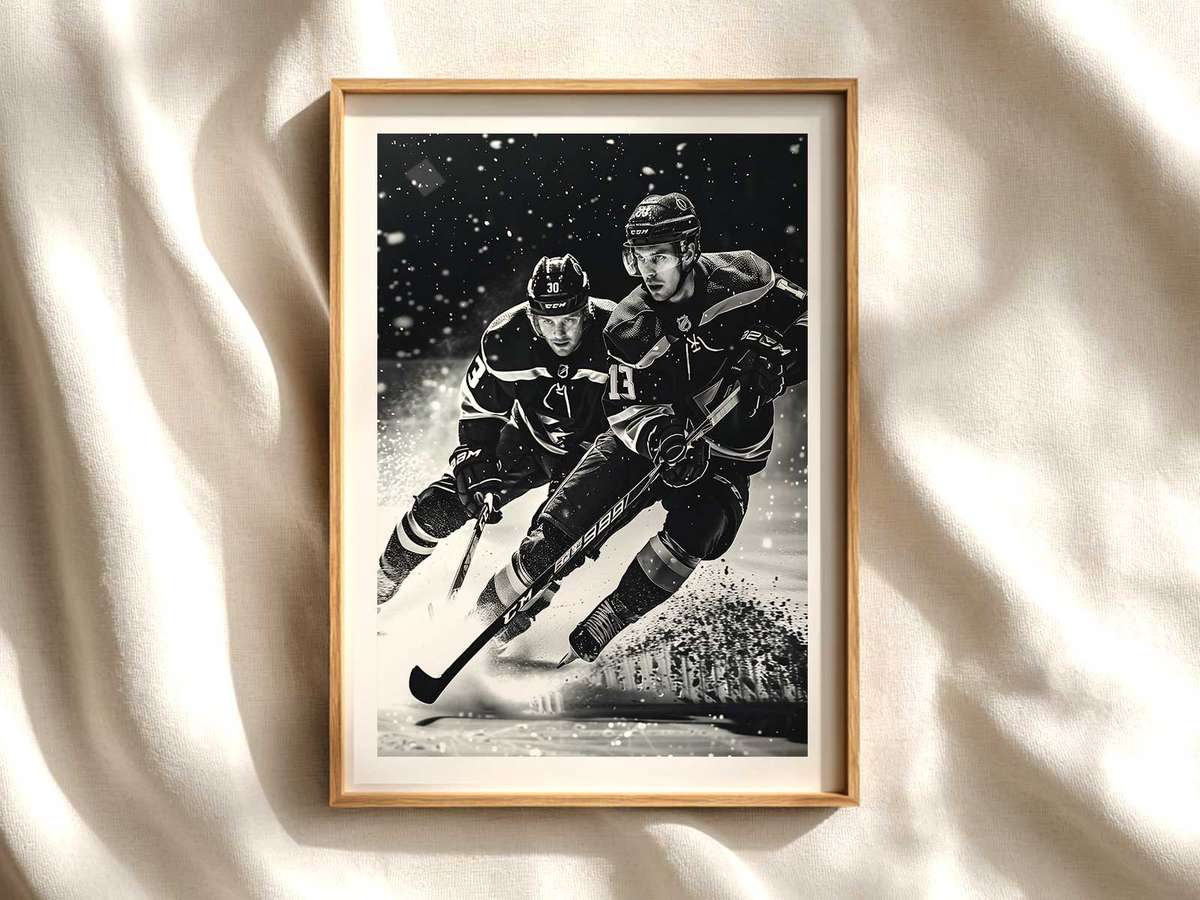
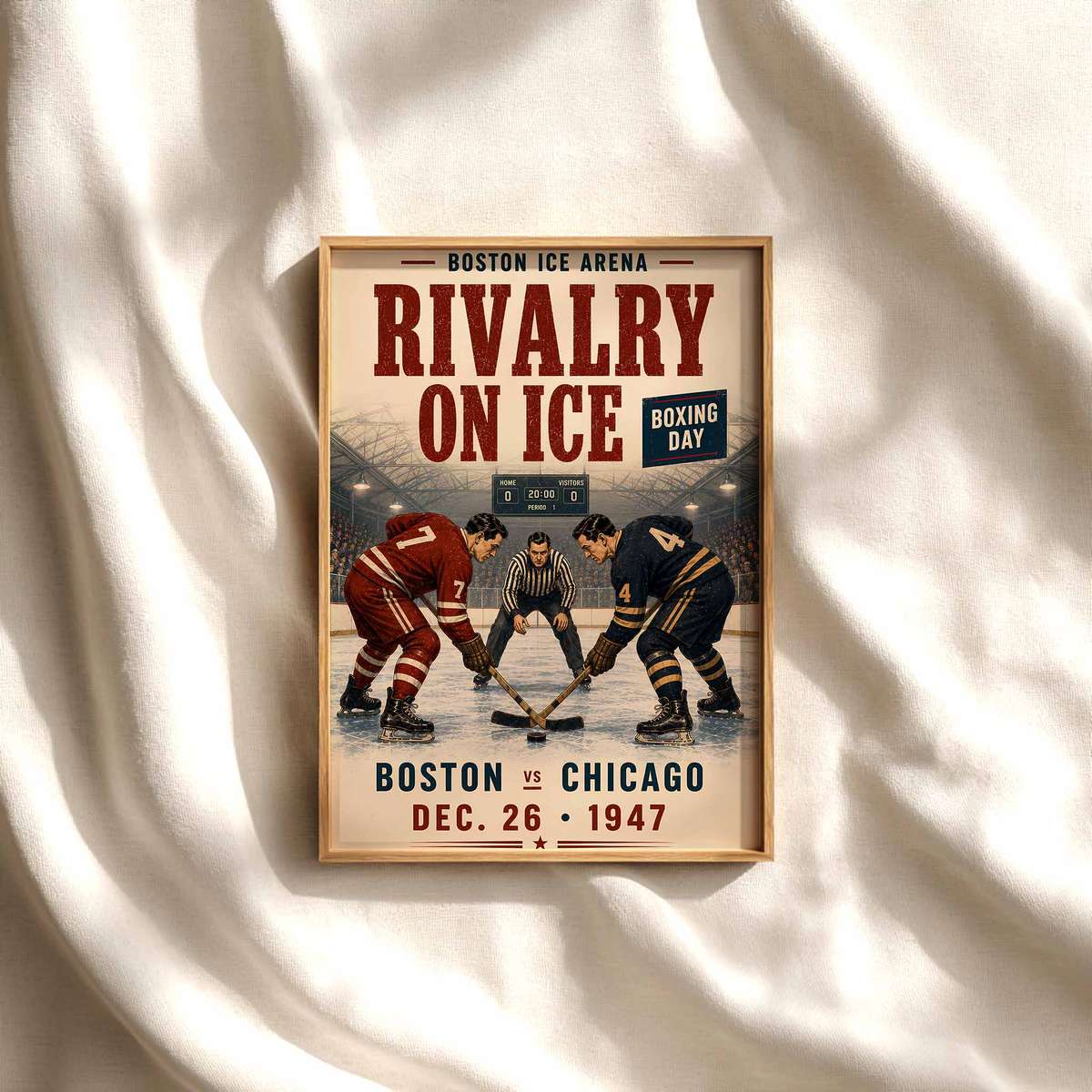
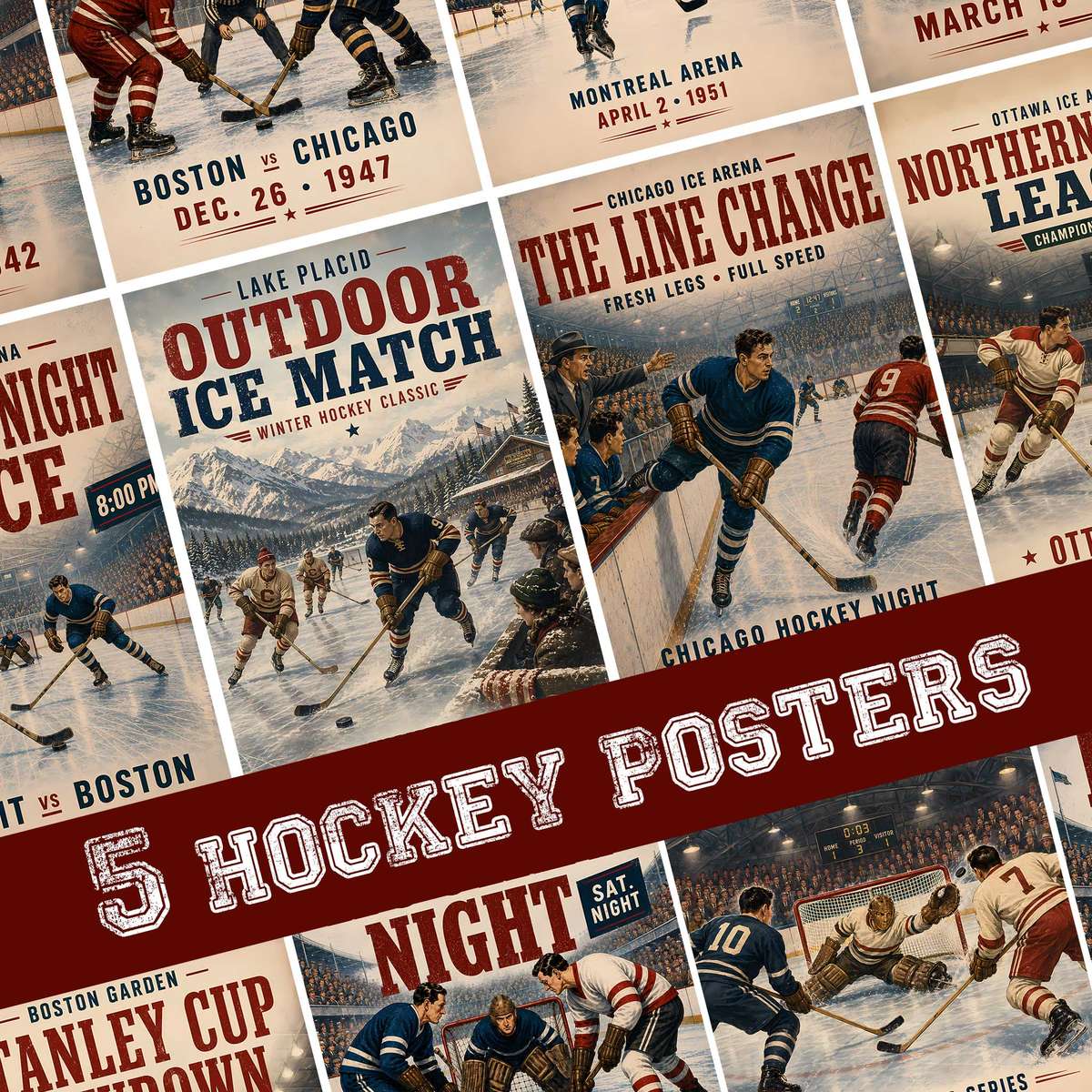
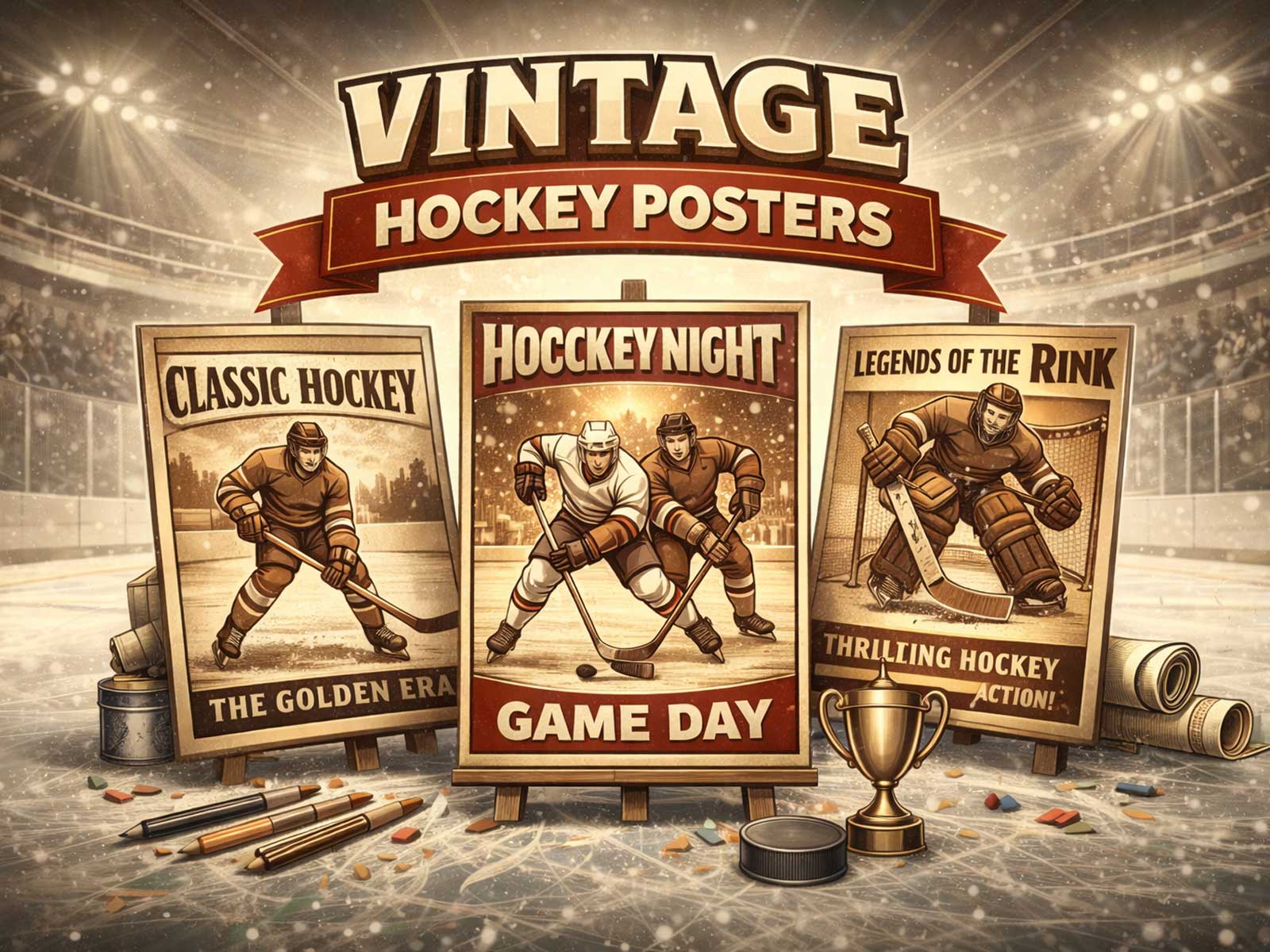
There is a particular visual weight to a well-executed vintage hockey print — a sense that the image is speaking from a specific time and place rather than simply dressing itself in faded colours. That depth is not accidental. It comes from a set of deliberate visual choices: an archival-inspired palette that reads like old print stock, typography that echoes hand-set letterforms, crest and sweater cues that suggest team history, and a rink atmosphere that recalls quieter arenas before modern spectacle. Together these elements create a poster that feels heritage-led rather than merely nostalgic.
Start with colour and paper character. A vintage-led print favours restrained, slightly muted tones: bruised indigo, newspaper-ink neutrals, and auric off-whites that imply sunlight through arena glass. These are not just desaturated blues or a wash of sepia; they mimic how ink sits on coarse paper, how halftone dots break up a block of colour, and how edges soften with handling. That printed-paper suggestion — grain, tiny imperfections, and border treatments — is what gives an image its tactile suggestion of age without resorting to cliché.
Typography and graphic hierarchy do much of the storytelling. Period-minded letterforms, set with clear but modest hierarchy, read like a caption from a sports section or an era-specific program. The restraint of a modest headline, a compact subline, or a crisply spaced team name implies editorial care: information designed to be read at a distance but made quiet on purpose. This is different from a generic retro effect that pastes a distressed type over a current photograph; here the letterforms belong to the same visual language as the image.
The language of uniforms and crests anchors the eye and memory. Even when a design is not claiming true provenance, classic sweater shapes, simple crest silhouettes, and era-appropriate equipment lines (the straight wooden stick, the fuller shoulder cut of older jerseys) conjure nostalgia through specificity. These cues do not shout; they suggest continuity — a lineage of fans, seasons, and the small rituals of the rink. That suggestion carries emotional weight because it feels like the shorthand of lived hockey experience rather than theatrical costume.
[IMAGE_INSERT_ARTICLE_01]
Rink atmosphere — the way ice reflects, the hush of stands in long-shot, the flattened perspective of an old arena — is another decisive element. Vintage hockey imagery often trades the modern arena's hyperlit glamour for colder, narrower light that emphasizes texture: fogged glass, scuffed boards, and the dim architecture of seating tiers. That quieter light makes the composition feel intimate and human-scaled, as if the viewer has stepped into a remembered game rather than a commercial spectacle.
Finally, a true heritage-led poster practices restraint. Decorative excess, over-saturated overlays, and trendy flourishes tend to break the spell. By keeping composition unbusy and tone controlled, the image becomes a room maker — it alters a study, den, or fan wall by lending it a calm, rooted identity. A framed vintage hockey print reads as deliberate taste: an appreciation for the sport’s visual history that doesn’t need to scream its fandom with logos or slogans.
When choosing a vintage-inflected hockey poster for living spaces, think about mood and fit rather than forceful fandom. A muted, heritage-oriented piece will sit comfortably above a study desk, in a game room where conversation and memory matter, or on a collector wall where each print is allowed to breathe. Its appeal is not theatrical; it is cumulative — a reminder of how material quality, typographic choices, and the memory of arenas together create an image that feels like part of a continuing story.
This kind of poster rewards quiet attention: look closely and the paper grain, the period letterforms, and the subtle palette reveal why the design feels honest and enduring. That is the real power of a vintage hockey print — not simply to recall a past, but to translate the texture and temperament of that past into something that shapes a room and a mood.