1967 Stanley Cup: How Toronto’s Last Original Six Title Closed an Era
The 1967 Stanley Cup is both a sporting result and a historical hinge: Toronto Maple Leafs defeating the Montreal Canadiens 4 games to 2 in the Final, clinching the series with a 3–1 victory in Game 6 on May 2, 1967 at Maple Leaf Gardens. That win, with captain George Armstrong accepting the Cup from NHL President Clarence Campbell, stands as the final Stanley Cup of the NHL’s Original Six era and—according to authoritative records—the last Cup the Maple Leafs have won through at least 2026.
Editorial summary
The 1967 Stanley Cup marks a defined endpoint in NHL history: the last pre-expansion championship and a cultural touchstone for both Toronto and Montreal. The series result and the Game 6 clincher are simple facts; their weight comes from timing—coming immediately before the league doubled in size in June 1967.
What you will learn here
- How the 1967 Stanley Cup result fits into NHL structural history.
- Why the Toronto win retains cultural significance beyond a single title.
- Which concrete facts anchor the Cup’s status as the last Original Six championship.
Where the moment sits: the end of the Original Six
The 1967 Stanley Cup final closed the 1966–67 NHL season and its playoffs—the last postseason played under the Original Six configuration. Within weeks of that final, the NHL executed the 1967 expansion, increasing the league from six to twelve teams in June 1967. That calendar placement makes the Maple Leafs’ victory not only a championship but a historical bookend: the final champion of one institutional era of the sport.
The series and the clinching game
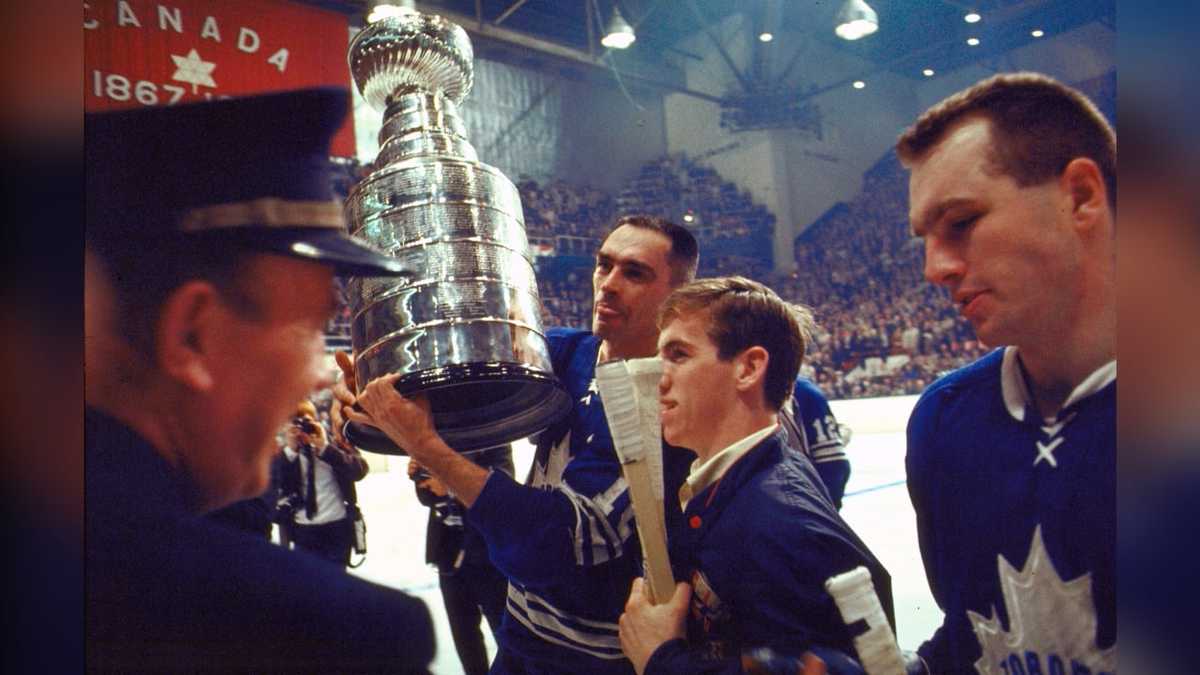
Facts anchor this narrative. The Toronto Maple Leafs beat the Montreal Canadiens 4 games to 2 in the Stanley Cup Final. The series concluded on May 2, 1967, when Toronto won Game 6 by a score of 3–1 at Maple Leaf Gardens. Following that win, NHL President Clarence Campbell presented the Cup to Maple Leafs captain George Armstrong—the formal closing gesture of the series and the era.
Why this remains Toronto’s last Cup
Authoritative historical records—NHL.com and Hockey-Reference among them—list the 1967 Cup as the most recent Stanley Cup won by the Toronto Maple Leafs. That simple statistic gives the 1967 victory a long shadow: it is not merely a past triumph, it is, by the record, the team’s current championship anchor point. The endurance of that fact shapes how fans and historians talk about both the franchise and its subsequent decades.
Rivalry, memory, and cultural weight
The 1967 final paired Toronto and Montreal—two franchises whose contests have carried outsized symbolic weight in Canadian hockey. The Maple Leafs’ win over the Canadiens is thus not only an outcome in a series; it is a cultural reference in both cities’ sporting memories. Retrospectives and league histories emphasize the match as a milestone: a championship that is repeatedly invoked because it closed one era and preceded a radical structural change in the league.
The expansion’s effect on how the Cup is read
The NHL expansion of June 1967, which doubled the size of the league, reframed how later Cups would be measured. Winning the 1967 Stanley Cup meant taking the last title in a compact, six-team league where the postseason and regular-season rivalries were intensely repeated. After expansion, the competitive map, travel, and playoff formats changed; that makes the 1967 title both chronologically last in one era and a comparative marker for everything that followed.
How the 1967 Cup shapes the franchise story today
Because the 1967 Stanley Cup remains Toronto’s most recent championship in the historical record, it functions as a persistent milestone in franchise storytelling. It anchors narratives about continuity and change: a captain accepting the Cup at Maple Leaf Gardens in 1967 stands as a fixed moment against which subsequent decades of the team are measured. That fixedness drives conversation about identity, expectation, and long-term memory for fans and commentators alike.
What the 1967 Stanley Cup reveals about the NHL
Beyond Toronto’s specific record, the 1967 Cup highlights a structural lesson: league formats and expansion reshape how championships are contextualized. The fact that the Maple Leafs were the last pre-expansion champions gives one single result greater historical resonance than it might otherwise hold. It shows how timing—winning immediately before a major institutional change—can amplify the meaning of a title.
Closing thoughts
The 1967 Stanley Cup is a compact set of verifiable facts: Toronto defeated Montreal 4–2 in the Final; Game 6 ended 3–1 on May 2, 1967 at Maple Leaf Gardens; George Armstrong received the Cup from NHL President Clarence Campbell. Those facts underpin a larger cultural and historical weight because the victory was the last of the Original Six era and remains, in the record, the Maple Leafs’ most recent Stanley Cup. That combination of precise event and institutional timing explains why the 1967 Cup still matters in hockey conversation.
Author: Cynthia D.