1997 Stanley Cup champions: How Detroit’s 1997 title reshaped a franchise…
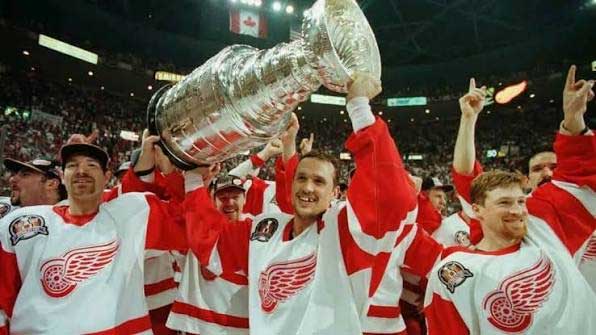
The phrase "1997 Stanley Cup champions" refers to a pivotal moment in modern NHL history: the Detroit Red Wings’ sweep of the Philadelphia Flyers, clinched at Joe Louis Arena on June 7, 1997. That victory ended a 42-year Stanley Cup drought and marked a clear identity shift for a franchise long chasing its next championship.
Editorial summary
The 1997 Stanley Cup champions were the Detroit Red Wings. Their 4–0 Final sweep of the Philadelphia Flyers, capped by a 2–1 Game 4 win, ended a 42-year drought and highlighted the crucial roles of coach Scotty Bowman, captain Steve Yzerman and Conn Smythe winner Mike Vernon.
What you will learn here
- Why the 1997 championship was a structural turning point for the Red Wings.
- The specific facts of the Final: opponent, series score, clinching date and location.
- Which people and outcomes from 1997 defined the franchise’s renewed identity.
WHERE THE FRANCHISE BEGINS (AND THE 42-YEAR GAP)
The verified anchor for the 1997 moment is the drought it ended: the Red Wings had not won the Stanley Cup since 1955, and the 1997 victory closed a 42-year gap. That long interval framed public perception of the franchise—Detroit was a club with deep history but a tangible absence of recent ultimate success. The 1997 Cup therefore functioned as a corrective milestone, not just another championship.
THE 1997 STANLEY CUP FINAL: FACTS THAT MATTER
Concrete facts define the Final’s place in history. The Detroit Red Wings defeated the Philadelphia Flyers in the 1997 Stanley Cup Final, sweeping the series 4–0. The clinching Game 4 took place at Joe Louis Arena in Detroit on June 7, 1997, and ended 2–1 in Detroit’s favour. Those results are the unambiguous, verifiable backbone of the “1997 Stanley Cup champions” claim.
PEOPLE WHO DEFINED THE 1997 CHAMPIONSHIP
The 1997 outcome is tightly associated with a small set of verified leaders. Scotty Bowman was the head coach when the Cup was presented; his stewardship is a documented part of the team’s structure. Steve Yzerman served as team captain at the time of the presentation, anchoring Detroit’s leadership on and off the ice. In the playoffs, goaltender Mike Vernon was awarded the Conn Smythe Trophy as playoff MVP—an explicit recognition of his impact across the run.
THE ERA THAT GAVE THE FRANCHISE REAL SHAPE
Winning the Stanley Cup in 1997 did more than add a trophy; it reframed a franchise narrative. Ending a 42-year drought reset expectations for Detroit’s competitiveness and validated organizational choices that produced a championship-calibre team. The sweep of the Final and the timing of the clinch at Joe Louis Arena created a clear, publicized turning point in how the club’s modern era was remembered.
RIVALRIES, FAN MEMORY, AND CULTURAL WEIGHT
While the verified record for 1997 records the opponent—Philadelphia Flyers—the sweep and the home-ice clinch amplified the moment for Detroit fans specifically. The stadium setting and the end of a long drought are concrete features that fuel fan memory and civic pride. Those elements turned a competitive achievement into a cultural marker for the franchise and its supporters.
WHAT THE 1997 HISTORY REVEALS ABOUT THE NHL
At a league level, the 1997 Red Wings underline how single championships can alter a franchise’s trajectory. The verified facts—sweep, clinch date and place, drought ended, Conn Smythe winner, coach and captain—show a compact example of how leadership, goaltending performance in the playoffs, and decisive series results combine to produce lasting identity change for an NHL club.
HOW THE TEAM IS VIEWED TODAY (AFTER 1997)
The 1997 Stanley Cup champions label remains a defining part of Detroit’s modern identity because it is tied to verifiable outcomes: the series sweep over Philadelphia, the clinch on June 7, 1997 at Joe Louis Arena, and the Conn Smythe recognition for Mike Vernon. Those fixed points are reference anchors fans and historians use when discussing the Red Wings’ late-20th-century revival.
WHY THE 1997 CHAMPIONSHIP STILL MATTERS
The importance of the 1997 Stanley Cup champions lies in its clear, documentable consequences: it ended a long championship drought, confirmed leadership roles for Scotty Bowman and Steve Yzerman, and produced a playoff MVP in Mike Vernon. Those verifiable facts make 1997 a hinge year for the franchise—one that reshaped expectations and solidified a renewed chapter in Detroit’s hockey story.
Author: William L.