Building the 1980 USA Hockey Team: Herb Brooks’ Tactical Rigour and Lasting…
The 1980 USA hockey team that stunned the world at Lake Placid did not arrive by accident. Coached by Herb Brooks, the squad combined an intense physical and mental preparation with a deliberate tactical synthesis that allowed amateur American players to beat professional-calibre Soviet opposition and then secure Olympic gold. This article examines how Brooks shaped that collective, what changed in American hockey because of the Miracle on Ice, and why the episode remains a defining chapter in U.S. hockey culture.
Herb Brooks led a demanding pre-Olympic program and employed a hybrid system mixing North American physicality with European-style skating and puck possession. The team defeated the Soviet Union 4–3 on February 22, 1980 and clinched gold by beating Finland 4–2 on February 24 in the Lake Placid medal round.
THE PERIOD OR TURNING POINT THAT DEFINES THE TOPIC
The pivotal moment is clear: during the medal round at the 1980 Winter Olympics in Lake Placid, the United States beat the Soviet Union 4–3 on February 22, 1980—an upset that entered history as the "Miracle on Ice." Two days later the U.S. finished the medal round by defeating Finland 4–2 on February 24, 1980, which secured the gold medal under the tournament's round-robin format. That sequence—an improbable victory over the Soviet powerhouse followed by the gold-clinching win—represents a turning point because it demonstrated that a deliberately built amateur collective could outperform established international powers in Olympic competition.
HOW HERB BROOKS CONSTRUCTED THE TEAM: TACTICAL AND MENTAL METHODS
Herb Brooks’ approach combined three concrete pillars: heavy physical conditioning, psychological toughness, and a hybrid tactical system. Contemporary and retrospective accounts document a demanding pre-Olympic schedule and conditioning emphasis that prepared the players for a high-tempo game plan. Brooks then layered tactics that mixed North American checking and physical play with European-style emphasis on skating, puck possession, and quick transitions.
Rather than relying on a single stylistic tradition, the hybrid system aimed to neutralize Soviet advantages in structured puck movement while exploiting moments for aggressive forechecking and direct transition offense. The tactical synthesis required players who could skate hard, recover quickly, and execute disciplined team concepts—hence the rigorous conditioning and repetitive, system-focused practices documented in modern retrospectives.
HOW THE GAME LOOKED AND FELT AT LAKE PLACID
The 1980 medal round saw a contrast in styles: the Soviets were known for precise, possession-based hockey, while the U.S. roster featured players conditioned to play a faster, more physical North American game when possession turned over. In that environment, the U.S. team’s conditioning and tactical discipline produced bursts of speed and sustained pressure at critical moments—notably in the February 22 game against the USSR—allowing them to convert opportunities and withstand pressure when outshot or pinned in their zone.
These qualities were not mere slogans. The documented preparation—long practices, a heavy schedule, and conditioning work—translated into on-ice behaviors: consistent forechecking, quick backchecking, and the stamina to execute shifts that disrupted opponents’ rhythm. Those behaviors were decisive in tight medal-round games where single momentum swings determined outcomes.
RULES, TOURNAMENT STRUCTURE, AND WHY FORMAT Mattered
The Olympic tournament structure in 1980 used a medal-round round-robin, where results and goal differentials mattered across several games rather than a single elimination bracket. This format meant that the U.S. victory over the Soviet Union was a critical result within a mini-league: it had immediate tournament impact and set the stage for the decisive meeting with Finland two days later. The round-robin logic rewarded consistent team performance and made the U.S. ascent to first place a product of tactical planning across multiple opponents rather than a single lucky win.
WHAT THE ERA LEFT BEHIND: INSTITUTIONAL AND CULTURAL CONSEQUENCES
The Miracle on Ice had measurable cultural and institutional effects on American hockey. Official bodies and national discourse repeatedly credit the 1980 team's success with increasing American interest in the sport and influencing development pathways. USA Hockey, the U.S. Congress, and hockey institutions have recognized the team as a pivotal moment; scholarly analyses have explored how the victory was adapted into national narratives and how it stimulated growth in youth participation and investment in coaching and development structures.
Institutionally, the event became a reference point for how intensive preparation, clear tactical identity, and a focus on player development could lift U.S. competitiveness on the international stage. The team's commemoration by halls of fame and Olympic institutions underscores its long-term symbolic role in U.S. hockey culture.
THE VISUAL MEMORY AND ITS MEANING
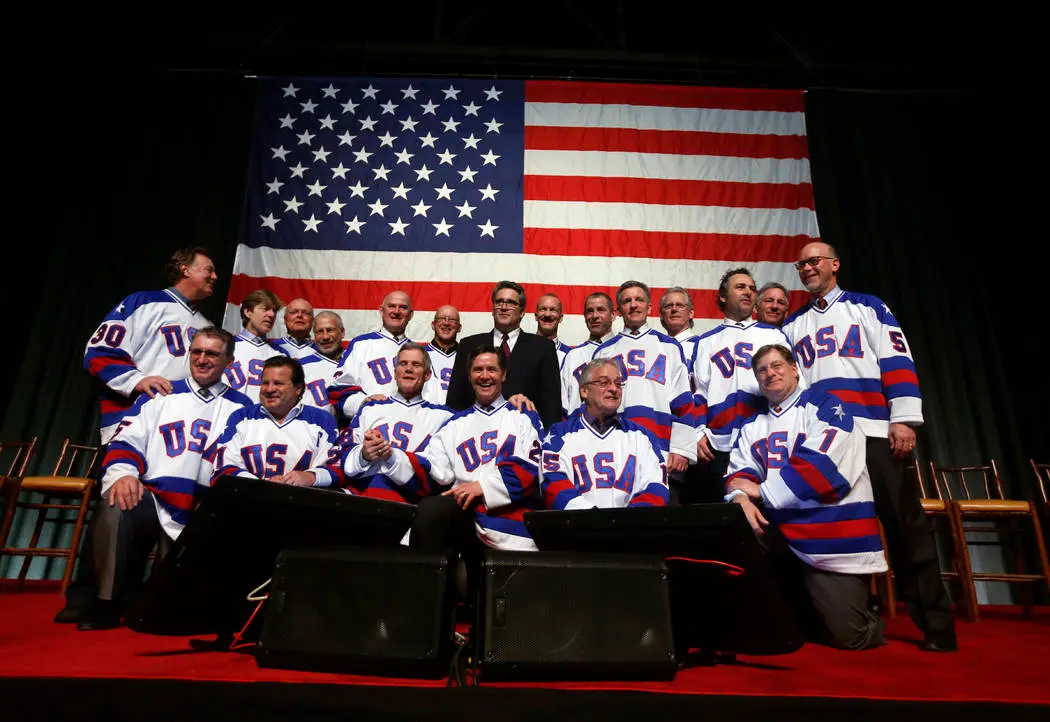
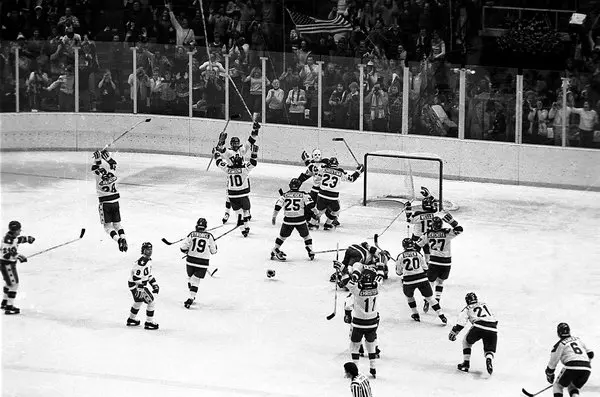
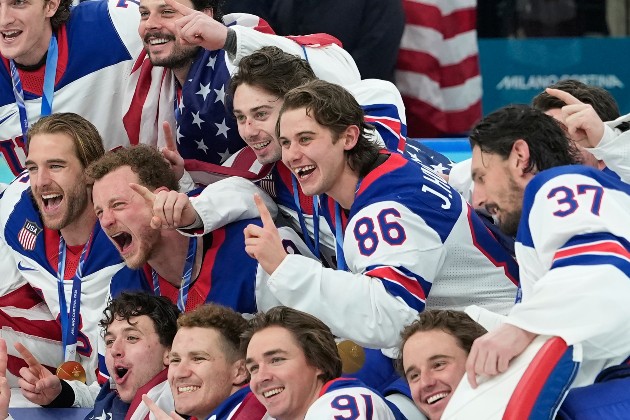
Images from Lake Placid—team celebrations, Jim Craig in goal during the medal round games, and the broader iconography of the Miracle on Ice—helped crystallize the story in the public imagination. That visual memory reinforced the narrative that a composed, well-drilled collective could overcome a seemingly superior system. These images are also institutional: museums, Olympic archives, and retrospective publications continue to curate and present the 1980 team as both a sports achievement and a cultural artifact.
CLOSING INTERPRETATION
The construction of the 1980 USA hockey team under Herb Brooks combined demanding conditioning, psychological preparation, and a pragmatic hybrid tactical system to create a collective capable of overturning expectations. The result at Lake Placid—a 4–3 win over the Soviet Union on February 22, 1980 and a 4–2 victory over Finland on February 24, 1980 to clinch gold—was not only a single-game miracle but the outcome of deliberate institutional choices. The cultural and institutional consequences—measurable increases in interest, formal recognition, and a reshaping of development priorities—mean that the episode still informs how American hockey thinks about preparation, identity, and international competition today.
Author: Cynthia D.