Hockey Blue Line Explained: Zones, Offside, Point Shots and Team Structure
The blue line is one of the simplest visual features on the ice and one of the most important for how hockey is played. Two 30 cm wide blue lines divide the rink into three zones—attacking (offensive), neutral (centre), and defending (defensive)—and the blue line itself controls when a puck and players are considered inside or outside the offensive zone. Understanding the blue line clarifies offside decisions, why teams set up at the point, and how controlled zone entries change the quality of scoring chances.
Quick summary: Two blue lines separate the ice into three zones. The puck must completely cross the blue line to change zones. Offside is called when an attacking player's skates cross the opponent's blue line before the puck. Defensemen often play 'the point' on or near the blue line to keep possession and take long shots.
Quick access: Definition • Rules & Offside • Tactics & Zone Entries
CLEAR DEFINITION
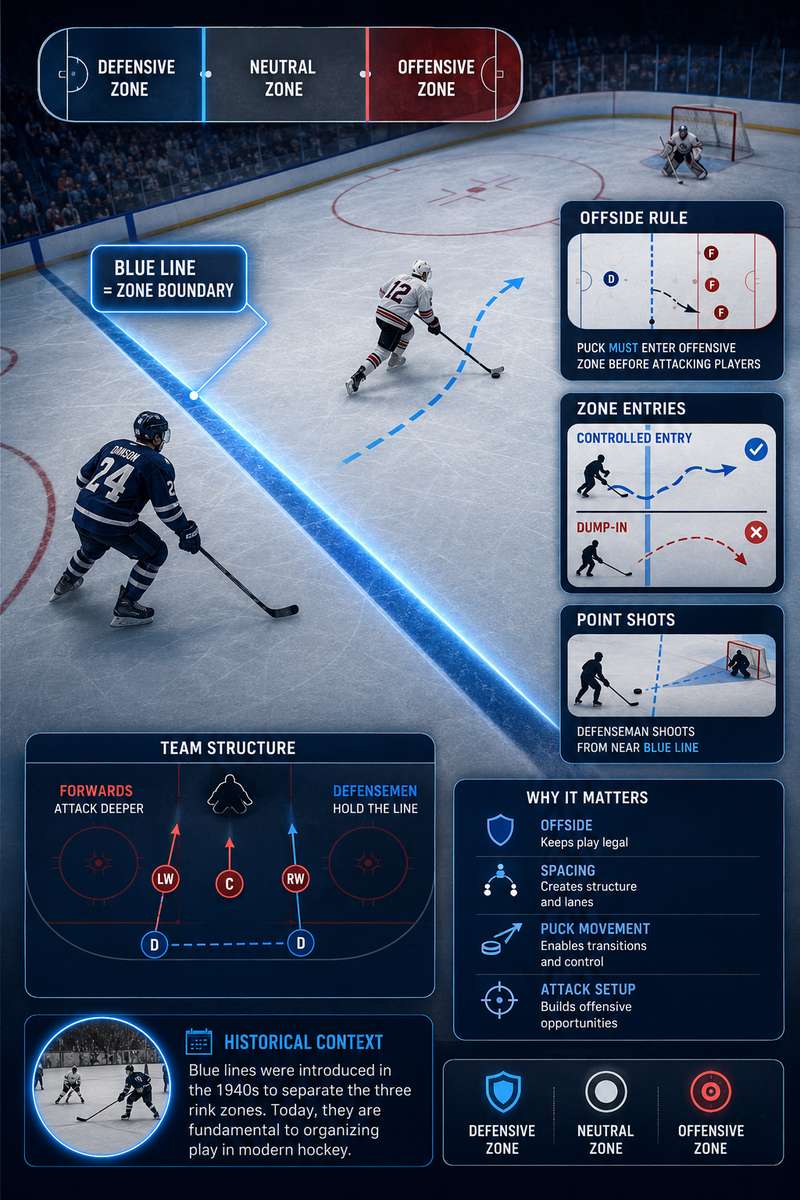
There are two blue lines on a standard rink, each 30 cm wide, that divide the ice into three zones: the attacking (offensive) zone, the neutral (centre) zone, and the defending (defensive) zone. For any given team, the defending blue line is closer to that team’s net; the attacking blue line is the one farther from their net. The blue line itself is the boundary used to determine when the puck and players enter or leave the offensive zone.
HOW IT WORKS
The puck is considered to enter or leave a zone only when it completely crosses the blue line. That same plane is used to judge player location: an attacking player must not have their skates fully across the opponent’s blue line into the offensive zone before the puck. Officials use the blue line as the reference for stoppages and faceoffs when offside is called.
RULES AND OFFICIATING (OFFSIDE)
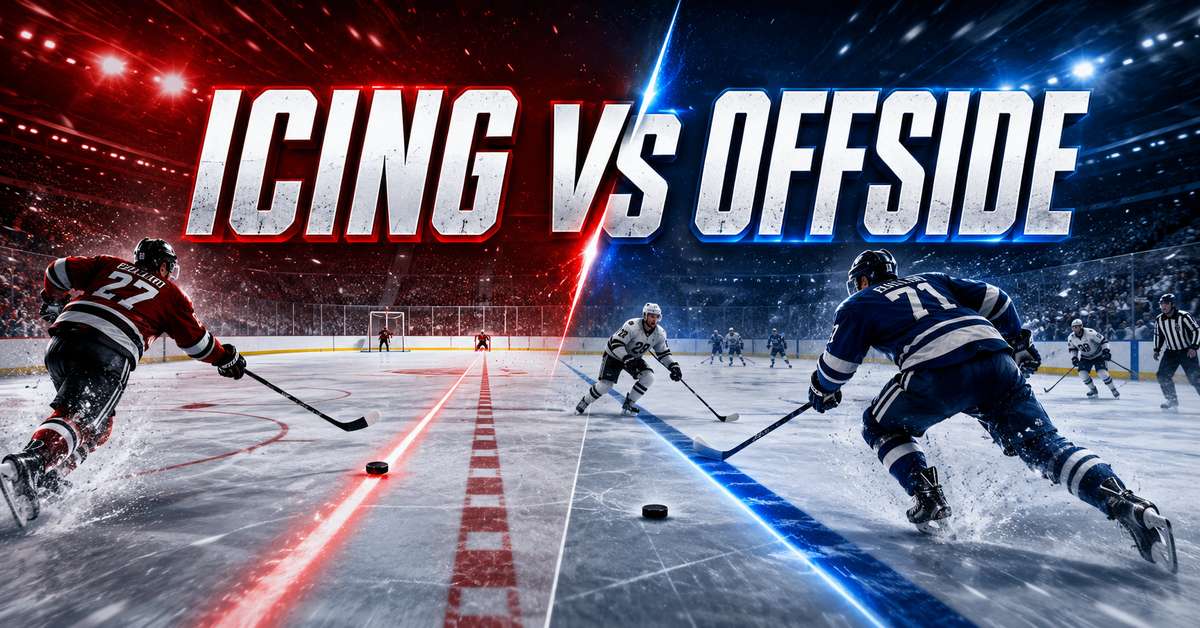
Offside occurs when an attacking player's skates are entirely across the opponent’s blue line into the offensive zone before the puck crosses that line. When linesmen determine offside, play is stopped and a faceoff follows. Official rulebooks such as those used by IIHF and the NHL reference the blue line explicitly when describing offside procedures.
POINT SHOTS AND THE POINT POSITION
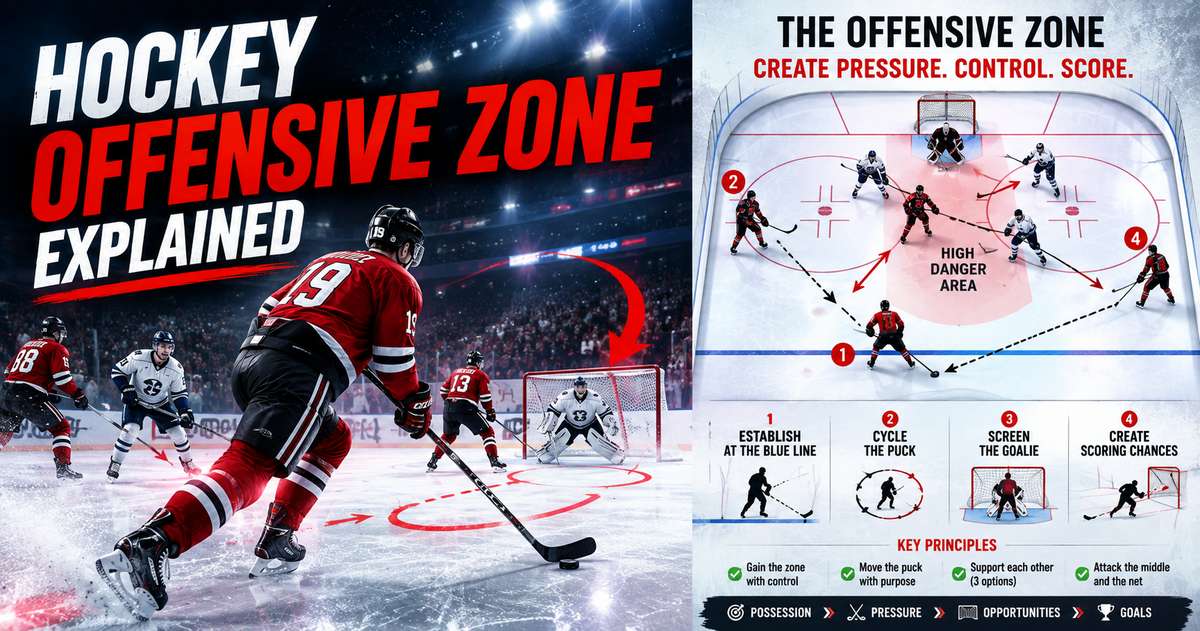
Defensemen commonly position at "the point"—near or on the blue line inside the offensive zone—to keep the puck in the zone, move the puck laterally, and take long shots from the blue line. Point shots are intended to produce rebounds, deflections, or screening opportunities in front of the net and are a staple of attack when a team can hold the blue line.
TACTICS, ZONE ENTRIES AND TEAM STRUCTURE
Controlled zone entries—carrying or passing the puck into the offensive zone while maintaining possession as the puck crosses the blue line—generally lead to higher-quality chances than dump-ins. How a team manages the blue line during entries affects chance quality and the opposing forecheck response. Teams will situationally "hold the blue line": defensemen or forwards will remain on or near the line to prevent clears and sustain offensive pressure.
RINK POSITION AND GAME FLOW
The blue line is a visual and tactical anchor for both attack and defense. Offensively it marks where zone structure shifts from neutral-zone play to sustained pressure; defensively it is a reference for gap control and neutral-zone traps. Coaches design breakouts and forechecks around who is responsible for crossing or holding the blue line during transitions.
COMMON MISUNDERSTANDINGS
Beginners often think a player is offside the moment any skate touches the blue paint; in fact, offside requires the attacking player to be completely across the plane of the blue line before the puck. Another frequent confusion is equating point shots with low-quality attempts; well-placed point shots that create screens or deflections are an effective and intentional tactic.
FAN VIEWING GUIDE
When watching a game, look for the blue line during entries: controlled entries with support players near the line often mean sustained possession and better scoring chances. Notice which players "hold the blue line"—they indicate a team’s strategy to keep the puck in and build pressure. On replays, the puck’s full crossing of the blue line is the detail officials evaluate for an offside call.
HOCKEY ART AND VISUAL LANGUAGE
The blue line is also a strong visual motif in hockey posters and vintage wall art: it divides the composition like it divides the ice, offering a graphic band that suggests transition, tension, and the edge of attack. Classic imagery often places a silhouetted defenseman at the point or shows the blue line as the threshold where skaters surge into the offensive zone—visual shorthand for momentum about to break.
CLOSING INTERPRETATION
The blue line is both a literal boundary and a tactical fulcrum: it defines zones, enforces offside rules, shapes where players stand and skate, and influences how teams generate chances from the point or during entries. Understanding the blue line helps fans read plays, appreciate coaching choices, and notice the visual cues that designers and poster artists use to capture classic moments on ice.
Author: Cynthia D.