Hockey Offensive Zone Explained: Blue Line, Cycling, Screening and Puck Movement
The offensive zone is the end of the rink your team is trying to score in, the area between the opponent's goal line and opponent's blue line. Understanding how the blue line, zone entries, cycling, screening and deliberate puck movement work together is essential for reading possession, recognizing scoring chances, and appreciating the visual drama often captured in vintage hockey posters and rink art.
Quick summary: The offensive zone lies from the opponent's goal line to their blue line. Offside is judged by skates and puck at the blue line. Teams sustain pressure there through clean zone entries, possession tactics like cycling, net-front screening, point support at the blue line, and quick puck movement that forces defensive shifts and opens shooting lanes.
Quick access: Definition • Why the blue line matters • Cycling & puck movement
CLEAR DEFINITION
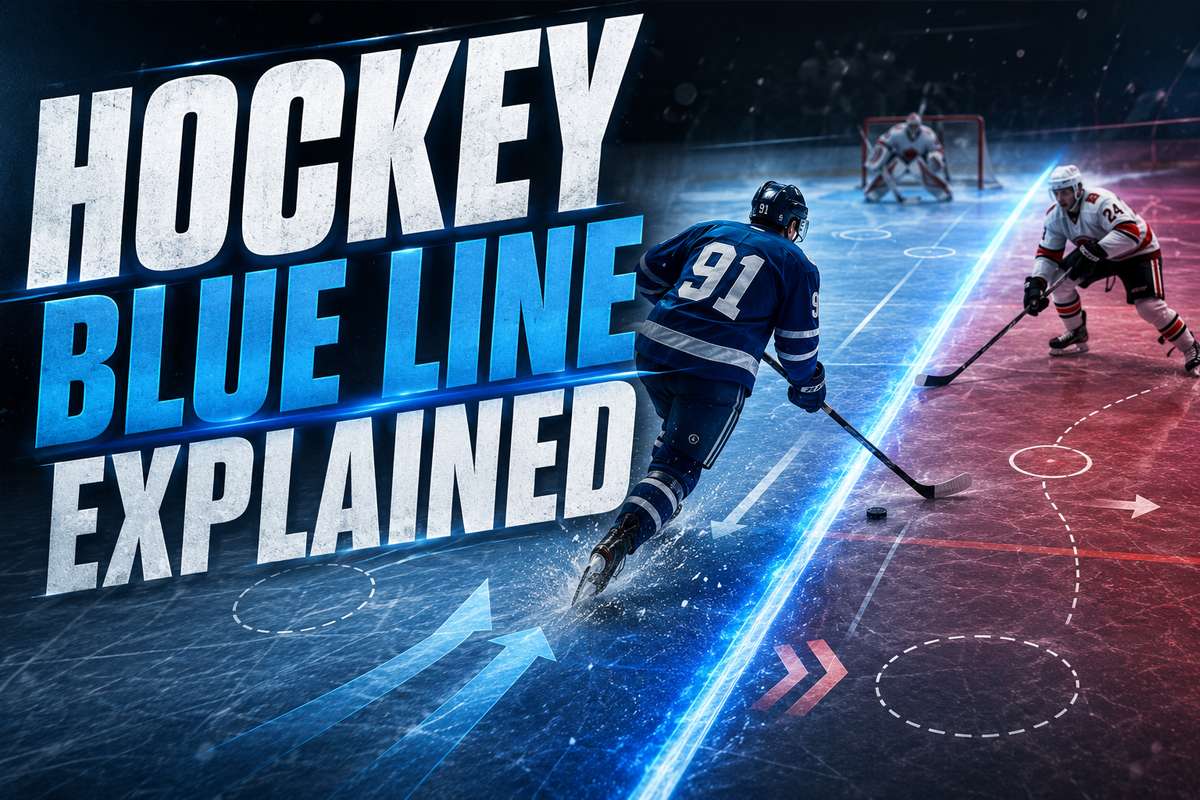
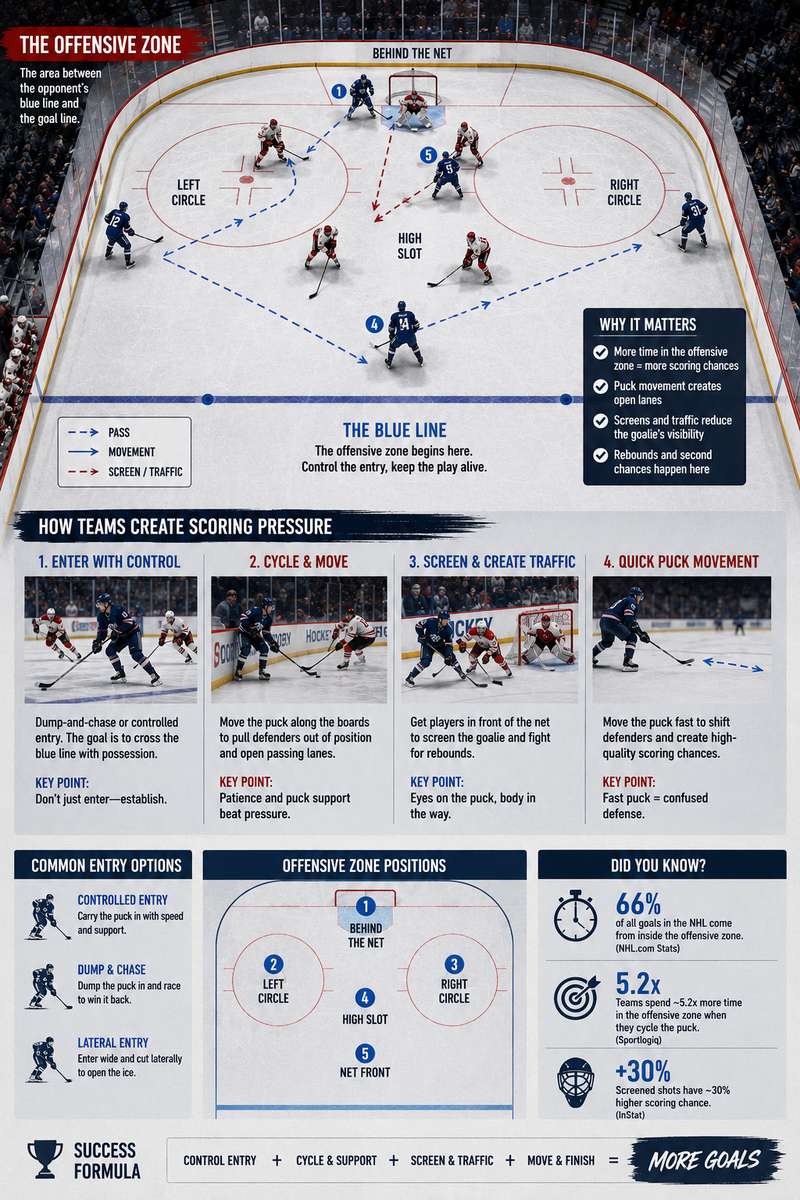
In rink terms, the offensive zone (also called the attacking zone) is the area between your opponent's goal line and their blue line. For determining whether play is in the offensive zone or not, the blue line is considered part of whichever zone the puck is in. This geographic frame is how coaches, players and officials talk about entries, sustaining pressure, and where scoring chances are most likely to occur.
WHY THE BLUE LINE MATTERS
The blue line is the entry plane into the offensive zone and the anchor for offside rules: an attacking player is offside if both skates completely cross the blue line into the offensive zone before the puck completely crosses. Tactically, the blue line defines on-ice space—defensemen often station at the point (on or near the blue line) to keep pucks in the zone, to reset the attack, and to unleash shots when lanes open.
HOW IT WORKS — CYCLING, SCREENING AND PUCK MOVEMENT
Cycling is an offensive-zone tactic where players drive the puck along the boards and behind the net to change the point of attack. Effective cycles shift defenders, open passing lanes, and create opportunities closer to the net or for the point to step up. Cycling is taught in coaching resources as a core way to maintain possession and manufacture high-quality chances.
Screening is deliberately creating net-front presence so the goaltender's sightline is blocked, making shots harder to see and increasing the chance of rebounds or deflections. A good screen combined with controlled puck movement—low-to-high plays (moving the puck from behind the net or the corners up to the point) and quick cross-ice passes—creates seams in defensive coverage and clearer shooting lanes.
SUSTAINED OFFENSIVE PRESSURE
Sustained pressure in the offensive zone comes from several connected elements: clean zone entries, possession after entry (holding the puck in with support along the boards or at the point), active net-front work to screen and collect rebounds, and point support that keeps the puck from exiting the zone. When these elements align, defenses are forced to make difficult choices and odd-man opportunities or quality shot attempts are created.
RINK POSITION AND GAME FLOW
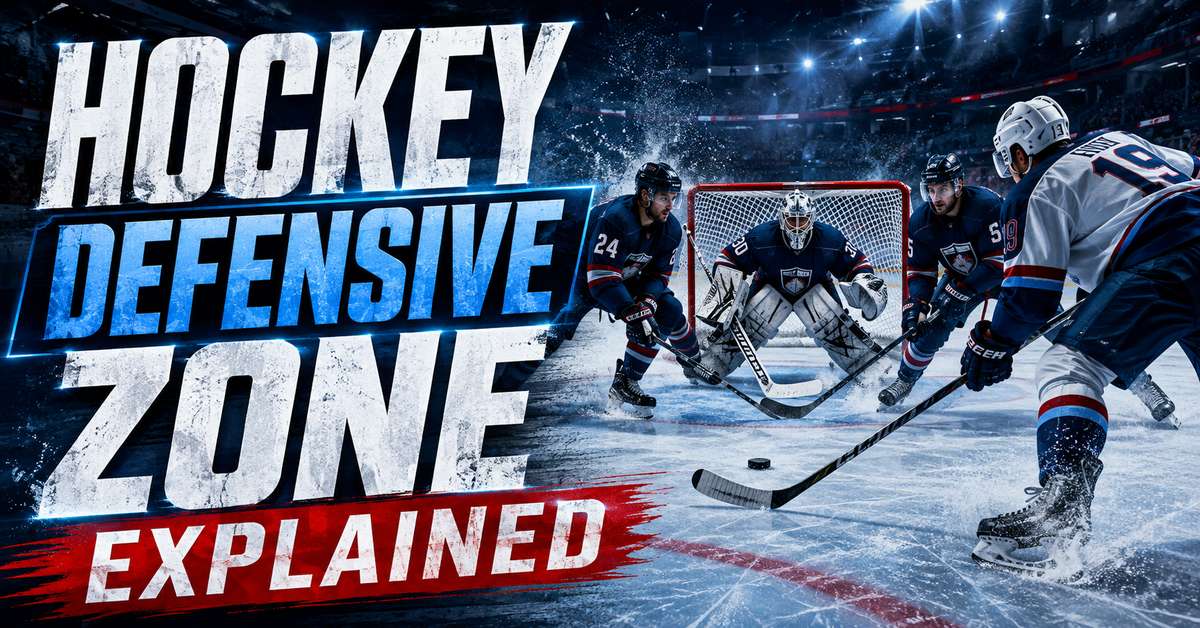
From a rink-layout view, the most dangerous areas are near the crease and the high-danger slot between the faceoff circles. Teams use the boards and behind-the-net space to cycle and relocate the puck; defensemen on the point patrol the blue line to maintain possession. Proper positioning at each of these reference points makes it easier for teams to sustain an attack and harder for opponents to clear the puck cleanly.
COACHING AND PRACTICE CONTEXT
Coaching materials and drillbooks explicitly teach zone-entry techniques, cycles, low-to-high movement, and net-front strategies as core offensive skills. Drills emphasize timing, support angles, and quick passing so players can execute the small, repeated actions that turn a simple entry into sustained pressure and higher-quality shots.
FAN VIEWING GUIDE
When watching a game, look for who carries the puck over the blue line and whether teammates arrive onside to support. Notice how quickly a team moves the puck from behind the net to the point or across the slot—fast low-to-high movement often precedes a dangerous shot. Watch for a player screening the goalie or digging for rebounds in front; these simple visual cues indicate a team is generating real scoring pressure, not just firing isolated shots from distance.
HOCKEY ART AND VISUAL LANGUAGE
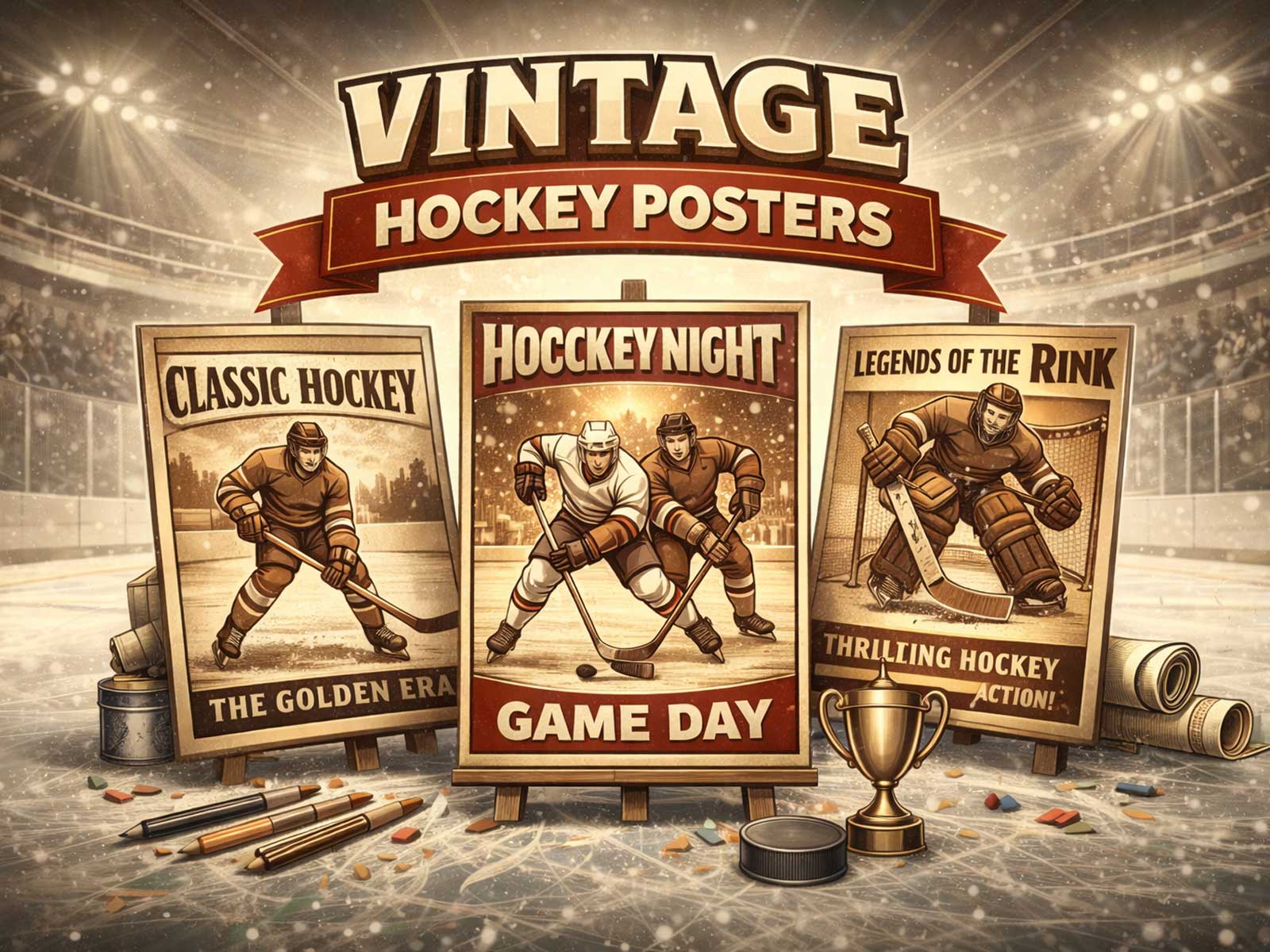
The offensive zone's drama—players battling in the corners, a net-front screen, a point shot flashing through traffic—translates naturally to hockey posters and vintage wall art. Artists often emphasize silhouettes at the blue line, the contrast of the crease and goal, and the physical, close-quarters action behind the net to evoke pressure and team identity. That visual shorthand helps fans recall not only tactics but the sensory memory of games: the scrape of skates, the thud of boards, and the sudden eruption after a goal.
CLOSING INTERPRETATION
Understanding the offensive zone—its boundaries, the role of the blue line, and the tactics of cycling, screening and purposeful puck movement—makes it easier to read a game. These elements turn possession into pressure and pressure into chances. Whether you watch for the technical detail, the tactical chess match, or the classic imagery that inspires posters and prints, the offensive zone is where strategy meets spectacle in hockey.
Author: Eric M.