Hockey Offside Explained: Blue Line Timing, Tag-Up, and Why It Shapes Rushes
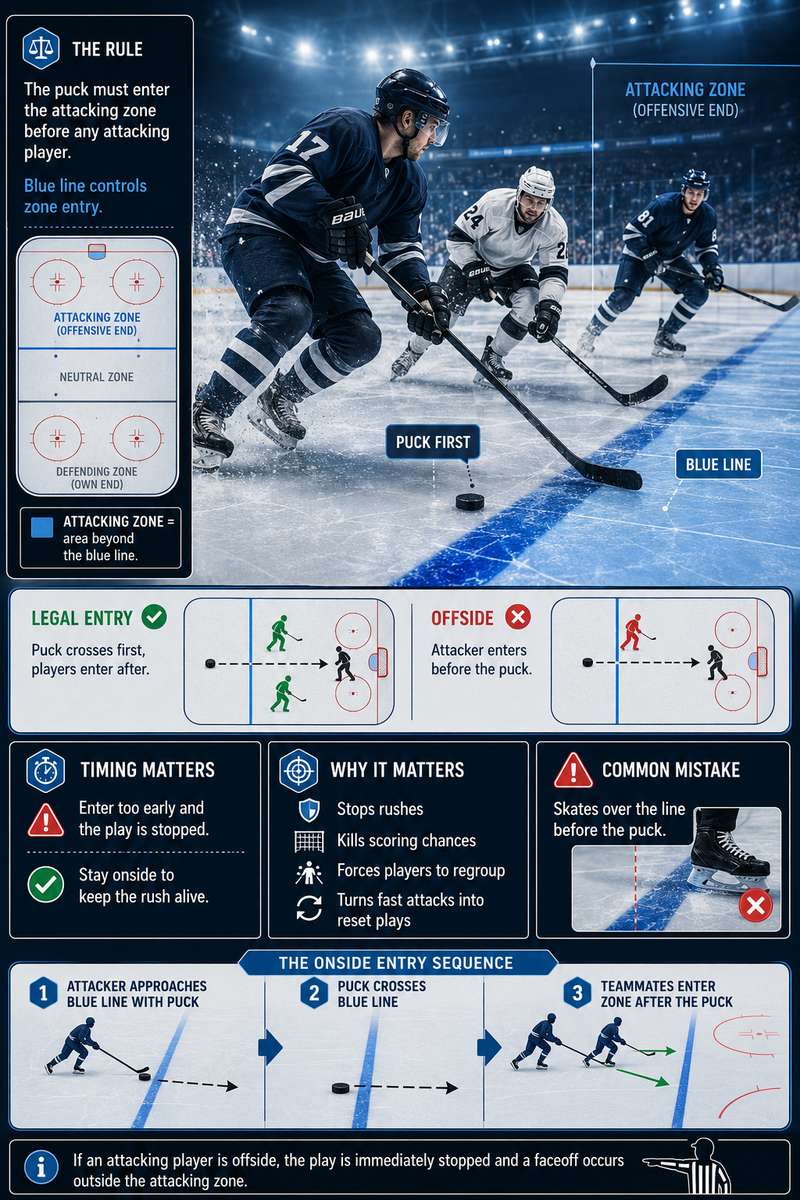
Offside is one of hockey's most-visible rules because it directly controls who can attack the net and when. Put simply: the blue line defines the offensive zone boundary, and whether an attacking skate crosses that line before the puck determines offside. The timing of the call—immediate or delayed—and the tag-up procedure change whether a rush becomes a scoring chance or a stoppage.
Quick summary: An attacker is offside if both skates fully cross the attacking blue line into the offensive zone before the puck. Linesmen monitor this; delayed offside lets play continue if attackers tag up (exit) to nullify the offside. If the offside is not nullified and the attacking team touches the puck, play stops and a neutral-zone faceoff follows.
Quick access: Definition • How it works • Timing & tag-up
CLEAR DEFINITION
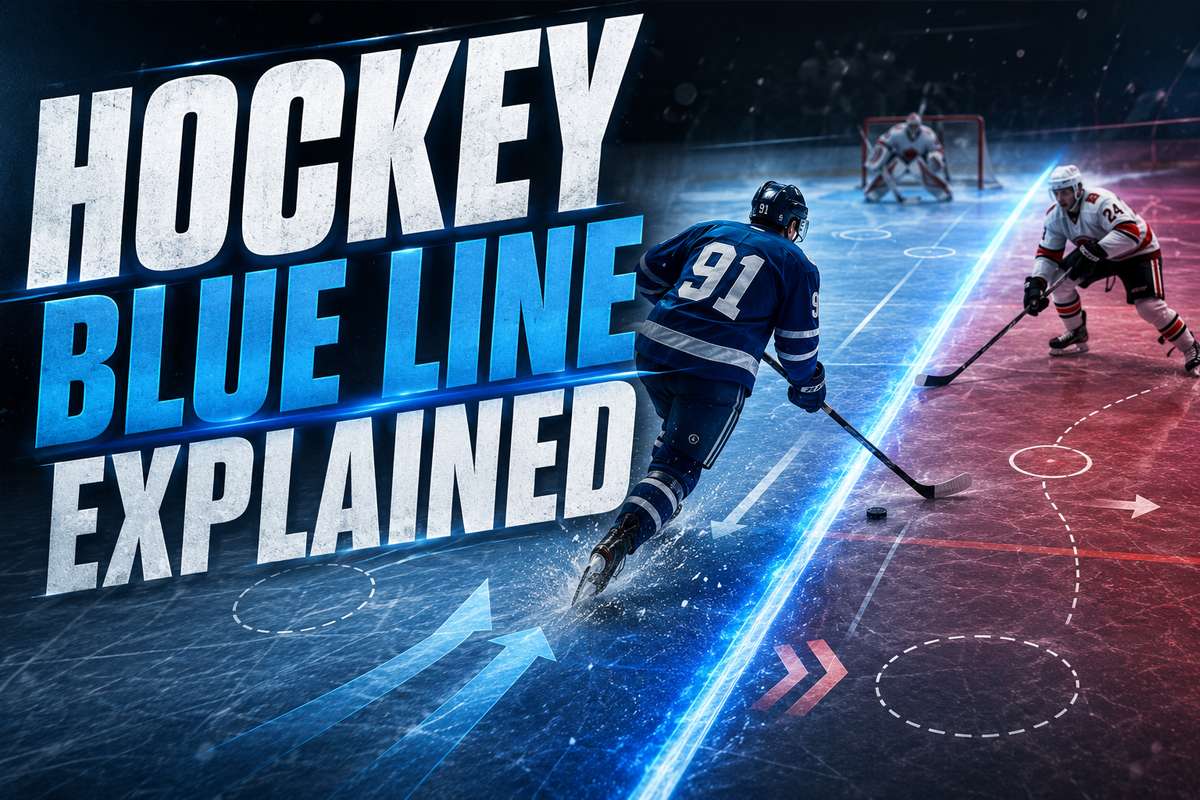
Offside in ice hockey is decided at the attacking blue line. An attacking player is offside if both of that player's skates completely cross the attacking blue line into the offensive zone before the puck does. This blue-line boundary, not an imaginary line across the ice, marks when an attacker has legally entered the zone with the puck.
HOW IT WORKS
Linesmen watch the blue line as the puck and players move toward the offensive zone. The crucial moment is when the puck crosses the plane of the blue line: if any attacker already has both skates fully over that plane, the player is offside. The rule applies in NHL-style hockey and in IIHF play, and the basic blue-line principle is common to many leagues, though some procedural details differ.
TIMING: IMMEDIATE VS DELAYED (TAG-UP)
When an attacker precedes the puck, officials may signal a delayed offside by raising an arm. Delayed offside allows play to continue while the attacking players "tag up"—that is, exit the offensive zone (get their skates back on or behind the blue line) so the offside is nullified. If attackers successfully tag up, the attacking team can maintain pressure and the rush is preserved. If the attacking team touches the puck while an offside stands, play is stopped immediately.
RULES AND OFFICIATING
Linesmen are primarily responsible for calling blue-line offsides during live play; referees may intervene for obvious missed calls in some systems. When an offside is not nullified and the attacking team touches the puck, play is stopped and a faceoff is conducted in the neutral zone nearest the blue line where the infraction occurred. In leagues with video review, replay can be used after a goal to determine whether a skate was on or over the blue line at the crucial moment.
TACTICS AND GAME IMPACT
Offside directly shapes attacking structure. An immediate offside kills a developing rush before teammates can set up around the net. By contrast, a delayed offside with successful tag-up lets attackers regroup at the blue line and re-enter cleanly with the puck, preserving possession and scoring chances. Teams practice timing and puck placement at the blue line—clearing passes, control along the boards, and entries onside versus risky stretch passes—because the difference between onside and offside often determines whether a sequence ends in a rebound or a faceoff.
RINK POSITION AND PLAYER ROLES
The blue line itself is a tactical landmark. Defensemen use it to gap up and force attackers to carry the puck through the neutral zone; wingers and centers time their skates and puck touches to avoid leading the puck over the line. During breakouts and line changes, players must be mindful of when their skates cross the line—timing here affects whether a quick counterattack becomes a legal entry or an offside stoppage.
VIDEO REVIEW AND CLOSE CALLS
Close offside-goal calls can be reviewed with replay. Video evidence focuses on whether a skate was on or over the blue line at the instant the puck crossed that plane. Because a skate must be completely across the line to be offside, replay decisions hinge on tight visual angles and frame-by-frame timing, which is why some offside reviews remain controversial despite inspection by review officials.
COMMON MISUNDERSTANDINGS
Beginners often think any part of a skate over the blue line is offside; the rule requires both skates completely across the line. Another confusion is believing a delayed offside is a free pass—attackers must tag up correctly, or any touch of the puck will immediately stop play if offside still applies. Finally, people sometimes blame referees for all offside calls; linesmen are the officials chiefly responsible for monitoring the blue line during live play.
HOCKEY ART AND VISUAL LANGUAGE
The blue line’s graphic simplicity—a bold stripe across the ice—translates well into vintage hockey posters and wall art. Classic prints often show rushes frozen at the blue line, silhouetted skaters timing a breakout or a winger stretching for a pass. That visual moment—the split second before the puck crosses the blue line—captures the tension between speed and legal space, making offside both a rules concept and a powerful image in hockey decor and team identity.
CLOSING INTERPRETATION
Understanding offside explained through the blue line clarifies why timing and positioning matter so much in hockey. The rule enforces order between speed and space: a precisely-timed onside entry creates sustained pressure and scoring chances, while an untimely overshoot ends the play. For fans, knowing when and why offsides are called improves viewing of rushes, replays, and the small tactical battles at the blue line—moments that often define a game and also make great subjects for hockey posters and classic rink imagery.
Author: William L.