Ice Hockey Rules Explained: A Beginner’s Guide to Periods, Offsides, Icing and…
Ice hockey moves quickly on a compact sheet of ice, but its basic rules are straightforward once you know what to watch for. This guide explains the core rules—periods, goals, offsides, icing, penalties, faceoffs and line changes—and the reasons the game feels so fast. It’s written for newcomers, fans who want precise rule context, and anyone who appreciates hockey’s visual culture and vintage poster imagery.
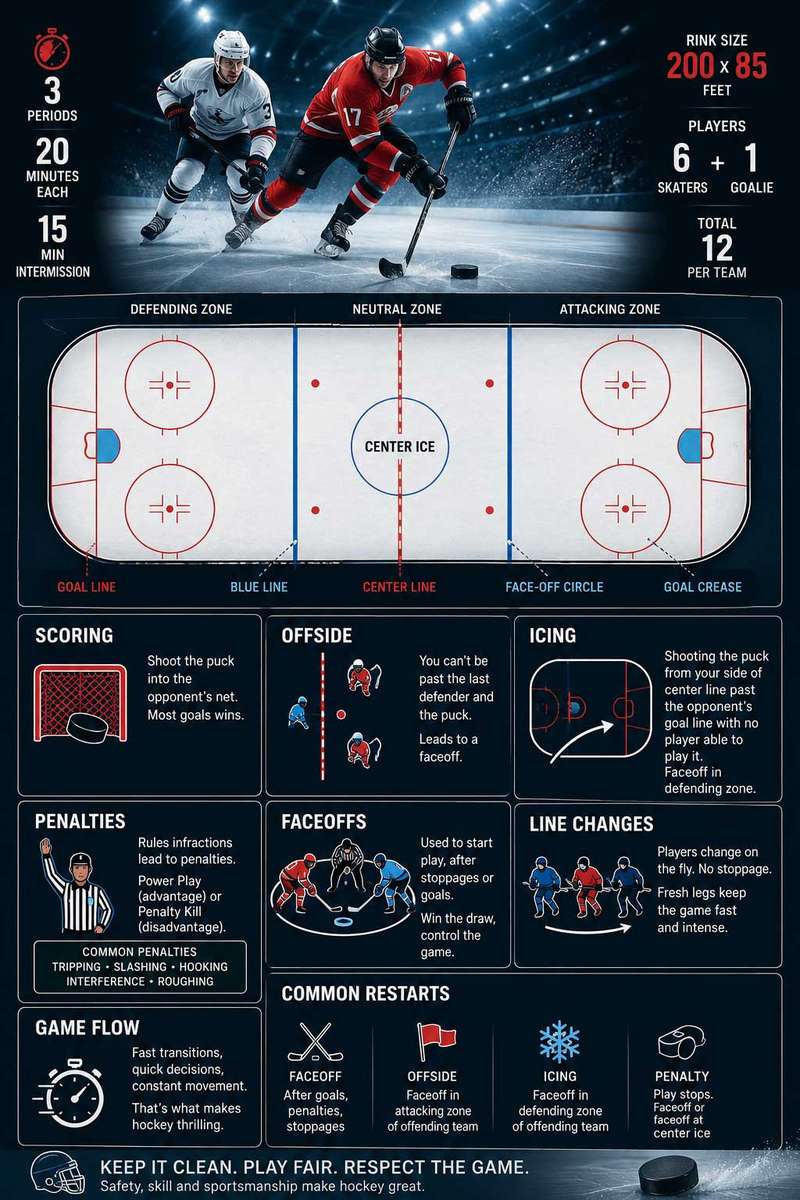
Quick summary: A standard professional game is three 20-minute periods. Goals count when the puck fully crosses the goal line. Offsides and icing stop play and restart with faceoffs. Penalties cost time in the penalty box and create power plays. Teams make frequent line changes; those short shifts and tight rink dimensions are part of why hockey feels so fast.
Quick access: Periods and clock · Offsides · Icing
Periods and clock
In NHL-style professional hockey a game is played in three periods of 20 minutes each, for 60 minutes of official playing time. The game clock stops at whistles, so real elapsed time is longer than 60 minutes. Periods begin and end with faceoffs and the careful management of time affects tactics—teams tighten defense late in a period or pull the goalie in certain situations depending on the score and time remaining.
Goals and video review
A goal is scored when the puck completely crosses the goal line between the goal posts and under the crossbar. Leagues use video-review systems to confirm goals when necessary; reviews check whether the puck crossed the line, whether an attacking player interfered with the goalkeeper, or whether the puck was kicked or batted illegally, depending on the rulebook in force.
Offsides
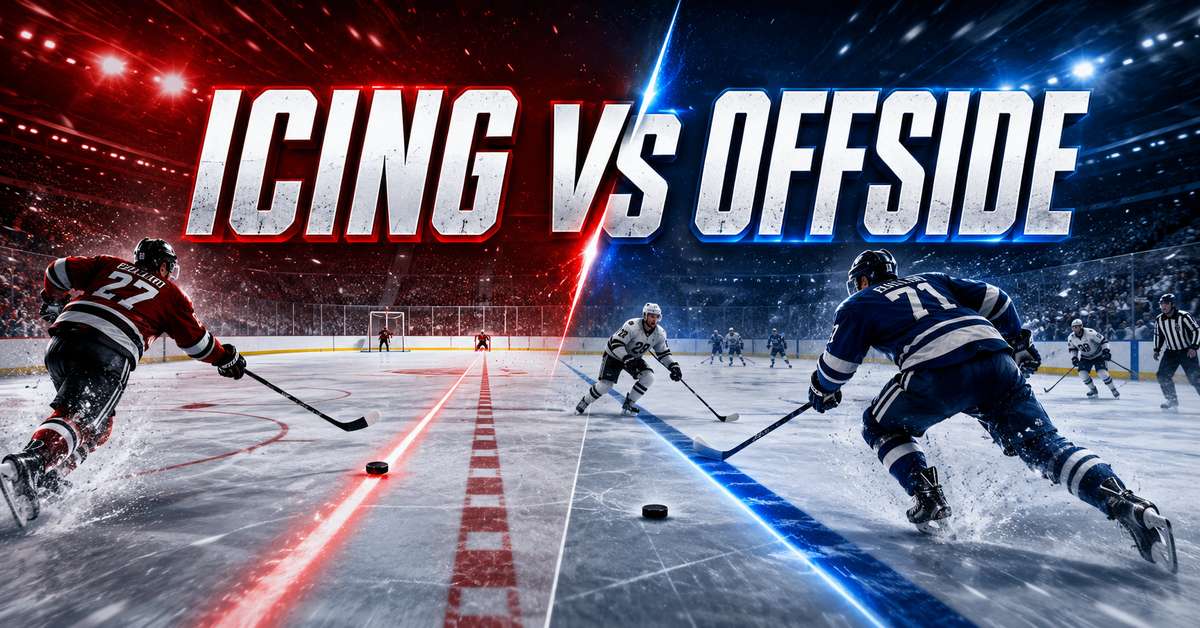
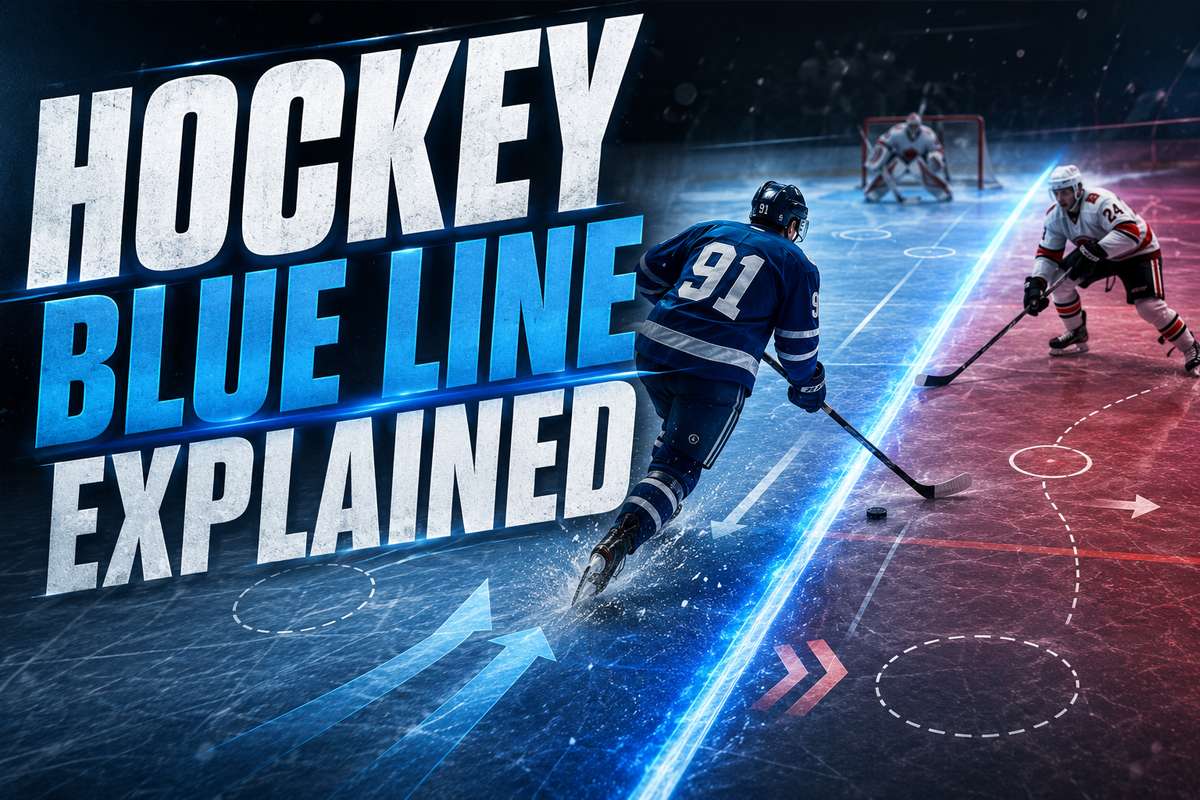
Offsides happens when an attacking player enters the offensive zone (crosses the blue line) before the puck does. The standard outcome is a stoppage of play and a faceoff outside the offensive zone. The basic offside concept is shared across major rule sets—NHL, IIHF and others—though some enforcement details can vary. Offsides matters tactically because teams use timing and quick passes at the blue line to create legal entries and maintain attacking pressure.
Icing
Icing occurs when a player shoots the puck from behind the center red line past the opposing team’s goal line without it being touched. That play is stopped and play restarts with a faceoff, subject to the league’s icing rules. Many leagues, including the NHL, use hybrid icing: officials judge which player would reach the puck first to determine whether to blow the whistle. After icing the team that committed the infraction normally cannot make a line change, with exceptions such as injuries or when that team is shorthanded.
Penalties and power plays
Rule infractions send players to the penalty box for specified time periods. Common categories include minor, double-minor, major, misconduct and match penalties; a typical minor penalty is two minutes and creates a power play for the non-penalized team. If the opposing team scores during a standard minor penalty, the penalized player may return to the ice for many minor penalties. Penalties shape momentum: a successful power play can swing the scoreboard and force defensive tactical changes like tighter zone coverage.
Faceoffs and restarts
Faceoffs restart play after stoppages—start of periods, after goals, offsides, icing, penalties, and other whistles. The faceoff location depends on the reason for the stoppage; officials place the puck on the dot or spot that best reflects where the play stopped or what rule caused the whistle. Centers typically take the faceoff, and winning draws can yield immediate control and scoring chances.
Line changes and shifts
Teams substitute players frequently, both during stoppages and on the fly. Short shifts keep players fresh and allow coaches to stack favorable matchups. Rules limit certain changes—after an icing the offending team normally cannot change players except for specific exceptions—so coaches and players must time changes carefully. Line-change strategy influences forechecking, defensive coverage and special-teams deployment.
Why hockey can feel so fast
Several factors combine to make hockey appear faster than many other team sports. Short shift lengths and frequent line changes keep players energetic and allow for high-intensity bursts. The rink’s compact dimensions and narrow neutral zone turn turnovers into rapid end-to-end transitions. Skilled skating, edgework, quick passing and purposeful puck movement create continuous flow; because play stops less often for long pauses, momentum swings and quick counters feel immediate. Understanding those mechanics helps viewers read where pressure and danger will appear next on the ice.
Hockey art and visual language
The rules and flow of hockey also shape its visual culture. Vintage hockey posters and wall art often emphasize motion—skaters leaning into edges, a silhouette crossing the blue line, or a goalie crouched in the crease—because those images capture the defining tensions of the game: speed, space and the battle for possession. Poster artists use rink lines, goal frames and dramatic angles to hint at offsides threats, icing clears, forecheck pressure and the urgency of a short shift.
Closing interpretation
Learning the basic rules—periods, how goals are scored and reviewed, offsides and icing, penalties, faceoffs and line changes—turns the blur of the ice into legible patterns. Those patterns explain why coaches manage shifts the way they do, why a whistle often leads to a defensive reset, and why sudden transitions create scoring chances. For fans and collectors, that understanding deepens both game-watching and appreciation of hockey imagery: every poster, print or rink photograph is composed around the same core rules that make hockey uniquely fast and strategic.
Author: Eric M.