What Is Icing in Hockey? A Clear Guide for Fans and Beginners
Icing is one of those stoppages that looks simple on TV but confuses new fans. At its core icing describes a team clearing the puck the length of the ice from its own half and across the opponent’s goal line without a goal being scored. The whistle, the faceoff and the tactical consequences that follow are the reason every coach and player pays attention to it.
Quick summary: Icing happens when a player sends the puck from behind the centre red line across the opposing goal line without scoring. Play is stopped and a faceoff follows in the offending team’s defensive zone, with a number of league-dependent exceptions and enforcement styles.
Quick access: Definition · How it works · Icing vs offside
CLEAR DEFINITION
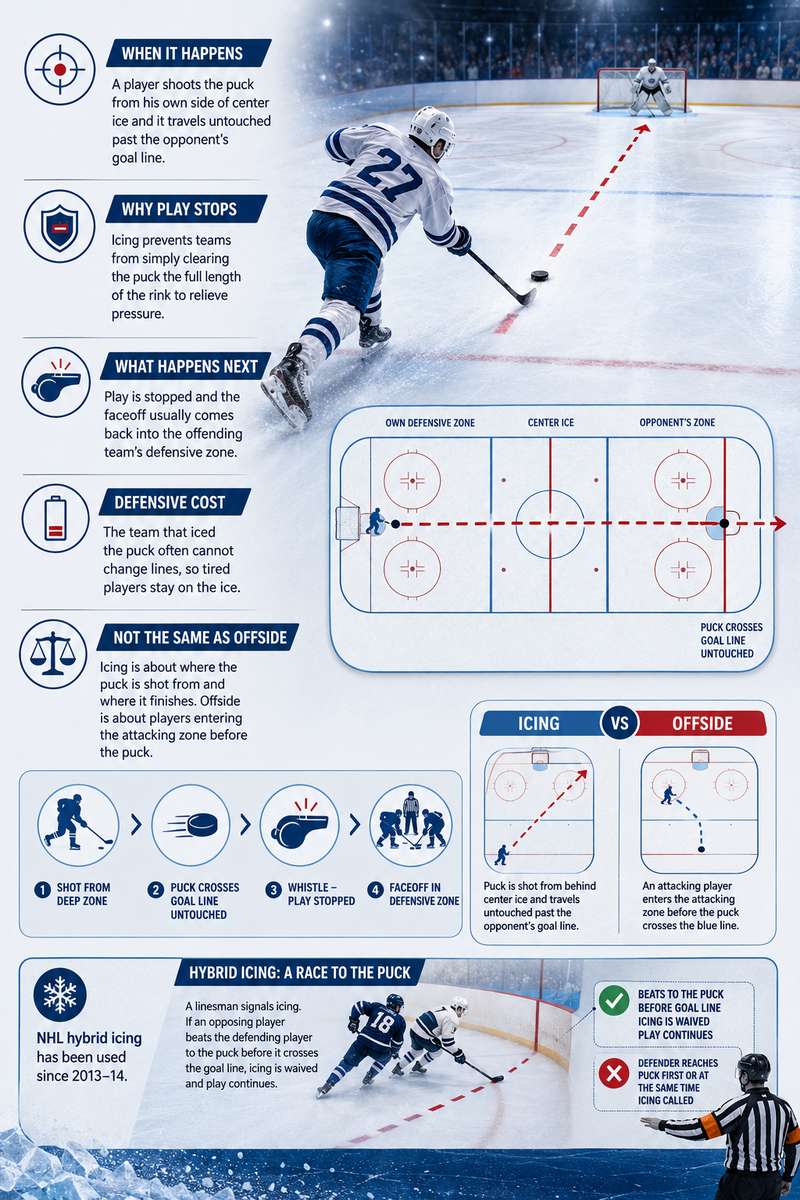
Icing occurs when a player shoots, bats, kicks or deflects the puck from their own half of the ice (that is, from behind the centre red line) and the puck crosses the opposing team’s goal line without entering the net. When the play meets the rule’s conditions, officials stop play and impose the icing procedure.
HOW IT WORKS
The enforcement method varies by league: touch icing requires an opposing player to touch the puck before play is whistled dead; no-touch or automatic icing is called as soon as the puck crosses the goal line; and hybrid icing—used by the NHL and many North American professional leagues—lets officials judge which player would reach the puck first at a designated point before calling icing. Hybrid icing was introduced to reduce dangerous races to the puck.
RULES AND OFFICIATING
When icing is called, play is stopped and a faceoff is conducted in the defending zone of the team that iced the puck. Rulebooks such as IIHF, Hockey Canada and USA Hockey spell out exceptions: icing can be nullified if the goaltender leaves the crease to play the puck, if the puck would have been a goal, or depending on the level, when a team is shorthanded. Exact wording and exceptions vary by jurisdiction and rulebook.
TACTICS AND DEFENSIVE IMPACT
Icing prevents defensive teams from repeatedly clearing the puck down the ice as a safe delay tactic. Because an icing call brings the faceoff back into the offending team’s defensive zone and often denies them the chance to change lines immediately, teams must balance the safety of a long clearing pass against the cost of lost territorial advantage and tired players on the next shift.
RINK POSITION AND GAME FLOW
Icing is all about the red line and opponent’s goal line: the puck must travel from a team’s own half (behind centre red line) across the opponent’s goal line. That spatial relationship distinguishes icing from infractions that involve the blue lines or offensive zone entry. After an icing faceoff the puck, players and lines are repositioned in the offending team’s defensive zone, which can change momentum and zone time for both teams.
COMMON MISUNDERSTANDINGS
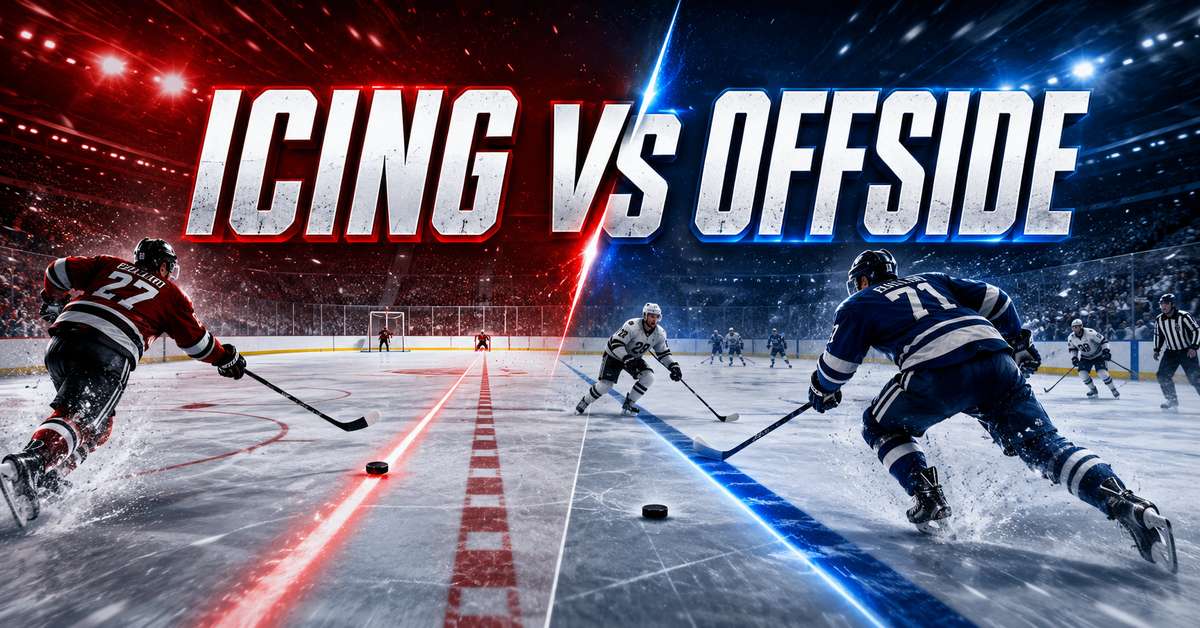
Beginners often confuse icing with offside because both stop play and involve crossing lines, but they are different infractions. Icing focuses on where the puck is cleared from and whether it crosses the opponent’s goal line; offside concerns attacking players entering the offensive zone (crossing the blue line) before the puck does. TV angles and fast transitions can make both look similar to an untrained eye.
FAN VIEWING GUIDE AND VISUAL CULTURE
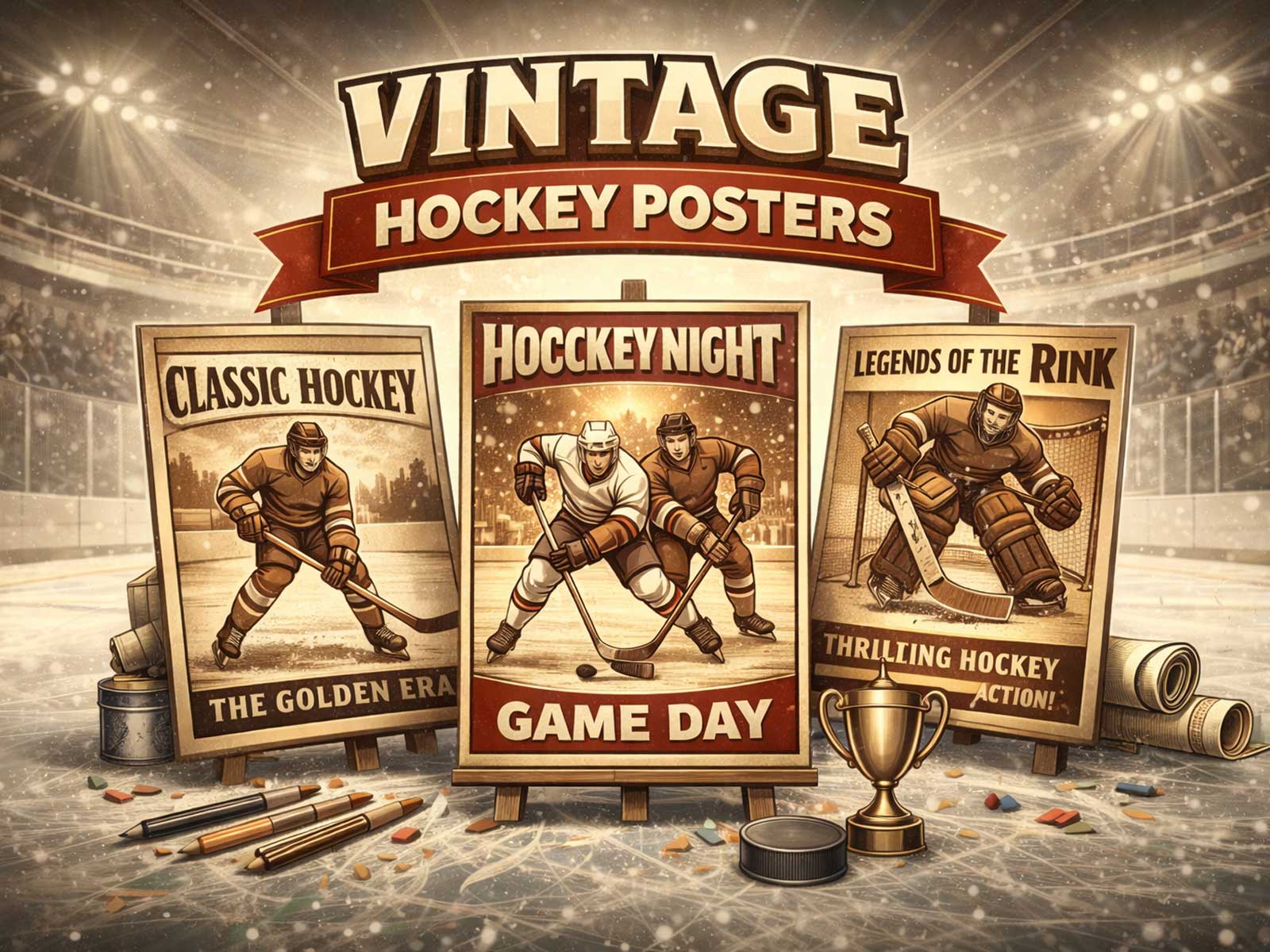
On television watch the puck’s origin and destination: if a long clearance starts behind the centre red line and the puck crosses the other team’s goal line without a goalie save or goal, icing is a possibility. In vintage hockey posters and wall art, the drama of an icing whistle—players racing down the ice, sticks extended, goalies poised—translates into classic motion and contrast that suits bold silhouettes and high-contrast rink scenes. Those images capture the speed, desperation and territorial struggle that the icing rule regulates.
CLOSING INTERPRETATION
Icing exists to balance safety, fairness and flow: it stops teams from escaping pressure by endlessly dumping the puck while reducing dangerous races to the end boards through variations like hybrid icing. Understanding icing helps fans read decisions about line changes, defensive tactics and momentum swings; it also explains some of the most physical, visual moments that appear in hockey art and classic rink photography.
Author: Alex R.