Gretzky Kings: How Wayne Gretzky’s Kings-Era Gear Mapped to His On-Ice Identity
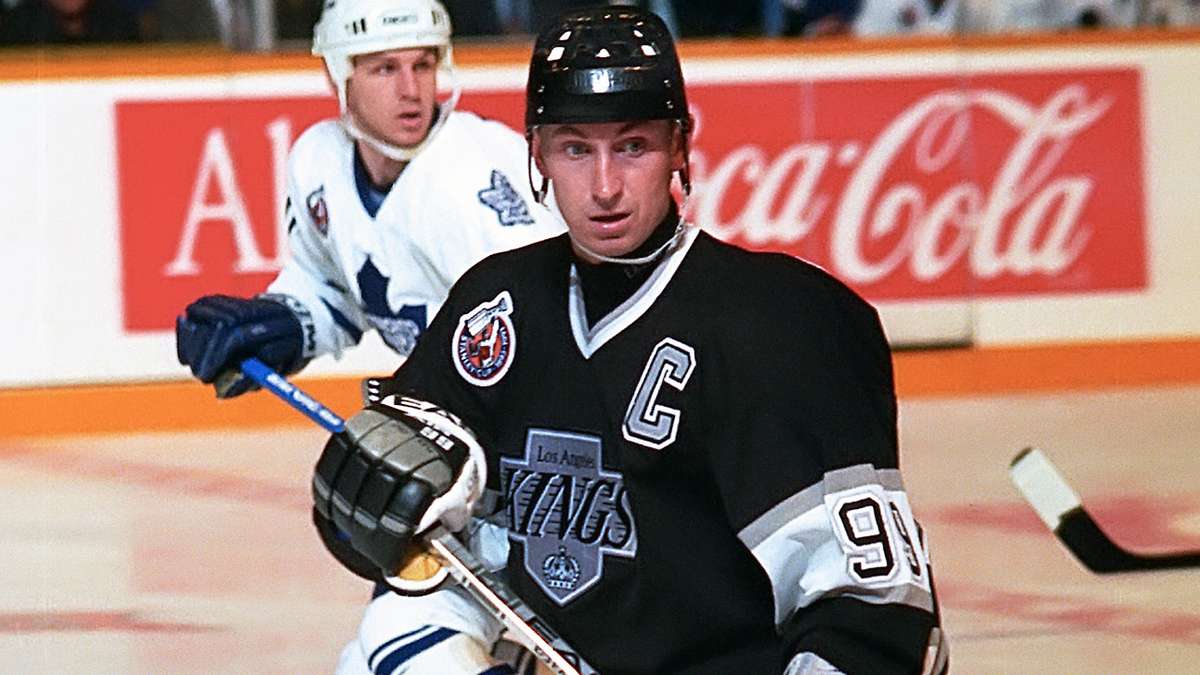
Wayne Gretzky’s move to the Los Angeles Kings (1988–1996) coincided with an equipment era in transition. Examining what he used—most notably his switch to Easton aluminum shafts—and the documented game-worn skates and sticks from that period helps explain how his technical identity adapted to changing tools and how his choices influenced equipment culture.
Quick answer
During his Kings years Gretzky moved from traditional wooden sticks toward Easton’s aluminum shaft technology; game-used sticks and skates from the era exist in auction records and photographs, and his public equipment choices intersected with a broader period of NHL gear evolution.
What this article explains
- Which equipment changes from the Kings period are documented and why they matter.
- How Gretzky’s switch to Easton aluminum shafts fit into playing logic and equipment trends.
- What auction and photo evidence shows about his skates and game gear.
THE GEAR PROFILE AT A GLANCE
The verified record for Gretzky’s Los Angeles Kings years is focused. Contemporary reporting and later memorabilia verify two clear facts: he used Easton aluminum shafts under an endorsement arrangement around 1990, and there are authenticated game-used sticks and at least one game-worn skate from his Kings era in auction and museum contexts. Broader technical specifics—exact skate models, detailed pad brands or precise stick flex/curve—are not reliably documented in the available sources.
STICK CHOICE AND ON-ICE LOGIC
Gretzky’s switch from wooden sticks (Titan and others during his earlier career) to Easton’s aluminum shafts is the clearest equipment pivot documented for the Kings period. Easton marketed metal-shaft technology aggressively, and contemporary reports from 1990 record Gretzky’s endorsement and in-game use of Easton shafts.
Why this matters: an elite playmaker’s stick is an extension of his hands and timing. Aluminum shafts were promoted for consistency of flex point and durability compared with wood; for a player whose game relied on rapid passes, soft hands, and precise stickhandling, a more uniform shaft response could reduce variability in feel from shot to shot or pass to pass. While sources confirm the adoption, they do not specify curve patterns or flex ratings, so we must avoid claiming technical specs beyond the documented material.
SKATES, EDGES, AND MOVEMENT FEEL
Auction listings and photographic evidence confirm that game-worn skates from Gretzky’s Kings era exist; at least one 1990s-era game-worn skate has been sold or listed with provenance. These artifacts indicate that his skate gear from that time has been preserved and examined, but the verified sources do not supply a continuous, authoritative record of exact skate brands or models season by season.
Interpretively, the presence of authenticated skates lets us say that Gretzky’s movement identity—quick first steps, positional nuance and edge work—was preserved in material culture. However, the specific boot and runner choices that shaped his stride are not fully documented in the available sources, so any mechanical link between a named skate model and a particular aspect of his skating must remain speculative.
PROTECTIVE SETUP AND ROLE-SPECIFIC NEEDS
Public records and the verified research do not provide detailed documentation of Gretzky’s shoulder pads, elbow protection, shin guards or torso setup during the Kings years. What can be reliably said is contextual: the 1990s were a period of evolving protective technology in the NHL, and coverage of equipment evolution places Gretzky’s choices inside a broader movement toward lighter, better-fitting gear.
From a role perspective, a playmaker like Gretzky typically favours protection that allows a full range of motion for passing and receiving while providing essential impact coverage. While the exact brands or customizations he used are not verified in the sources, situating him in the era’s trend toward improved mobility and fit is consistent with contemporary reporting about equipment evolution.
HELMET, GLOVES, AND PRACTICAL COMFORT
Specific, sourceable records of Gretzky’s helmet choices, glove brands, or fit preferences during the Kings years are not present in the verified materials. Auction and photo evidence confirm game-used items exist but stop short of cataloguing every piece of his protective kit.
As a general observation grounded in the era: top players who shifted to new stick technologies often paired those changes with attention to comfort and consistency across their kit. For a player whose spatial and tactile game was central, small comfort gains in glove fit or helmet stability could matter—but the sources do not document Gretzky’s personal fit decisions, so that connection must be framed as plausible context rather than established fact.
BRAND LINKS AND EQUIPMENT CULTURE
The Easton endorsement and Gretzky’s publicized move to aluminum shafts are documented and stand out as a moment where a star’s choice intersected with a manufacturer’s push. Easton’s move into hockey and its association with Gretzky helped normalize non-wood shaft materials in elite play during a period when NHL equipment was modernizing.
Memorabilia listings and auction catalogs that feature Gretzky’s Easton sticks and game-worn skates function as cultural evidence: they show market demand for physical traces of the player’s equipment and underscore how a single elite athlete’s equipment choices can accelerate broader adoption or at least attract fan attention to new technologies.
HOW THE GEAR CHANGED OVER TIME
The verified sources identify a clear timeline point: around 1990 Gretzky switched to Easton aluminum shafts. Beyond that, sources note the NHL-wide evolution of equipment through the late 1980s and 1990s but do not provide a season-by-season inventory of Gretzky’s gear. Auction evidence documents artifacts from across the Kings period, which implies some continuity of game-used material, yet precise timelines for every change are absent from the record.
Editorially, the change to a metal shaft stands as the most documentable equipment evolution for Gretzky in Los Angeles—an emblematic shift rather than a comprehensive equipment overhaul recorded in public sources.
WHAT THE EQUIPMENT SAYS ABOUT THE PLAYER
The documented move to Easton shafts suggests an openness to marginal gains in consistency and durability from equipment—traits that fit a player focused on precision. The presence of authenticated game-used sticks and skates from the Kings era signals the collector and historical value of his material culture and confirms that Gretzky’s equipment choices from that time were noteworthy to contemporaries and later audiences.
Crucially, the verified evidence lends itself to a cautious interpretation: Gretzky’s on-ice identity combined exceptional reading of the game with tools that were themselves evolving. The Easton association is a concrete link between a player’s preference and an instrument-maker’s technology push; other gear areas remain under-documented and should be treated as contextual rather than definitive.
WHY THIS SETUP MATTERS TO HOCKEY FANS
For serious readers, the Kings-era equipment story is valuable because it ties a technical innovation (aluminum shafts) to a high-profile player at a pivotal moment in NHL equipment history. Auctioned sticks and skates provide physical anchors for that narrative. At the same time, the limits of the public record remind fans and researchers to separate confirmed gear changes from appealing but unverified detail.
In short: Gretzky’s documented equipment choices during his Los Angeles years reveal both a willingness to experiment with emerging technologies and the broader era’s push toward more consistent, performance-oriented gear. Those concrete facts—Easton shafts and surviving game-used artifacts—are enough to map an equipment-based angle on his playing identity without overstating the record.
Author: Alex R.