Gretzky hockey player: why Wayne Gretzky became larger than the game
Wayne Gretzky's name often functions as shorthand in hockey conversation: a reference point for vision, playmaking and sustained dominance. As the verified record shows, Gretzky the hockey player left behind more than totals—he created a reproducible template for anticipating play that reshaped how success in the NHL is judged.
Snapshot: Gretzky holds the NHL career points record (2,857) and set the single-season points mark with 215 in 1985–86. He won four Stanley Cups with the Edmonton Oilers and received nine Hart Trophies and ten Art Ross Trophies.
Quick access: What made him larger than a player • The playing identity • Visual memory and posters
WHAT MADE THE FIGURE FEEL LARGER THAN A PLAYER
Gretzky's reputation exceeds the label "great" because his achievements combined exceptional longevity with defining peaks that changed expectations. The career total of 2,857 points and the single-season high of 215 points are not decorative statistics: they signal both sustained production and an unprecedented offensive ceiling. Those figures, together with nine Hart Trophies and ten Art Ross Trophies, convert personal excellence into a sustained standard that the league, opponents and fans used as a comparative measure.
Beyond awards and totals, Gretzky's immediate induction into the Hockey Hall of Fame after retirement and his placement in national conversation about hockey show that his career carried institutional and cultural weight. The combination of record-setting numbers, multiple championships with Edmonton, and repeated recognition as the league's most valuable player positioned his name as a stable reference in hockey discourse rather than a passing era-specific star.
THE PLAYING IDENTITY
At the hockey-logic level, Gretzky was a playmaker whose defining trait was anticipatory positioning. He is widely credited with a trademark approach summarized by the phrase about skating "to where the puck is going to be, not where it has been." That description captures his spatial reading of the ice: he set up teammates through timing, movement off the puck and an ability to see passing lanes before they formed.
Concrete statistical patterns back up that interpretation. Gretzky's 1,963 career assists are the clearest numerical evidence of a player whose primary impact came via creation rather than just finishing. Single-season and career assist totals, plus stretches of remarkable consistency—such as multiple consecutive 100‑point seasons—map onto the picture of an architect of offense rather than a one-dimensional scorer.
ERA, CONTEXT, AND COMPETITIVE IMPACT
Gretzky arrived in an NHL that already valued high-end offence, but his levels of production redefined that valuation. His run of statistical milestones—including a 51-game point streak and a decade-plus of 100+ point seasons—set new thresholds for elite performance. Those thresholds affected team construction, opponent tactics and how the league marketed star players.
Winning four Stanley Cups with the Edmonton Oilers during the 1980s anchored his personal dominance to team success. When a player's peak coincides with championship runs, their style and numbers shift from private records into shared memories of decisive moments and defining teams.
MOMENTS THAT FIXED THE IMAGE
While this analysis avoids inventing specific individual game moments, the verified record shows that Gretzky's seasons and awards created lasting anchors: record-setting single-season totals, repeated MVP recognitions, and sustained high-assist seasons. These season-level landmarks are the durable moments that compress a career into recognisable milestones for later fans.
In other words, the aggregate of record seasons and trophy years functions as a set of canonised moments. Those peaks are what sports memory reaches for when it needs a shorthand for extraordinary vision and production.
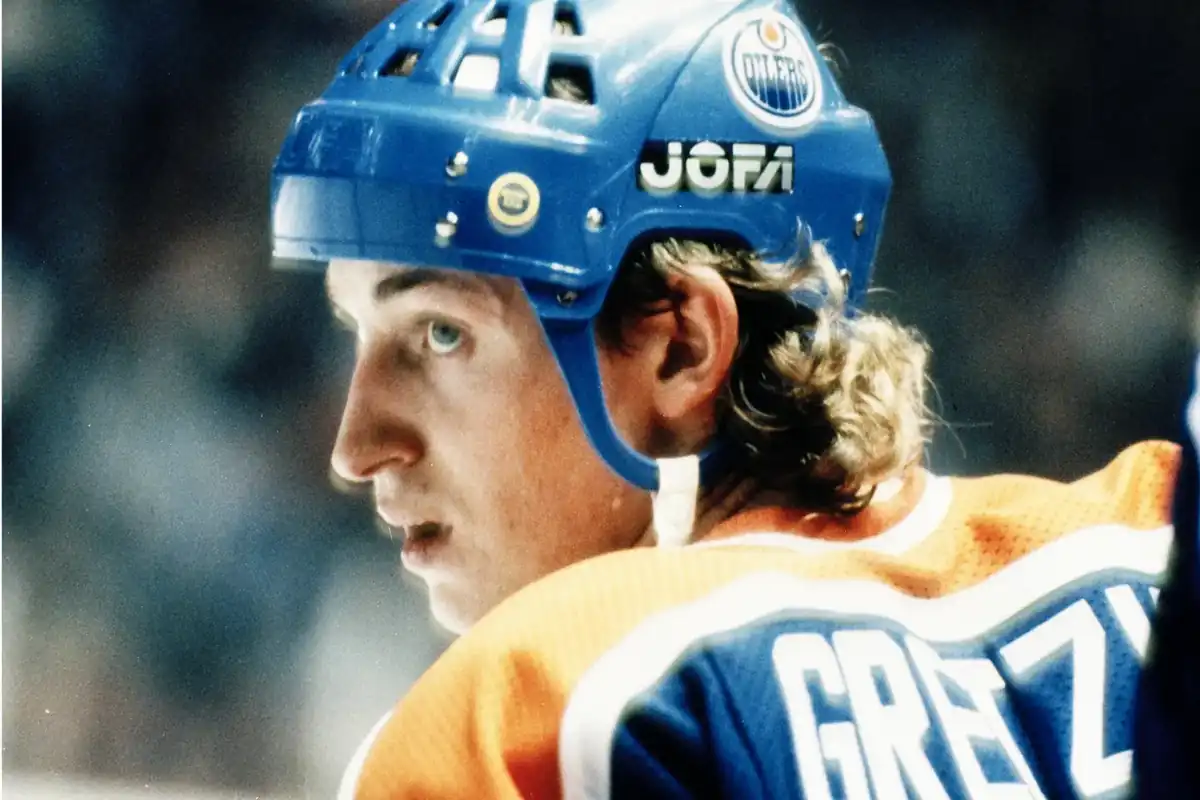
VISUAL MEMORY AND SYMBOLIC PRESENCE
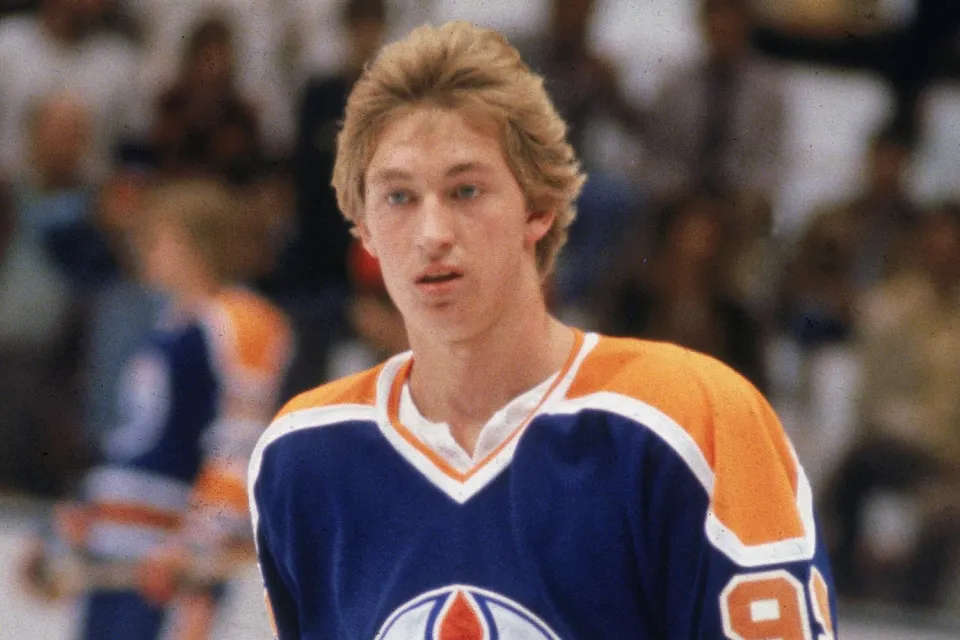
Gretzky's visual recognisability is practical for poster culture. A name tied to extreme statistical records and clear stylistic tropes—playmaking, graceful movement, and court vision—translates easily into imagery. Fans reproduce familiar poses, jersey images and action stills because they represent a recognizable hockey intelligence as much as an athlete.
Poster art thrives on symbols that carry immediate meaning. Gretzky's numbers and awards provide that meaning: they justify why his likeness can stand for playmaking excellence and a particular era of offensive hockey.
WHY THE NAME STILL MATTERS NOW
The ongoing relevance of Gretzky's name comes from a convergence of measurable records and cultural conversation. Career totals, single-season records, Hall of Fame induction, and his role in championship teams give commentators and fans concrete touchpoints to discuss modern players and stylistic shifts. When the sport debates vision or playmaking, Gretzky the hockey player is still the reference point because his achievements provide quantifiable benchmarks.
Moreover, Gretzky's presence in national and cultural discussion—where commentators treat him as a figure in Canadian hockey identity—keeps his name active beyond statistical citations. That continuity ensures his image remains available for new generations evaluating what elite hockey looks like.
CLOSING INTERPRETATION
Wayne Gretzky became larger than a player because his game combined reproducible stylistic innovation with record-setting outcomes and team success. His spatial intelligence manifested in seasons and trophies that no longer read as merely personal achievements but as standards the sport uses to measure itself. For poster makers and fans, the Gretzky hockey player is therefore both a set of numbers and an instantly legible visual and tactical shorthand: a legacy rooted in evidence, not myth.
Author: Cynthia D.