How Bobby Orr Became Bigger Than a Great Player: Speed, Transition Control and…
Bobby Orr altered the grammar of hockey. By combining elite skating speed, puck-carrying and playmaking from the blue line, he changed what a defenseman could do—and in the process turned his name into a shorthand for revolutionary impact in the sport.
Why Orr mattered: first truly offensive defenseman, first to lead the league in points from the blue line, and the player whose 1970 playoff performance crystallized a new role.
WHAT MADE THE FIGURE FEEL LARGER THAN A PLAYER
The shift Bobby Orr represented was tactical and symbolic. He was not merely an outstanding defenseman; he was the first defenseman to regularly drive transition and offense from the blue line. That single technical innovation—turning a role defined by prevention into one that initiated attack—gave his name an outsized cultural weight. The combination of rare skill and visible, game-changing consequence made his reputation do more work than ordinary greatness.
Concrete milestones back the claim. Orr became the first defenseman to reach 100 points in a season and the first defenseman to win the Art Ross Trophy as the NHL's scoring leader. Those achievements converted a stylistic innovation into measurable dominance, which is why the shift he embodied feels definitive rather than anecdotal.
THE PLAYING IDENTITY
At ice level, Orr's identity rested on three interlocking traits: elite skating speed, puck-carrying that bypassed neutral-zone congestion, and playmaking from the back end. These features allowed him to pick up the puck in his own end, accelerate through transition, and become an offensive fulcrum rather than a last line of defense.
That description is tactical, not flattering rhetoric: reputable sources credit him as the first true offensive defenseman who regularly drove transition and offense. The concrete result of that identity was unprecedented scoring from a top defender, culminating in a 120-point regular season in 1969–70 that led the league.
ERA, CONTEXT, AND COMPETITIVE IMPACT
Orr's innovations arrived in an NHL ready to be reimagined. By reassigning offensive initiation to a defenseman, he changed how coaches and teams thought about roster roles and matchups. Historians and journalists consistently link Orr's style to a broader evolution: defensemen shifted from stay-at-home specialists to active transition agents, influencing how subsequent generations were developed and deployed.
Those tactical consequences matter because they outlast single seasons. Where earlier defenders were judged primarily by defensive steadiness, managers and scouts increasingly valued mobility, puck skills and the ability to join or start rushes—traits Orr showcased and normalized.
MOMENTS THAT FIXED THE IMAGE
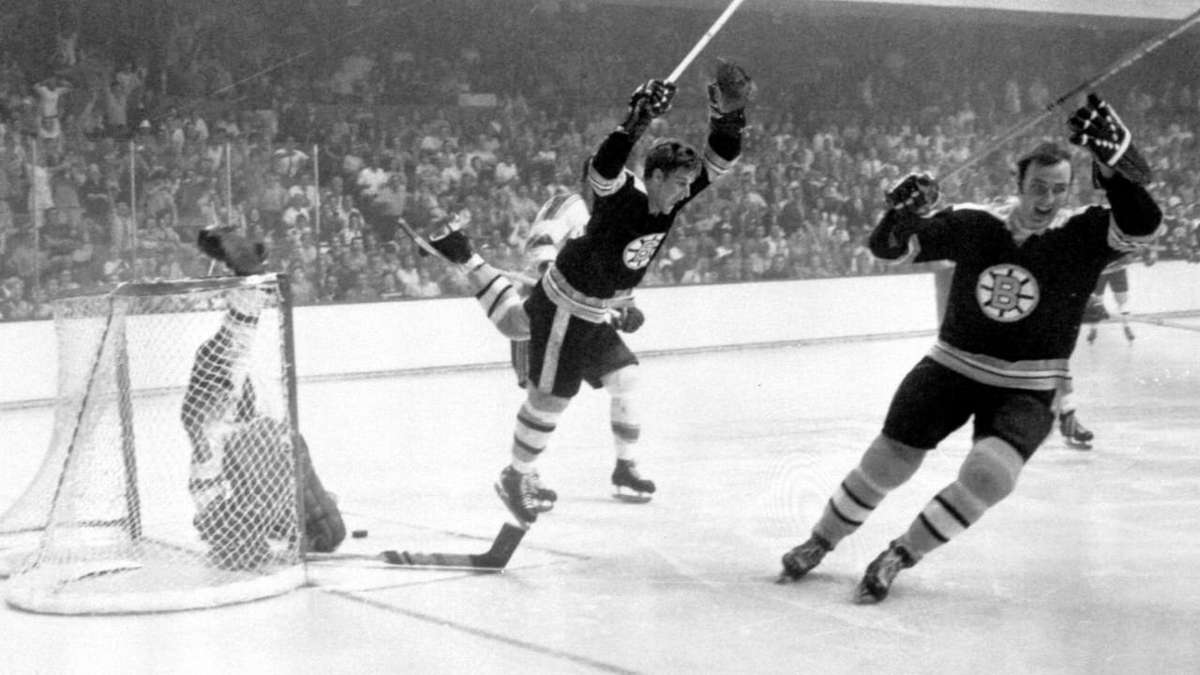
Some careers become permanent thanks to a handful of vivid moments. For Orr that moment came on May 10, 1970: his overtime Cup-winning goal secured the Stanley Cup for the Boston Bruins and produced an instantly recognisable photograph of him airborne with arms raised. That play synthesized what he had offered the game—offense from the back end converted into the highest available prize—and it linked his technical revolution to an emotional, historic image.
Alongside that goal, the 1969–70 season stands as a factual anchor. That year he won four major NHL awards—Norris, Hart, Art Ross and Conn Smythe—demonstrating both elite regular-season production and playoff impact in the same campaign. Those trophies provide a clear ledgered basis for calling his influence transformative.
VISUAL MEMORY AND SYMBOLIC PRESENCE
Images matter to legacy. The flying-celebration photograph and his No. 4 Bruins jersey are compact visual forms that poster culture and memory can reproduce easily. When a name like "Bobby Orr" appears on a wall or a poster, it signals a specific story: the defenseman who skated like a forward and scored at elite rates.
This recognisability helps the legend translate into merchandise, museum exhibits and popular references. The visual shorthand—skate, stick, blue-line attack—keeps Orr's revolution legible to fans who never saw him play.
WHY THE NAME STILL MATTERS NOW
Orr's legacy persists because his change to positional function is transferable across eras. When modern defensemen are praised for rushing the puck or breaking play with a carry, critics point to the same lineage: the role Orr made possible. That continuity gives his name cultural utility; it appears in discussions about style and development, not only as praise but as a historical reference point.
Moreover, the Hall of Fame induction in 1979—where the usual waiting period was waived—underlines how contemporaries and institutions understood his career as exceptional in both impact and timing. Institutional recognition like that reinforces the lasting conversational traction of his name.
CLOSING INTERPRETATION
Bobby Orr's legend rests on a clear chain: technical innovation (skating, puck-carrying, playmaking) produced measurable dominance (leading the league in points as a defenseman, 100+ point season), dramatic, defining moments (overtime Cup-winning goal), and institutional affirmation (multiple Norris and Hart trophies, Conn Smythe, Hall of Fame induction with waiting period waived). That chain makes his name more than admiration; it makes it a concise way to describe a structural change in hockey. In short, Orr is a durable reference because his personal gifts changed the game's grammar and left both statistic and image that people still point to when they describe what a modern defenseman can be.
Author: Alex R.