How Golden Knights Hockey Built a Dense Story in Just a Few Seasons
The story of Golden Knights hockey is shorthand for speed: a franchise awarded in 2016 that began play in 2017–18, delivered an almost unimaginable inaugural run to the Stanley Cup Final, and within six seasons reached the sport’s highest peak by winning the Stanley Cup in 2023. That compressed timeline—spectacle and sporting success in the same breath—explains why the franchise’s early history feels so dense.
Quick summary: Awarded in 2016, the Vegas Golden Knights began play in 2017–18, reached the Stanley Cup Final in their inaugural season, and captured their first Stanley Cup in 2023 with a Game 5 clincher at T-Mobile Arena.
Quick access: The story at its true centre • Turning points that fixed the memory • Visual afterlife
THE STORY AT ITS TRUE CENTRE
At its core, Golden Knights hockey is about how a modern franchise fused two often-separated logics: theatrical identity and quick sporting legitimacy. The timeline of facts is straightforward. The NHL awarded the franchise in 2016, the team began play in the 2017–18 season, and that inaugural campaign produced a division title and an improbable run to the Stanley Cup Final. That same franchise then secured the Stanley Cup in 2023, a championship gained in its sixth season.
Those milestones frame the central drama: how a team from a new hockey market used organization, presentation and performance to turn novelty into credibility faster than most expected. The result is not only trophies on a shelf but a dense narrative skeleton the sport can point to when talking about expansion, identity and success.
THE SETTING AND STAKES
Las Vegas is an entertainment capital; the Golden Knights used that setting deliberately. Playing at T-Mobile Arena since the first season, the franchise tied home presentation to the city’s showmanship while building a roster that could win in the league’s competitive environment. The stakes were twofold: perform as an authentic NHL contender on the ice, and represent Las Vegas without letting spectacle overshadow results.
That double demand—entertainment expectations from the market, sporting expectations from the league—made every early victory weigh heavier. Success in that context meant changing assumptions about what an expansion team could be when built to both entertain and compete.
THE TURNING POINTS THAT FIXED THE MEMORY
There are two clear historical checkpoints in the verified record that shaped how fans recall Golden Knights hockey. First, the 2017–18 inaugural season: winning the Pacific Division and advancing all the way to the Stanley Cup Final created a narrative shock—expansion teams rarely reach those heights immediately, which made the debut historically notable.
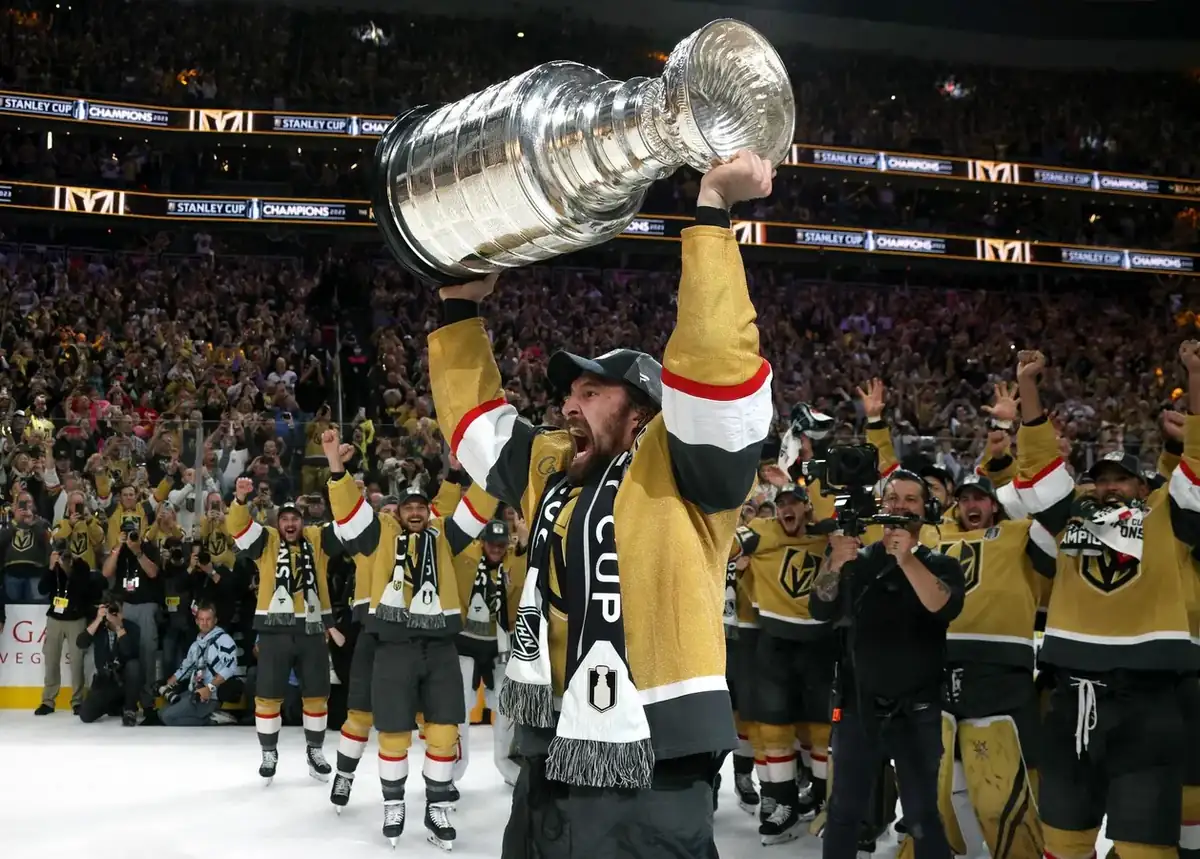
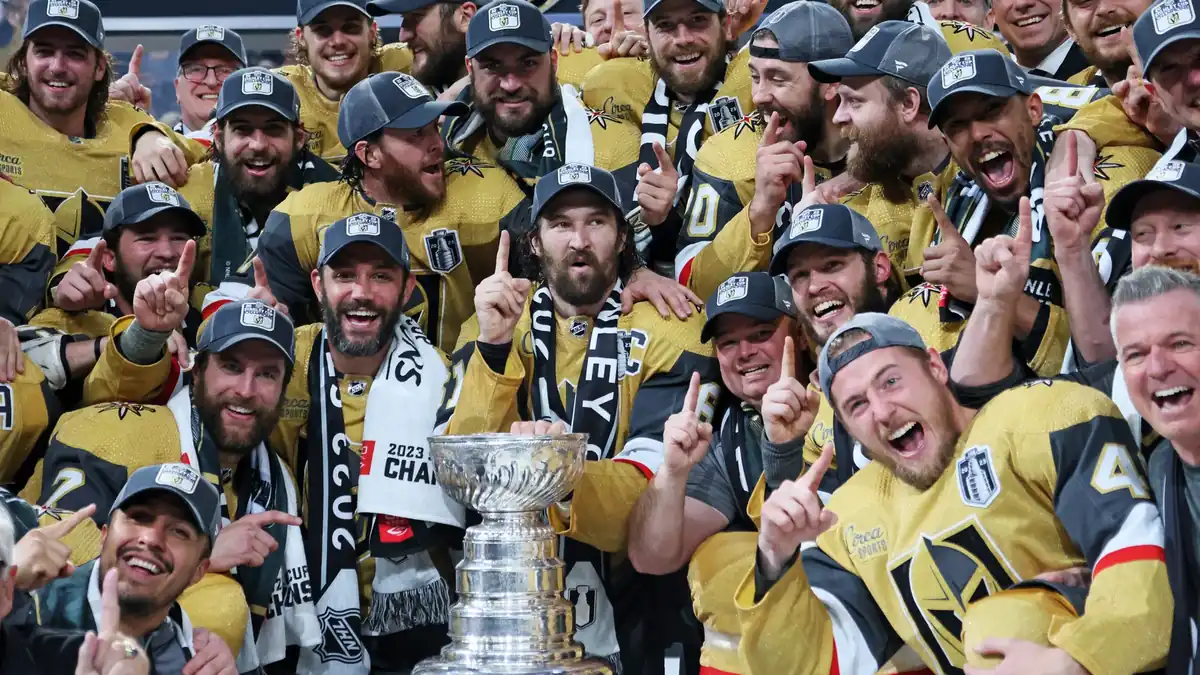
Second, the franchise’s first Stanley Cup in 2023. The clinching moment came in Game 5 of the Final at T-Mobile Arena, when the Golden Knights defeated the Florida Panthers to secure the series 4–1. The emphatic Game 5 score and the fact that the Cup was won at home gave the championship a terminating, image-rich moment that fixes the arc from dazzling newcomer to confirmed champion.

THE PEOPLE AND FORCES INSIDE THE STORY
The verified record emphasizes institutional choices and on-ice results rather than single personality myths. Organizational construction—how the franchise was assembled after its 2016 award and how it competed from 2017–18 onward—is central. The team’s 2023 playoff run ended with a home-ice clincher at T-Mobile Arena, confirming the roster and management decisions that had layered experience onto that initial momentum.
The 2023 Final also produced concrete, headline-making performers whose achievements are now part of the franchise’s early story. The Cup-clinching game and series coverage identify key individual contributions in that final series, which helped shape how the championship is told in summary and celebration.
WHY THIS STORY STUCK
The narrative power of Golden Knights hockey comes from compression and contrast. An expansion franchise rarely reaches a Final in its first season; to do so created a cultural echo that kept the team in conversations beyond standard expansion curiosity. Then, winning the Stanley Cup within six seasons—one of the fastest championships in the modern NHL era—turned initial surprise into sustained legitimacy.
Put simply: the debut created attention; the championship answered doubters. That sequence gives fans and commentators a tidy arc—astonishment followed by confirmation—that is easy to remember and repeat.
THE VISUAL AFTERLIFE OF THE MOMENT
Certain images from the verified events anchor the franchise’s early visual memory. The T-Mobile Arena clincher in 2023—the final game score and the on-ice celebration—serves as a compact emblem of arrival. Early-season and playoff images from 2017–18 likewise function as origin shots: a team decked in new colors winning division titles and advancing to the Final in its first year.
Visual culture matters because hockey memories often live on posters, jerseys and arena displays. For the Golden Knights, the combination of Las Vegas-style presentation and trophy imagery creates décor that reads as both local spectacle and sporting authenticity.
CLOSING INTERPRETATION
Golden Knights hockey matters because it reframes what expansion can be in the NHL: not simply a slow build but a capable, identity-driven franchise that can achieve rapid sporting success while leaning into its market’s character. The verified milestones—award in 2016, inaugural 2017–18 Final run, and the 2023 Stanley Cup clinched at home in Game 5—form a short but dense chronology that explains why the franchise’s early history feels larger than its years.
In hockey terms the lesson is double-edged. The sport rewards careful roster construction and managerial clarity; it also rewards narrative clarity. When those elements align—when a team matches a city’s personality with legitimate on-ice results—the story becomes memorable. For the Golden Knights, those few seasons were enough to turn a new franchise into a living chapter in modern NHL history.
Author: Alex R.