Maurice Richard: From Montreal Roots to a Career That Became Cultural History
Maurice Richard's career with the Montreal Canadiens intersected sport and society. This article follows Joseph Henri Maurice Richard from his emergence in Montreal hockey through the milestones—the 50 goals in 50 games season, a landmark suspension and riot, eight Stanley Cups—and explains how a playing career became cultural history.
Quick answer
Maurice Richard was a high-output goal scorer for the Montreal Canadiens from 1942 to 1960, the first player to score 50 goals in 50 games, a central figure in the 1955 Richard Riot, and a player whose honours include Hockey Hall of Fame induction and an NHL goal-scoring trophy named after him.
What you will learn here
- Key career milestones that defined Richard's on-ice reputation.
- How the 50-in-50 season and the Richard Riot anchored his cultural significance.
- Why his legacy is institutionalized—Hall of Fame induction and the Maurice "Rocket" Richard Trophy.
EARLY ROOTS AND FIRST HOCKEY DEVELOPMENT
The verified record establishes Maurice Richard as Joseph Henri Maurice Richard, born August 4, 1921. He rose through Montreal's hockey environment into organized professional play and made his NHL debut with the Montreal Canadiens in 1942. These Montreal roots matter because Richard spent his entire 18-season NHL career with the Canadiens, making his local development and identity central to how fans understood him.
THE PATH INTO HIGHER-LEVEL COMPETITION
Richard entered the NHL in 1942 and stayed with a single franchise throughout his career. That continuity is a key structural fact: 18 seasons from 1942 through retirement in 1960, all with the Montreal Canadiens, anchored his influence within one team and one city rather than across multiple franchises.
THE FIRST YEARS THAT MADE PEOPLE NOTICE
Early in his NHL tenure Richard established himself as a goal scorer. The clearest verified breakthrough is the 1944–45 season, when he became the first player in NHL history to score 50 goals in a single season and did so within the first 50 games. His 50th goal arrived on March 18, 1945. That achievement set a new measurable standard for goal-scoring and became a touchstone for later comparisons.
THE ERA OR TEAM THAT DEFINED THE PLAYER
Richard's career is inseparable from the Montreal Canadiens of the 1940s and 1950s. Over 18 NHL seasons he accumulated team success that included eight Stanley Cup victories. These championships, spread across his career, position him among the most decorated players of his era and connect his individual scoring feats to sustained team outcomes.
STYLE OF PLAY AND ON-ICE IDENTITY
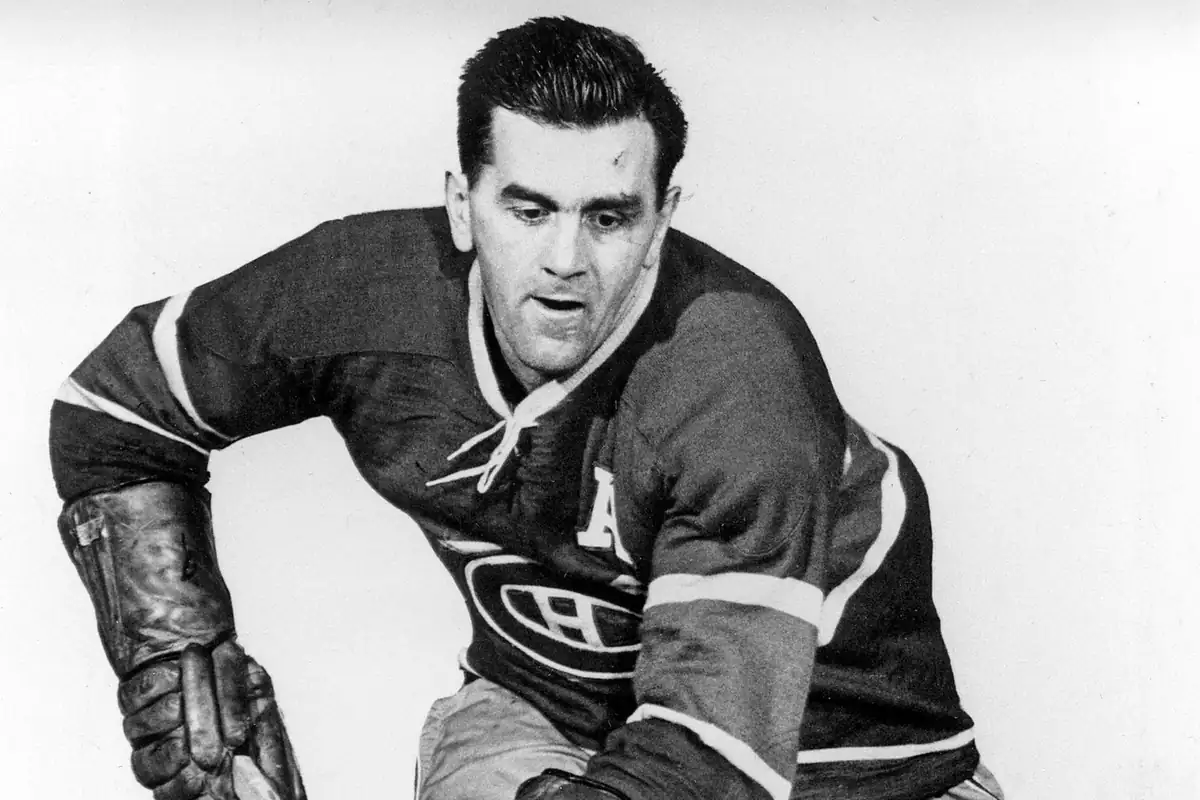
The verified facts focus on Richard's scoring output and his reputation as an elite goal scorer. The 50-in-50 accomplishment is the clearest statistical marker of his on-ice identity: a player defined by finishing and goal production. That measurable scoring profile explains why his name later became attached to the NHL's top goal-scorer trophy.
RIVALRIES, TEAMMATES, AND DEFINING RELATIONSHIPS
While the verified research centers on Richard's club continuity with Montreal, it also highlights how his presence within the Canadiens contributed to multiple Stanley Cup wins. Staying with a single team through his peak seasons strengthened the bond between player, teammates and the city, turning athletic partnership into civic memory.
SETBACKS, SUSPENSION AND THE RICHARD RIOT
One of the most consequential non-performance moments of Richard's career was his suspension in March 1955 by NHL president Clarence Campbell. The suspension covered the remainder of the 1954–55 regular season and the playoffs. Campbell's decision—and his appearance at a Canadiens home game—triggered the Richard Riot on March 17, 1955. That disturbance moved Richard's story beyond sports reporting into broader social and political conversation in Quebec and Canada.
THE MOMENTS THAT FIXED THE LEGEND
Two verified events anchor Richard's legend. First, the 1944–45 50 goals in 50 games milestone provided an unmistakable statistical legacy that altered expectations for elite scorers. Second, the 1955 suspension and the ensuing Richard Riot converted a disciplinary episode into a cultural turning point: public unrest tied to a single player's treatment elevated Richard from star athlete to emblematic figure in popular memory.
HONOURS, HALL OF FAME, AND LASTING COMMEMORATION
Maurice Richard was inducted into the Hockey Hall of Fame in 1961; the waiting period was waived, underscoring the immediate recognition of his career. The NHL later named the Maurice "Rocket" Richard Trophy—first awarded in 1999—after him; the trophy is presented annually to the league's top regular-season goal scorer. These honours translate career facts (goals, seasons, landmark achievements) into institutional memory.
HOW MAURICE RICHARD IS VIEWED TODAY
Verified accounts show Richard remembered both for elite, record-setting scoring and for the cultural reaction tied to his 1955 suspension. His career totals—978 NHL games, 544 goals and 422 assists—support the depiction of a sustained offensive contributor across nearly two decades. The combination of measurable production, multiple Stanley Cups, a Hall of Fame induction and a namesake trophy explains why Richard's reputation remains visible in NHL history and in Quebec's cultural narrative.
WHAT THIS CAREER REVEALS ABOUT HOCKEY
Maurice Richard's trajectory demonstrates how a player's statistical peaks and single-team loyalty can fuel a larger cultural role. A milestone like 50 goals in 50 games creates a sharp, repeatable fact that anchors legend. Equally, public reaction to disciplinary events can recast athletic careers into societal symbols. In Richard's case, goals and a riot together explain why sport, civic identity and institutional memory remain tightly linked around his name.
Author: Cynthia D.