What skills do professional hockey players need — and what scouts really look…
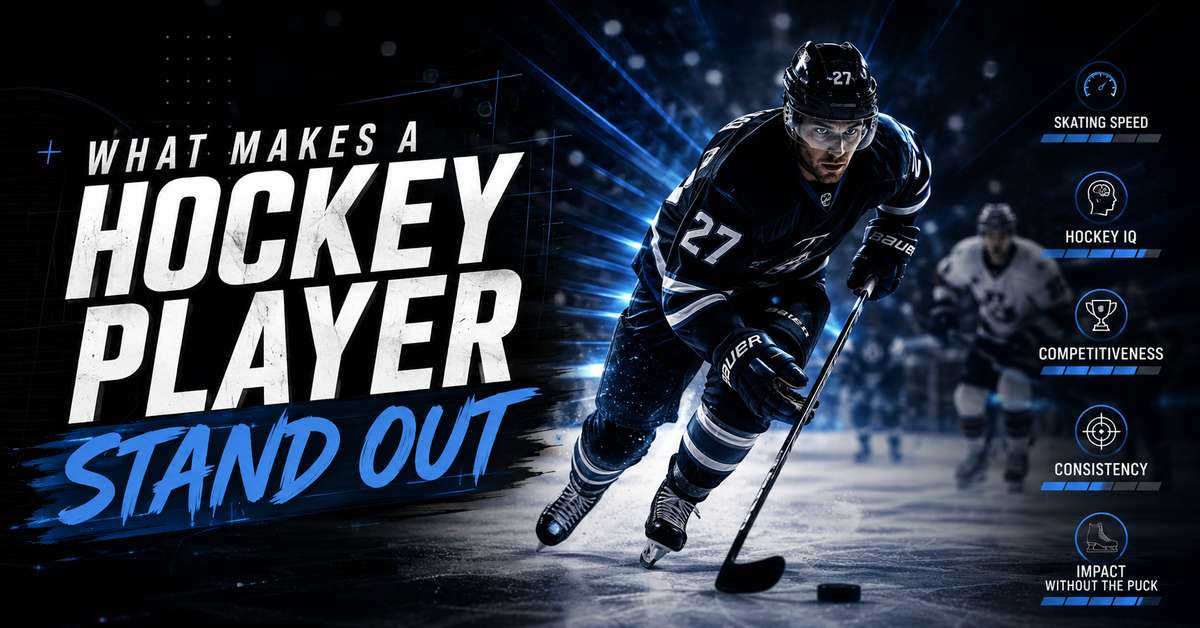
Want a straight answer? Professional hockey players need a specific set of interlocking skills: elite skating, reliable puck control, acute ice awareness (hockey IQ), clean passing, varied shooting, disciplined positioning, physical toughness and fast decision-making. That list is accurate — but it hides how those abilities interact, which ones scouts judge first, and why many talented players stall despite strong technical tools.
Quick answer
Skating is the foundation: edge control, acceleration, stopping and agility enable every other skill. Puck control, passing, shooting, positioning, toughness and decision-making are the tools that become match-effective only when skating and awareness hold up under pressure and fatigue.
What this article explains
- Why national coaching guidance places skating first and how it supports other skills.
- How puck control, passing and shooting must work at game speed and under pressure.
- What scouts and coaches actually evaluate beyond highlight plays.
What the question really means: a checklist or a system?
Asking "what skills do professional hockey players need" is tempting to answer as a list. The verified coaching and development documents behind this article treat those skills not as isolated talents but as connected capacities. Skating appears in multiple official resources as the foundational skill because it enables safe, effective execution of puck work, positioning, and contact. Puck control, passing, shooting and positioning are taught in youth curricula as skills that must transfer into fast, repetitive game situations. Decision-making and toughness are framed as outcomes of repeated, game-like practice.
Skating as the foundation — why it matters more than you think
USA Hockey materials and allied coaching resources emphasise skating fundamentals: posture, edge control, acceleration, stopping and agility. Those elements are essential not only for speed but for injury prevention and being able to execute under pressure. Evaluators often notice poor edges or unstable posture before they notice a slick deke because weak skating collapses options: you cannot pass, shoot, protect the puck or maintain gap control if your edges fail under contact or fatigue.
Puck skills at game speed: more than stickhandling tricks
Puck control in development curricula is defined as receiving, protecting and controlling the puck at speed. The documents used in official youth progressions emphasise that stickhandling drills must transfer into situational practice — one-touch receives, protecting the puck along the boards, and making plays while moving at game pace. Isolated stick-skill highlights matter less to coaches than repeatable, pressure-resistant puck control that leads to useful plays.
Ice awareness and decision-making: hockey IQ in action
Official development guides list anticipation, spatial awareness and repeated decision-making practice as core priorities. That means players must learn to scan, read pressure and choose the right pass or lane before the puck arrives. Training that increases reaction speed and situational reads is recommended because it shortens decision windows. In practice, better awareness makes technically adequate actions look faster and safer to teammates and evaluators.
Passing, shooting and positioning: technical skills with tactical purpose
Passing is taught for accuracy and timing and for appropriate risk assessment — coaches prefer consistent, safe outlets and well-timed passes that drive transition. Shooting practice in official materials focuses on variety, accuracy and quick release combined with smart shot selection. Positioning appears across coaching manuals as offensive and defensive body placement, gap control and angling — the discipline that lets a player be in the right place to use their skating and puck skills effectively.
Toughness and physicality: technique plus resilience
Development documents tie physical competitiveness to correct checking technique and to physical preparation. Toughness here means being able to play through contact while maintaining balance, winning puck battles with technique rather than reckless aggression, and recovering mentally after turnovers. Those qualities are coached as a blend of physical training and situational repetition, not as an invitation to unsafe play.

What coaches and scouts actually evaluate
Across official coaching and NHL commentary, the recurring pattern is that evaluators look first for functional skating and for skills that hold up in game-like repetition. They judge whether a player's puck control works while moving and under contact, whether passing choices are safe and timely, and whether a player's positioning reduces risk for his teammates. Decision-making under pressure and the ability to repeat useful actions through a full game matter more than a single spectacular play.
Common misconceptions: what the obvious answer leaves out
Highlight stickhandling or a powerful shot can mislead parents and players into overvaluing isolated drills. Official youth progression documents make clear that skills developers must be embedded in scenarios that force scanning, contested receives and quick outlet passes. Similarly, skating is not only about linear speed — edge control, efficient stops and transitions determine whether a player can carry the puck, recover position defensively, or absorb contact without losing play control.
How these skills are built in practice — the coaching logic
Verified training guidance recommends layering: start with skating mechanics (posture, edges, acceleration, stops), add puck control at speed, then practise passing and shooting under game-like constraints, and finish with decision-making and reaction drills that simulate real pressure. Repetition in contested, variable environments trains the mental patterns scouts look for: scanning before reception, making the right pass under pressure, and returning quickly to supporting positions.
Realistic next step: where to focus if you want progress
If you're improving, align training with this hierarchy: skating fundamentals first, puck control at speed second, then passing/shooting in pressured scenarios, with regular small-sided games or drills that force quick reads. Use sessions that require repeated decisions to develop the reaction-time skills and hockey IQ emphasized in the verified materials. Coaches and development programs cited in the source material recommend this integrated approach rather than isolated repetition of a single skill.
Final verdict: yes, but it’s the system that matters
Yes — professional players need skating, puck control, awareness, passing, shooting, positioning, toughness and decision-making. The deeper reality from national curricula and pro commentary is that these are not independent boxes to tick. Skating is the structural base that supports effective puck work and safe contact. Puck skills, passing and shooting must be proven under pressure and fatigue. Awareness and decision-making are trained through repeated, game-like practice. Scouts and coaches track whether those abilities reliably influence full games, not just isolated highlights.
Author: Cynthia D.